Cultic Studies Journal, Vol. 9, No. 2, 1992, Page 36
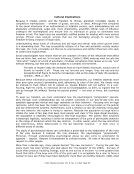
C. S. Lewis. During his early period Machen was fascinated by the aestheticism of evil. In his
The White People, he propounds a Crowleyesque doctrine redolent of Huysmans and fin-de-
siècle Paris:
“Sorcery and sanctity,” said Ambrose, “these are the only realities. Each is an
ecstasy, a withdrawal from the common life...
“I think you are falling into the very general error of confining the spiritual world to
the supremely good but the supremely wicked necessarily have their portion in it...
“Great people of all kinds forsake the imperfect copies and go to the perfect originals.
I have no doubt but that many of the highest among the saints have never done a
“good action” (using the words in their ordinary sense). And on the other hand, there
have been those who have sounded the very depths of sin, who all their lives have
never done an “ill deed.” (Machen, 1973, p.79)
Machen‟s novels reflected his preoccupation with “directing man‟s supernatural dread towards
Pan, the satyrs, and other strange races and divinities who symbolized for him the Darwinian-
Freudian „beast in man‟” (Machen, 1973). His aestheticism of evil is, however, exceedingly
seductive to the confused adolescent who intensely experiences the conflict between the real
world of feelings and the idealized (and for that reason hypocritical) world of adult standards
and morality. For the adolescent, Machen‟s antimodernist preoccupation is less important than
the sense of impotence that acutely informs a novella such as The White People. The
examination of this novel will illustrate these issues in a surprisingly direct fashion.
The primary story of The White People is contained in a diary written by a nameless
adolescent. Detailing her initiation into the occult and satanism, the diary‟s presentation is
framed by a fin-de-siècle discussion of the aestheticism of evil. Evil is presented as a force
coexistent and coequal with goodness, having its elite practitioners and adepts. The
discussion itself as presented above is apropos of the recent film, The Silence of the Lambs, in
which Dr. Hannibal Lecter is seen as less a monster than a fallen angel. The crabbed
antiquarian world in which the diary is read parallels the claustrophobic world into which the
protagonist enters. And the equal appropriateness granted good and evil, life and death,
reflects the frequent confusion in the mind of the protagonist and in the mind of the modern
adolescent.
The protagonist of The White People is hardly described. She is 16 years old, living with her
father in the “country.” Her mother died when she was eight. Her closest
friend/mentor/confidante is her nanny. The nanny, a member of the peasantry, repeatedly
refers to her grandmother‟s sayings or stories. Indeed, the protagonist‟s father dismisses the
protagonist‟s questions and interest in the occult as much on class grounds as on the grounds
of rationalism:
I once told my father one of her little tales, which was about a ghost, and asked him
if it was true, and he told me it was not true at all, and that only common, ignorant
people believed in such rubbish. He was very angry with nurse for telling me the
story, and scolded her, and after that I promised her I would never whisper a world
of what she had told me. (Machen, 1973, p. 98)
Her father‟s primary involvement is in trusts and estates, perhaps he is an attorney. The
adolescent female forms a bond with a female nurturing figure in opposition to a patriarchal
authority. The actual activity within The White People takes place in a remote and ominously
confined countryside.
The story conveys the importance of the private mythologies that all adolescents create in
order to cope with the mundane physical world in which they live. But in this novel of
alienation, the adolescent‟s initiation into the occult occurs in a hallucinatory experience in
C. S. Lewis. During his early period Machen was fascinated by the aestheticism of evil. In his
The White People, he propounds a Crowleyesque doctrine redolent of Huysmans and fin-de-
siècle Paris:
“Sorcery and sanctity,” said Ambrose, “these are the only realities. Each is an
ecstasy, a withdrawal from the common life...
“I think you are falling into the very general error of confining the spiritual world to
the supremely good but the supremely wicked necessarily have their portion in it...
“Great people of all kinds forsake the imperfect copies and go to the perfect originals.
I have no doubt but that many of the highest among the saints have never done a
“good action” (using the words in their ordinary sense). And on the other hand, there
have been those who have sounded the very depths of sin, who all their lives have
never done an “ill deed.” (Machen, 1973, p.79)
Machen‟s novels reflected his preoccupation with “directing man‟s supernatural dread towards
Pan, the satyrs, and other strange races and divinities who symbolized for him the Darwinian-
Freudian „beast in man‟” (Machen, 1973). His aestheticism of evil is, however, exceedingly
seductive to the confused adolescent who intensely experiences the conflict between the real
world of feelings and the idealized (and for that reason hypocritical) world of adult standards
and morality. For the adolescent, Machen‟s antimodernist preoccupation is less important than
the sense of impotence that acutely informs a novella such as The White People. The
examination of this novel will illustrate these issues in a surprisingly direct fashion.
The primary story of The White People is contained in a diary written by a nameless
adolescent. Detailing her initiation into the occult and satanism, the diary‟s presentation is
framed by a fin-de-siècle discussion of the aestheticism of evil. Evil is presented as a force
coexistent and coequal with goodness, having its elite practitioners and adepts. The
discussion itself as presented above is apropos of the recent film, The Silence of the Lambs, in
which Dr. Hannibal Lecter is seen as less a monster than a fallen angel. The crabbed
antiquarian world in which the diary is read parallels the claustrophobic world into which the
protagonist enters. And the equal appropriateness granted good and evil, life and death,
reflects the frequent confusion in the mind of the protagonist and in the mind of the modern
adolescent.
The protagonist of The White People is hardly described. She is 16 years old, living with her
father in the “country.” Her mother died when she was eight. Her closest
friend/mentor/confidante is her nanny. The nanny, a member of the peasantry, repeatedly
refers to her grandmother‟s sayings or stories. Indeed, the protagonist‟s father dismisses the
protagonist‟s questions and interest in the occult as much on class grounds as on the grounds
of rationalism:
I once told my father one of her little tales, which was about a ghost, and asked him
if it was true, and he told me it was not true at all, and that only common, ignorant
people believed in such rubbish. He was very angry with nurse for telling me the
story, and scolded her, and after that I promised her I would never whisper a world
of what she had told me. (Machen, 1973, p. 98)
Her father‟s primary involvement is in trusts and estates, perhaps he is an attorney. The
adolescent female forms a bond with a female nurturing figure in opposition to a patriarchal
authority. The actual activity within The White People takes place in a remote and ominously
confined countryside.
The story conveys the importance of the private mythologies that all adolescents create in
order to cope with the mundane physical world in which they live. But in this novel of
alienation, the adolescent‟s initiation into the occult occurs in a hallucinatory experience in