Cultic Studies Journal, Vol. 9, No. 2, 1992, Page 21
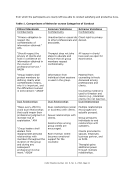
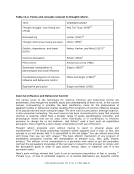
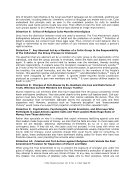
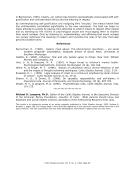
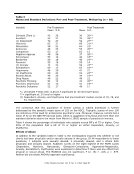
Table 13.2. Terms and concepts relevant to thought reform.
Term Originator(s)/Date
Thought struggle (ssu-hsiang tou-
cheng)
Mao Tse Tung (1929)90
Brainwashing Hunter (1951)48
Thought reform(ssu-hsiang kai-tsao) Lifton (1956)2
Debility, dependency, and dread
(DDD)
Farber, Harlow, and West (1957)27
Coercive persuasion Schein (1961)3
Mind control Anonymous (circa 1980)
Systematic manipulation of
psychological and social influence
Singer (1982)91
Coordinated programs of coercive
influence and behavioral control
Ofshe and Singer (1986)58
Exploitative persuasion Singer and Addis (1992)
Coercive Influence and Behavioral Control
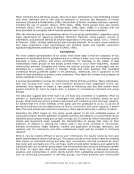
The names given to the techniques for coercive influence and behavioral control are
problematic, even though the scientific study and understanding of them is not. In the current
context, brainwashing is probably the least satisfactory name for the phenomenon of
apparent mental or behavioral change resulting from programs of coercive influence because
of its popularized and loose colloquial usage. The term coercive persuasion, although superior,
is also somewhat misleading. The word coercive has been misconstrued to imply that physical
coercion is required, rather than a broader range of social, psychological, economic, and
physiological means that can be used, either individually, or in combination, to influence
someone to change his or her behavior. Had Schein3 used a term such as exploitative
persuasion, there might be a more clearly understood current use of the term.
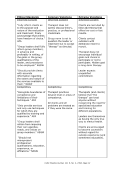
Thought reform programs work without having to resort to physical abuse and
imprisonment.2,3 The social psychology literature clearly supports such a view. In fact, this
concept is so well-known that it is exemplified in the old adage “You can attract more flies
with honey than you can with vinegar.” The basic effector mechanism of any program of
exploitative persuasion involves the manipulation of emotion (e.g., fear, guilt, shame,
anxiety). The effector of the manipulation is a persuader who seeks to get the persuadee
(without the persuadee‟s knowledge of the real goal or consent to the process) to comply with
the persuader‟s goals in order to gain power, money, labor, or whatever else it is the
persuader seeks.
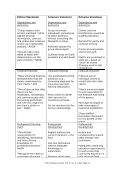
West‟s early writings showed that “pain is not an exclusive precondition of fear or anxiety.”7
Threats (e.g., of loss of emotional support, or of eternal damnation) are powerful control
Table 13.2. Terms and concepts relevant to thought reform.
Term Originator(s)/Date
Thought struggle (ssu-hsiang tou-
cheng)
Mao Tse Tung (1929)90
Brainwashing Hunter (1951)48
Thought reform(ssu-hsiang kai-tsao) Lifton (1956)2
Debility, dependency, and dread
(DDD)
Farber, Harlow, and West (1957)27
Coercive persuasion Schein (1961)3
Mind control Anonymous (circa 1980)
Systematic manipulation of
psychological and social influence
Singer (1982)91
Coordinated programs of coercive
influence and behavioral control
Ofshe and Singer (1986)58
Exploitative persuasion Singer and Addis (1992)
Coercive Influence and Behavioral Control
The names given to the techniques for coercive influence and behavioral control are
problematic, even though the scientific study and understanding of them is not. In the current
context, brainwashing is probably the least satisfactory name for the phenomenon of
apparent mental or behavioral change resulting from programs of coercive influence because
of its popularized and loose colloquial usage. The term coercive persuasion, although superior,
is also somewhat misleading. The word coercive has been misconstrued to imply that physical
coercion is required, rather than a broader range of social, psychological, economic, and
physiological means that can be used, either individually, or in combination, to influence
someone to change his or her behavior. Had Schein3 used a term such as exploitative
persuasion, there might be a more clearly understood current use of the term.
Thought reform programs work without having to resort to physical abuse and
imprisonment.2,3 The social psychology literature clearly supports such a view. In fact, this
concept is so well-known that it is exemplified in the old adage “You can attract more flies
with honey than you can with vinegar.” The basic effector mechanism of any program of
exploitative persuasion involves the manipulation of emotion (e.g., fear, guilt, shame,
anxiety). The effector of the manipulation is a persuader who seeks to get the persuadee
(without the persuadee‟s knowledge of the real goal or consent to the process) to comply with
the persuader‟s goals in order to gain power, money, labor, or whatever else it is the
persuader seeks.
West‟s early writings showed that “pain is not an exclusive precondition of fear or anxiety.”7
Threats (e.g., of loss of emotional support, or of eternal damnation) are powerful control