Cultic Studies Journal, Vol. 6, No. 2, 1989, Page 83
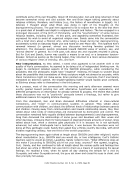
A very significant portion of the deprogramming's content consisted of suppressed
information about ISKCON, new information about totalism and theories of coercive
persuasion. By virtue of their goal-directed questions and interpretations, the
deprogrammers, like therapists, presented Ken with a cognitive framework. His cult
conversion had been covertly coerced.
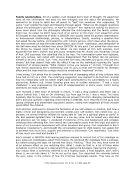
Operant conditioning. Like all change-oriented interactions, some of Ken's behaviors were
approved while others were disapproved. In this study, the amount of direct reinforcement
(as measured by the incidences of the codes “Agree” and “Disagree) was relatively minimal
however, the incidence of less direct reinforcement was substantially higher.
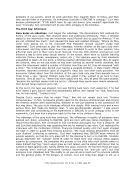
Modeling and identification. Social learning (the modeling of appropriate coping
strategies) is an important facet of the therapeutic relationship. Psychoanalytically-oriented
therapists use the term “identification” to describe the tendency of clients to begin to act,
feel, and think in ways that resemble their analysts. For Ken, self-disclosure was one
behavior that was repeatedly modeled. As the deprogramming progressed Ken began to
identify with his deprogrammers. Half-way through the deprogramming, he announced that
he would be interested in becoming a deprogrammer himself. (He eventually did, for about
a year.)
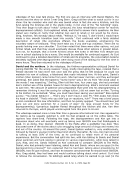
Suggestion and persuasion. Traditionally, counseling relationships tend to be less
directive than therapy relationships Ken's deprogramming involved a great deal of
persuasion and suggestion. Although there were few overt directives (as measured by an
“Orienting” code), suggestions tended to be ever-present in the background when they
were over they were often well-timed and highly incisive (as when Curt suggested that Ken
forgo chanting), if sparse.
Rehearsal and repetition. In therapy, rehearsing and repeating new behaviors aimed at
improved coping increase the likelihood that they will replace maladaptive behaviors and
helps the client to be more confident In Ken's deprogramming, the deprogrammers often
repeated key themes (e.g., ISKCON corruption, comparisons between ISKCON and other
totalistic movements) and the deprogrammee was continually encouraged to think (e.g., to
view his ISKCON experiences from the deprogrammers' perspective), interpret, explain,
view alternatives, and reminisce (eg., about his pre-cult past).
Chapter V
References
Appel, W. (1983). Cults in America: Programmed for paradise. New York: Holt, Rinehart &
Winston.
Bakken, T. (1985). Religious conversion and social evolution clarified. Similarities between
traditional and alternative groups. Small Group Behavior, 16, 157-166.
Balch, R. (1980). Looking behind the scenes in a religious cult: Implications for the study of
conversion. Sociological Analysis, 41, 137-143.
Bandler, R., &Grinder, J. (1975). Patterns of the hypnotic techniques of Milton Erickson,
M.D. (Volume 1). Cupertino, CA: Meta Publications.
Barker, E. (1984). The Making of a Moonie: Brainwashing or choice? New York -Basil Black-
well.
Beckford, J. (1985). Cult controversies: The societal response to the new religious
movements. London: Tavistock.
Beme, E. (1961). Transactional analysis in psychotherapy. New York: Grove.
Blackham, G. (1977). Counseling: Theory, process and practice. Belmont, CA: Wadsworth.
A very significant portion of the deprogramming's content consisted of suppressed
information about ISKCON, new information about totalism and theories of coercive
persuasion. By virtue of their goal-directed questions and interpretations, the
deprogrammers, like therapists, presented Ken with a cognitive framework. His cult
conversion had been covertly coerced.
Operant conditioning. Like all change-oriented interactions, some of Ken's behaviors were
approved while others were disapproved. In this study, the amount of direct reinforcement
(as measured by the incidences of the codes “Agree” and “Disagree) was relatively minimal
however, the incidence of less direct reinforcement was substantially higher.
Modeling and identification. Social learning (the modeling of appropriate coping
strategies) is an important facet of the therapeutic relationship. Psychoanalytically-oriented
therapists use the term “identification” to describe the tendency of clients to begin to act,
feel, and think in ways that resemble their analysts. For Ken, self-disclosure was one
behavior that was repeatedly modeled. As the deprogramming progressed Ken began to
identify with his deprogrammers. Half-way through the deprogramming, he announced that
he would be interested in becoming a deprogrammer himself. (He eventually did, for about
a year.)
Suggestion and persuasion. Traditionally, counseling relationships tend to be less
directive than therapy relationships Ken's deprogramming involved a great deal of
persuasion and suggestion. Although there were few overt directives (as measured by an
“Orienting” code), suggestions tended to be ever-present in the background when they
were over they were often well-timed and highly incisive (as when Curt suggested that Ken
forgo chanting), if sparse.
Rehearsal and repetition. In therapy, rehearsing and repeating new behaviors aimed at
improved coping increase the likelihood that they will replace maladaptive behaviors and
helps the client to be more confident In Ken's deprogramming, the deprogrammers often
repeated key themes (e.g., ISKCON corruption, comparisons between ISKCON and other
totalistic movements) and the deprogrammee was continually encouraged to think (e.g., to
view his ISKCON experiences from the deprogrammers' perspective), interpret, explain,
view alternatives, and reminisce (eg., about his pre-cult past).
Chapter V
References
Appel, W. (1983). Cults in America: Programmed for paradise. New York: Holt, Rinehart &
Winston.
Bakken, T. (1985). Religious conversion and social evolution clarified. Similarities between
traditional and alternative groups. Small Group Behavior, 16, 157-166.
Balch, R. (1980). Looking behind the scenes in a religious cult: Implications for the study of
conversion. Sociological Analysis, 41, 137-143.
Bandler, R., &Grinder, J. (1975). Patterns of the hypnotic techniques of Milton Erickson,
M.D. (Volume 1). Cupertino, CA: Meta Publications.
Barker, E. (1984). The Making of a Moonie: Brainwashing or choice? New York -Basil Black-
well.
Beckford, J. (1985). Cult controversies: The societal response to the new religious
movements. London: Tavistock.
Beme, E. (1961). Transactional analysis in psychotherapy. New York: Grove.
Blackham, G. (1977). Counseling: Theory, process and practice. Belmont, CA: Wadsworth.