Cultic Studies Journal, Vol. 6, No. 2, 1989, Page 19
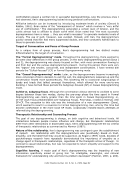
Information Processing, “Snapping,” and Deprogramming
Most deprogrammers I interviewed agreed that deprogrammings and exit counselings can
generally be classified by (1) the amount of time it takes for the cultist to deconvert and
reintegrate back into society, and (2) the presence or lack thereof of an identifiable
“snapping” phase.
“Snapping” is a term first popularized by Conway and Siegelman (1978). It purports to
denote a phase in brainwashing marked by pronounced information overload, when an
individual experiences a sudden and extensive change in world-view that results in a sudden
personality change. Snapping has also come to denote the time period of moment during a
deprogramming when, as Steven Hassan (1988) describes it, the cultist has “the
indescribable experience of [the] mind opening up, as if a light switch had been thrown”
(p.29). Often, the snap is actually preceded by “minisnaps” – periods throughout the
middle phase of a deprogramming when the cultist, if even for a few brief moments, is able
to entertain criticisms, doubts, or positive associations with personal history. For former
Moonist Hassan, the first of these minisnaps occurred on the second day of his own
deprogramming, as his father was driving him to see his mother:
My father turned around from the driver‟s seat and started to cry…
This is crazy,” he pleaded. “Tell me, what would you do, if your son, your
only son, went away for a weekend workshop and all of [a] sudden
disappeared, dropped out of college, quit work, and got involved with such a
controversial organization?” That was the first time since I had joined ]the
Unification Church] that – for even a moment – I allowed myself to think from
his perspective. (Hassan, 1988, pp. 27-28)
Occasionally, there is no single, identifiable snapping episode, but the cultist instead makes
a gradual and lengthy transition from cult mindset to renunciation over a period of weeks or
even months. This form of deconversion has been observed more frequently with
prolonged, less pressured exit counseling as opposed to time-intensive deprogrammings.
In Hassan‟s experiences as a deprogrammer and exit counselor, the process of deconversion
is centered around providing the cultist with missing information. The primary problem is
getting the cultist to attend to and seriously consider that information. The nine keys to
getting the cultist to reevaluate the cult, he claims, involve: (1) building rapport and trust,
(2) using goal-oriented communications marked by “an agenda to influence others,” (3)
developing models of identity (understanding the cultists‟ pre-cult and cultic personalities,
as well as the “typical” cultist‟s personality), (4) getting the person in touch with his pre-cult
identity, (5) getting the cult member to look at reality from many different perspectives
(e.g., consider alternative hypotheses), (6) side-step the thought-stopping process by
giving information in an indirect way (e.g., Ericksonian indirect suggestion), (7) visualize [to
the cultist] a happy future outside the cult to undo phobia indoctrination, and (9) offer the
cult member concrete definitions of mind control and characteristics of a destructive cult
(Hassan, 1988, pp. 148-170).
Deprogramming
The process of deprogramming, as Clark et. al. (1981), p. 63) describe it, involves a
“sometimes forced reawakening of the convert‟s old personality and an evaluation of his cult
experience.” The activity itself seems to vary somewhat, but usually involves three steps:
First, the cult member is physically separated (voluntarily or involuntarily) from the cult
milieu, and then is engaged in an intense discussion that may last from one to several days.
Finally, the member undergoes “rehabilitation.” Rehabilitation can involve spending several
weeks at a “rehab” center located away from the site of the deprogramming, and/or
ongoing mental health counseling. When conducted at a formal rehab center, this final step
Information Processing, “Snapping,” and Deprogramming
Most deprogrammers I interviewed agreed that deprogrammings and exit counselings can
generally be classified by (1) the amount of time it takes for the cultist to deconvert and
reintegrate back into society, and (2) the presence or lack thereof of an identifiable
“snapping” phase.
“Snapping” is a term first popularized by Conway and Siegelman (1978). It purports to
denote a phase in brainwashing marked by pronounced information overload, when an
individual experiences a sudden and extensive change in world-view that results in a sudden
personality change. Snapping has also come to denote the time period of moment during a
deprogramming when, as Steven Hassan (1988) describes it, the cultist has “the
indescribable experience of [the] mind opening up, as if a light switch had been thrown”
(p.29). Often, the snap is actually preceded by “minisnaps” – periods throughout the
middle phase of a deprogramming when the cultist, if even for a few brief moments, is able
to entertain criticisms, doubts, or positive associations with personal history. For former
Moonist Hassan, the first of these minisnaps occurred on the second day of his own
deprogramming, as his father was driving him to see his mother:
My father turned around from the driver‟s seat and started to cry…
This is crazy,” he pleaded. “Tell me, what would you do, if your son, your
only son, went away for a weekend workshop and all of [a] sudden
disappeared, dropped out of college, quit work, and got involved with such a
controversial organization?” That was the first time since I had joined ]the
Unification Church] that – for even a moment – I allowed myself to think from
his perspective. (Hassan, 1988, pp. 27-28)
Occasionally, there is no single, identifiable snapping episode, but the cultist instead makes
a gradual and lengthy transition from cult mindset to renunciation over a period of weeks or
even months. This form of deconversion has been observed more frequently with
prolonged, less pressured exit counseling as opposed to time-intensive deprogrammings.
In Hassan‟s experiences as a deprogrammer and exit counselor, the process of deconversion
is centered around providing the cultist with missing information. The primary problem is
getting the cultist to attend to and seriously consider that information. The nine keys to
getting the cultist to reevaluate the cult, he claims, involve: (1) building rapport and trust,
(2) using goal-oriented communications marked by “an agenda to influence others,” (3)
developing models of identity (understanding the cultists‟ pre-cult and cultic personalities,
as well as the “typical” cultist‟s personality), (4) getting the person in touch with his pre-cult
identity, (5) getting the cult member to look at reality from many different perspectives
(e.g., consider alternative hypotheses), (6) side-step the thought-stopping process by
giving information in an indirect way (e.g., Ericksonian indirect suggestion), (7) visualize [to
the cultist] a happy future outside the cult to undo phobia indoctrination, and (9) offer the
cult member concrete definitions of mind control and characteristics of a destructive cult
(Hassan, 1988, pp. 148-170).
Deprogramming
The process of deprogramming, as Clark et. al. (1981), p. 63) describe it, involves a
“sometimes forced reawakening of the convert‟s old personality and an evaluation of his cult
experience.” The activity itself seems to vary somewhat, but usually involves three steps:
First, the cult member is physically separated (voluntarily or involuntarily) from the cult
milieu, and then is engaged in an intense discussion that may last from one to several days.
Finally, the member undergoes “rehabilitation.” Rehabilitation can involve spending several
weeks at a “rehab” center located away from the site of the deprogramming, and/or
ongoing mental health counseling. When conducted at a formal rehab center, this final step