Cultic Studies Journal, Vol. 6, No. 2, 1989, Page 12
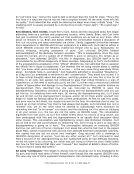
opinions, but the Hare Krishna chant is often reported to be the most effective method of
thought-stopping (Conway &Siegelman, 1978). Devotees are taught that all doubts are
caused by demons, and must be actively combated. They are then told that the hypnotic
chanting of the Hare Krishna mantra is the only defense against falling into maya.
Meanwhile, in both the U.C. and ISKCON, the complex causes of world problems and the
multilevel nature of the individual‟s personal difficulties are simplified into child-like battles
between the forces of good (Moon and his allies in spirit world Lord Krishna and his
followers) and evil (Satan and his dupes demons and maya).
Doctrine over person. As a corollary to the establishment of a “sacred science,” totalistic
systems maintain that personal experience does not overrule the “facts” as explained by the
doctrine. As a result, individual critical faculties, and even perception itself, are denied. As
Lifton (1961, p. 431) explained: “the underlying assumption is that the doctrine – including
its mythological elements – is ultimately more valid, true, and real than is any aspect of
actual human character or human experience.” In my U.C. training, when a recruit began to
fall asleep during a lecture, he was told that satanic “sleepy spirits” were pushing his eyelids
shut, and that these spirits must be combated. The leader refused to accept the recruit‟s
suggestion that his drowsiness might be related to lack of sleep over the past several
nights.
In ISKCON, devotees who had witnessed the excesses of a leading guru were repeatedly
told that they must be under spiritual attack by demons, for surely a “pure spiritual
devotee” could not engage in illicit drug use or sexual encounters (cf., Hubner &Gruso,
1988, pp. 204-264).
The dispensing of existence. According to Lifton (1961, p. 433), “the totalist
environment draws a sharp line between those whose right to existence can be recognized,
and those who possess no such right.” In practice, this has led to an “ends justify the
means” attitude among destructive cult leaders. Moonists are told that, since all wealth
belongs to God (i.e., Sun Myung Moon) and all nonmembers are satanic, illegal fundraising
techniques are merely a means of returning materials good to their rightful original owner
(Edwards, 1979 Freed, 1980). Similarly, ISKCON considers nonmembers “demons,” and
instructs devotees that it is acceptable to express rages or frustrations against
nonmembers. Violence, including murder, is sanctioned if it is done in Krishna‟s name
against a nonmember or fallen devotee (Hubner &Gruson, 1988). In ISKCON, illegal and
fraudulent fund-raising activity is called “transcendental trickery” (Ruden &Rudin, 1980, p.
53).
Lifton’s Revised Model of Induced Evil: the process of “doubling”
Twenty-five years after the publication of his initial study of thought reform, Lifton‟s
manuscript on the psychology of healers-turned-killers appeared. In the Nazi Doctors:
Medical Killing and the Psychology of Genocide, Lifton (1986) attempted to explain the
psychological mechanisms that allowed professional healers (physicians) to become
professional accomplices to mass murder as they participated in the most efficient,
professional killing apparatus known to Western civilization: the Nazi death camps. In the
Forward to his book, Lifton (1986, pp. xi-xiii) did not associate this new study with his
earlier work on the process of thought reform. Yet he subsequently incorporated many of
these earlier concepts into this more general theoretical framework for understanding the
psychology of induced evil facilitated by a totalistic system.
The background of the typical German physician in the 1920s bore some resemblance to
that of the “typical” cultist: intelligent, well-educated, idealistic, hoping to find a place in
history as a soldier in the ongoing was against ultimate and universal evils: disease, decay,
and death. It is difficult to dispute the inverted morality behind the work of Dr. Josef
Mengele. Whether the behavior of cultists and cult leaders implies a similarly inverted
opinions, but the Hare Krishna chant is often reported to be the most effective method of
thought-stopping (Conway &Siegelman, 1978). Devotees are taught that all doubts are
caused by demons, and must be actively combated. They are then told that the hypnotic
chanting of the Hare Krishna mantra is the only defense against falling into maya.
Meanwhile, in both the U.C. and ISKCON, the complex causes of world problems and the
multilevel nature of the individual‟s personal difficulties are simplified into child-like battles
between the forces of good (Moon and his allies in spirit world Lord Krishna and his
followers) and evil (Satan and his dupes demons and maya).
Doctrine over person. As a corollary to the establishment of a “sacred science,” totalistic
systems maintain that personal experience does not overrule the “facts” as explained by the
doctrine. As a result, individual critical faculties, and even perception itself, are denied. As
Lifton (1961, p. 431) explained: “the underlying assumption is that the doctrine – including
its mythological elements – is ultimately more valid, true, and real than is any aspect of
actual human character or human experience.” In my U.C. training, when a recruit began to
fall asleep during a lecture, he was told that satanic “sleepy spirits” were pushing his eyelids
shut, and that these spirits must be combated. The leader refused to accept the recruit‟s
suggestion that his drowsiness might be related to lack of sleep over the past several
nights.
In ISKCON, devotees who had witnessed the excesses of a leading guru were repeatedly
told that they must be under spiritual attack by demons, for surely a “pure spiritual
devotee” could not engage in illicit drug use or sexual encounters (cf., Hubner &Gruso,
1988, pp. 204-264).
The dispensing of existence. According to Lifton (1961, p. 433), “the totalist
environment draws a sharp line between those whose right to existence can be recognized,
and those who possess no such right.” In practice, this has led to an “ends justify the
means” attitude among destructive cult leaders. Moonists are told that, since all wealth
belongs to God (i.e., Sun Myung Moon) and all nonmembers are satanic, illegal fundraising
techniques are merely a means of returning materials good to their rightful original owner
(Edwards, 1979 Freed, 1980). Similarly, ISKCON considers nonmembers “demons,” and
instructs devotees that it is acceptable to express rages or frustrations against
nonmembers. Violence, including murder, is sanctioned if it is done in Krishna‟s name
against a nonmember or fallen devotee (Hubner &Gruson, 1988). In ISKCON, illegal and
fraudulent fund-raising activity is called “transcendental trickery” (Ruden &Rudin, 1980, p.
53).
Lifton’s Revised Model of Induced Evil: the process of “doubling”
Twenty-five years after the publication of his initial study of thought reform, Lifton‟s
manuscript on the psychology of healers-turned-killers appeared. In the Nazi Doctors:
Medical Killing and the Psychology of Genocide, Lifton (1986) attempted to explain the
psychological mechanisms that allowed professional healers (physicians) to become
professional accomplices to mass murder as they participated in the most efficient,
professional killing apparatus known to Western civilization: the Nazi death camps. In the
Forward to his book, Lifton (1986, pp. xi-xiii) did not associate this new study with his
earlier work on the process of thought reform. Yet he subsequently incorporated many of
these earlier concepts into this more general theoretical framework for understanding the
psychology of induced evil facilitated by a totalistic system.
The background of the typical German physician in the 1920s bore some resemblance to
that of the “typical” cultist: intelligent, well-educated, idealistic, hoping to find a place in
history as a soldier in the ongoing was against ultimate and universal evils: disease, decay,
and death. It is difficult to dispute the inverted morality behind the work of Dr. Josef
Mengele. Whether the behavior of cultists and cult leaders implies a similarly inverted