Cultic Studies Journal, Vol. 6, No. 2, 1989, Page 20
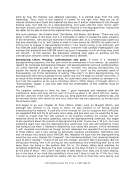
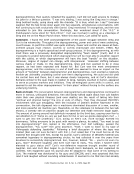
often occurs in the company of other recently deprogrammed cult members, and is roughly
analogous to being placed in a psychiatric half-way house or day-treatment center for
substance abusers. It is at the rehab center that the former cult member begins to reorient
for his or her return to “normal” life (Kim, 1979). To avoid confusion, I will use the term
“deprogramming” re refer only to the second step of the above process (the intense
discussion). In keeping with my intent to describe deprogramming from the point of view of
its participants, I will (where appropriate) employ the terminology most frequently
employed by deprogrammers and their clients. Therefore, I will use the terms “snatch” or
“rescue” to denote the initial involuntary separation of the cultist from his or her cultic
milieu. (The issue of whether deprogrammers are in reality kidnapping their clients during a
“snatch” is considered in a later section of this chapter.) Finally, I will refer to the third and
last stage as the “rehab.”
Most researchers consider Ted Patrick (cf. Patrick, 1976) to have been the first
“deprogrammer,” and the first to conceptualize the process of joining and exiting a
destructive cult. Patrick believed that individuals were converted through “on-the-spot
hypnosis,” and that deprogramming worked by facilitating a process in which the cultist
comes out of an extended trance-state. The methods Patrick employed have been generally
regarded as highly confrontational. In describing his style, Patrick seemed to rely heavily on
cognitive restructuring, especially the use of questioning (Conway and Siegelman, 1978):
When you deprogram people, you force them to think … the only thing I do is
shoot them challenging questions … I shoot them the right questions, and
they get frustrated when they can‟t answer (pp. 65-66) … I start challenging
every statement the person makes … pushing it with questions … and when I
hit on that one certain point that strikes home, I push it … I stay with that
question … I keep pushing and pushing … (p.68)
Streiker (1984), in summarizing Patrick‟s approach, stated that “the key element in the
reversal of brainwashing is the skillful use of interrogation, asking the cult victim questions
which he or she cannot answer on the basis of the cult-formatted programming” (p.155).
By “repetitious questioning and quotations from literature to arouse doubts about the cult in
the individual” (Schwartz and Kaslow, 1982), deprogrammers force a “re-opening [of] the
subject‟s mind” to new information input (p. 20). The presentation of new information
serves to “debunk what the cult stand for, using logic and reason to counter the irrational
beliefs which have been instilled” by the cult (p.24).
Sylvia Buford, an associate of Patrick who has assisted him on many deprogrammings,
described the five stages of deprogramming:
1. Discredit the figure of authority: the cult leader
2. Present contradictions (ideology vs. reality): “How can he preach love when
he exploits people?” is an example.
3. The breaking point: When a subject begins to listen to the deprogrammer
when reality begins to take precedence over ideology.
4. Self-expression: When the subject begins to open up and to voice some of
his own gripes against the cult.
5. Identification and transference: when the subject begins to identify with the
deprogrammers, starts to think of himself as an opponent of the cult rather
than a member of it. (Stoner and Parke, 1977, p.231).
often occurs in the company of other recently deprogrammed cult members, and is roughly
analogous to being placed in a psychiatric half-way house or day-treatment center for
substance abusers. It is at the rehab center that the former cult member begins to reorient
for his or her return to “normal” life (Kim, 1979). To avoid confusion, I will use the term
“deprogramming” re refer only to the second step of the above process (the intense
discussion). In keeping with my intent to describe deprogramming from the point of view of
its participants, I will (where appropriate) employ the terminology most frequently
employed by deprogrammers and their clients. Therefore, I will use the terms “snatch” or
“rescue” to denote the initial involuntary separation of the cultist from his or her cultic
milieu. (The issue of whether deprogrammers are in reality kidnapping their clients during a
“snatch” is considered in a later section of this chapter.) Finally, I will refer to the third and
last stage as the “rehab.”
Most researchers consider Ted Patrick (cf. Patrick, 1976) to have been the first
“deprogrammer,” and the first to conceptualize the process of joining and exiting a
destructive cult. Patrick believed that individuals were converted through “on-the-spot
hypnosis,” and that deprogramming worked by facilitating a process in which the cultist
comes out of an extended trance-state. The methods Patrick employed have been generally
regarded as highly confrontational. In describing his style, Patrick seemed to rely heavily on
cognitive restructuring, especially the use of questioning (Conway and Siegelman, 1978):
When you deprogram people, you force them to think … the only thing I do is
shoot them challenging questions … I shoot them the right questions, and
they get frustrated when they can‟t answer (pp. 65-66) … I start challenging
every statement the person makes … pushing it with questions … and when I
hit on that one certain point that strikes home, I push it … I stay with that
question … I keep pushing and pushing … (p.68)
Streiker (1984), in summarizing Patrick‟s approach, stated that “the key element in the
reversal of brainwashing is the skillful use of interrogation, asking the cult victim questions
which he or she cannot answer on the basis of the cult-formatted programming” (p.155).
By “repetitious questioning and quotations from literature to arouse doubts about the cult in
the individual” (Schwartz and Kaslow, 1982), deprogrammers force a “re-opening [of] the
subject‟s mind” to new information input (p. 20). The presentation of new information
serves to “debunk what the cult stand for, using logic and reason to counter the irrational
beliefs which have been instilled” by the cult (p.24).
Sylvia Buford, an associate of Patrick who has assisted him on many deprogrammings,
described the five stages of deprogramming:
1. Discredit the figure of authority: the cult leader
2. Present contradictions (ideology vs. reality): “How can he preach love when
he exploits people?” is an example.
3. The breaking point: When a subject begins to listen to the deprogrammer
when reality begins to take precedence over ideology.
4. Self-expression: When the subject begins to open up and to voice some of
his own gripes against the cult.
5. Identification and transference: when the subject begins to identify with the
deprogrammers, starts to think of himself as an opponent of the cult rather
than a member of it. (Stoner and Parke, 1977, p.231).