ISSN: 2710-4028 DOI: doi.org/10.54208/1000/0006 71
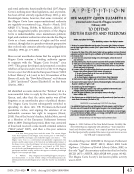
prostitute” (cudgel, 2014). Another similar example
is that Belanger wrote Queen Elizabeth II, seeking
appointment as her “Judicial Examiner Delegate
International (JEDI),” who would validate oaths of
office to the Crown (Belanger, 2002).
Beyond these issues, there are many instances where
CERI’s affiliates are remarkably selective about being
damned to hell for engaging in “necrophilia” with
“dead prostitutes.” In Potvin (Re) (2018 ABQB 652,
paras. 130-131), Justice Thomas noted the CERI
affiliate “minister” on one hand refused any interaction
with state actors or legislation on religious grounds,
but had also registered copyright in his own name with
the federal government Canadian Intellectual Property
Office. After that, Potvin in his Federal Courts litigation
proclaimed he was a devout CERI adherent, but, in
other documents, claimed title over his Strawman, the
“ALFRED GERARD POTVIN Living Estate Trust,”
despite that being prohibited “necrophilia” according
to CERI orthodoxy and Potvin himself (Potvin (Re),
2019 ABQB 785 Potvin (Re), 2019 ABQB 802).
The very same is true for Belanger, personally. Though
Belanger categorically rejects any affiliation with
government “dead prostitutes,” Belanger, nevertheless,
in videos directed to then provincial Minister of
Human Services Heather Klimchuk, and an Alberta
government lawyer, demanded disability payments
under the Alberta government’s Assured Income for
the Severely Handicapped program (Paraclete, 2015b).
In circumstances such as this, Matthew 7:5 seems
appropriate: “Thou hypocrite, first cast out the beam
out of thine own eye and then shalt thou see clearly to
cast out the mote out of thy brother’s eye.” (Holy Bible
King James Version, 1611).
As previously explained, James 2:9 is the keystone to
CERI King James Bible theory: “but if ye have respect
to persons, ye commit sin, and are convinced of the
law as transgressors.” “Persons” here allegedly means
corporations, governments, courts, the Strawman, and
other non-flesh and blood things. There are at least two
issues with CERI’s interpretation of this passage.
The first might be called an “originalism” (Solum,
2013) question, where the meaning of text is fixed by
what words meant to their historical authors. Belanger
teaches that when the authors of the King James Bible
chose the word “person,” they consciously chose
that word to indicate “artificial persons,” including
government. The problem is, when the King James
Bible was published in 1611, the concept of “artificial
persons” had not yet entered into English law to
represent government.
In 1611, government was centered on the monarch.
Only after the defeat of Charles I during the English
Civil War (1642-1651) did Parliament (a not-
human) become the chief law-making authority for
England, and, subsequently, the UK (Ashley, 1992).
The monarchy was abolished after the execution of
Charles I in 1649. England was a republic until the
1660 “restoration.” After that point England operated
as a constitutional monarchy, where lawmaking rested
solely with a not-human: Parliament.
Whatever the authors of the King James Bible meant
by “person,” that meaning was not what in modern law
is called a “government.” If nothing else, failure to “be
a respecter” of King James I and accept his authority
would plausibly have drastic, if not fatal, results.
A second fundamental issue with the CERI
interpretation of James 2:9 is when read in the context
of James 2 as a whole, “respect to persons” does not
relate to physical humans vs immaterial “persons,”
but, instead, flesh-and-blood humans with different
personal aspects. James 2:2-3 contrasts a wealthy man
“with a gold ring, in goodly apparel,” versus a “poor
man in vile raiment,” and describes seating the former
“in a good place,” while the poor man is relegated to
sitting under a footstool. James 2:4-8 decries this
distinction and different treatment of the rich and
poor, as the latter are “heirs to the kingdom.” To judge
a human in this manner is “partial” and makes one
a “[judge] of evil thoughts.” Thus, James 2, read as a
whole, has nothing to do with immaterial identities,
masks, or alternative legal roles, but guides the reader
to not judge an individual by their person: their
appearance and social status. James 2:14-25 further
emphasizes both a human’s faith and deeds are what
merit salvation. Again, this passage is about conduct of
humans, not some immaterial and not flesh-and-blood
legal entity.
The human-centered focus of James 2 is made clear
in more modern Bible versions, such as The New
prostitute” (cudgel, 2014). Another similar example
is that Belanger wrote Queen Elizabeth II, seeking
appointment as her “Judicial Examiner Delegate
International (JEDI),” who would validate oaths of
office to the Crown (Belanger, 2002).
Beyond these issues, there are many instances where
CERI’s affiliates are remarkably selective about being
damned to hell for engaging in “necrophilia” with
“dead prostitutes.” In Potvin (Re) (2018 ABQB 652,
paras. 130-131), Justice Thomas noted the CERI
affiliate “minister” on one hand refused any interaction
with state actors or legislation on religious grounds,
but had also registered copyright in his own name with
the federal government Canadian Intellectual Property
Office. After that, Potvin in his Federal Courts litigation
proclaimed he was a devout CERI adherent, but, in
other documents, claimed title over his Strawman, the
“ALFRED GERARD POTVIN Living Estate Trust,”
despite that being prohibited “necrophilia” according
to CERI orthodoxy and Potvin himself (Potvin (Re),
2019 ABQB 785 Potvin (Re), 2019 ABQB 802).
The very same is true for Belanger, personally. Though
Belanger categorically rejects any affiliation with
government “dead prostitutes,” Belanger, nevertheless,
in videos directed to then provincial Minister of
Human Services Heather Klimchuk, and an Alberta
government lawyer, demanded disability payments
under the Alberta government’s Assured Income for
the Severely Handicapped program (Paraclete, 2015b).
In circumstances such as this, Matthew 7:5 seems
appropriate: “Thou hypocrite, first cast out the beam
out of thine own eye and then shalt thou see clearly to
cast out the mote out of thy brother’s eye.” (Holy Bible
King James Version, 1611).
As previously explained, James 2:9 is the keystone to
CERI King James Bible theory: “but if ye have respect
to persons, ye commit sin, and are convinced of the
law as transgressors.” “Persons” here allegedly means
corporations, governments, courts, the Strawman, and
other non-flesh and blood things. There are at least two
issues with CERI’s interpretation of this passage.
The first might be called an “originalism” (Solum,
2013) question, where the meaning of text is fixed by
what words meant to their historical authors. Belanger
teaches that when the authors of the King James Bible
chose the word “person,” they consciously chose
that word to indicate “artificial persons,” including
government. The problem is, when the King James
Bible was published in 1611, the concept of “artificial
persons” had not yet entered into English law to
represent government.
In 1611, government was centered on the monarch.
Only after the defeat of Charles I during the English
Civil War (1642-1651) did Parliament (a not-
human) become the chief law-making authority for
England, and, subsequently, the UK (Ashley, 1992).
The monarchy was abolished after the execution of
Charles I in 1649. England was a republic until the
1660 “restoration.” After that point England operated
as a constitutional monarchy, where lawmaking rested
solely with a not-human: Parliament.
Whatever the authors of the King James Bible meant
by “person,” that meaning was not what in modern law
is called a “government.” If nothing else, failure to “be
a respecter” of King James I and accept his authority
would plausibly have drastic, if not fatal, results.
A second fundamental issue with the CERI
interpretation of James 2:9 is when read in the context
of James 2 as a whole, “respect to persons” does not
relate to physical humans vs immaterial “persons,”
but, instead, flesh-and-blood humans with different
personal aspects. James 2:2-3 contrasts a wealthy man
“with a gold ring, in goodly apparel,” versus a “poor
man in vile raiment,” and describes seating the former
“in a good place,” while the poor man is relegated to
sitting under a footstool. James 2:4-8 decries this
distinction and different treatment of the rich and
poor, as the latter are “heirs to the kingdom.” To judge
a human in this manner is “partial” and makes one
a “[judge] of evil thoughts.” Thus, James 2, read as a
whole, has nothing to do with immaterial identities,
masks, or alternative legal roles, but guides the reader
to not judge an individual by their person: their
appearance and social status. James 2:14-25 further
emphasizes both a human’s faith and deeds are what
merit salvation. Again, this passage is about conduct of
humans, not some immaterial and not flesh-and-blood
legal entity.
The human-centered focus of James 2 is made clear
in more modern Bible versions, such as The New