ISSN: 2710-4028 DOI: doi.org/10.54208/1000/0006 159
The texts that comprise the LCF and PCF corpora were
all filed in chancery court in the Circuit Court of Cook
County, Illinois in the United States. With very limited
exceptions not applicable here, all texts filed in court
in the United States at both the state and federal level
are part of the public record (see 705 ILCS 105/16(6)
for the applicable Illinois statute), meaning that there
was no legal or ethical issue to the collection of these
documents. Nevertheless, all personally identifying
information contained in the following examples has
been anonymized. The LCF and PCF corpora were
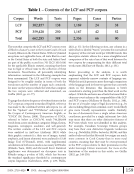
designed to be roughly similar in terms of both the
wordcount and the number of pages each contained
for more on the ways in which the texts that comprise
the two corpora were collected and annotated, see
Griffin (2022, pp. 61–77).
To gauge the relative frequency of written features in the
LCF corpus as compared to standard English, reference
was made to the combined written subcorpora (i.e. all
but the “Spoken” and “TV/Movies” subcorpora) of
the Corpus of Contemporary American English, or
“COCA” (M. Davies, 2008). This portion of COCA,
referred to below as COCA-W, totals 746,200,688
words from across six distinct categories (blogs, fiction,
magazine, newspaper, academic, and web-general).
The written contents of the LCF and PCF corpora
were analyzed in AntConc (Anthony, 2019) while
their graphic contents (i.e. their use of images, textual
emphasis, and layout elements) were analyzed in UAM
Image Tool (O’Donnell, 2011), with supplemental
calculations in both areas made as necessary in RStudio
(RStudio Team, 2020) and Microsoft Excel. Statistical
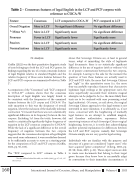
significance was determined via chi-square tests in
RStudio using a p-value of 0.01, which has become
the standard significance threshold in contemporary
corpus linguistics (Gabrielatos, 2018, p. 239 Wallis,
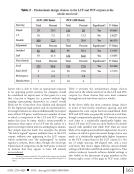
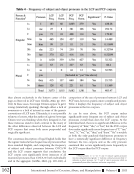
2021, p. 35). In the following section, any column in a
table which is labeled “Norm.” presents the normalized
frequency of the relevant word per 100,000 words this
descriptive statistic allows for a more straightforward
comparison of the rate of use of that word between the
two corpora by compensating for their different total
wordcounts (McEnery &Hardie, 2012, p. 251).
Before proceeding to the analysis, it is worth
emphasizing that the LCF and PCF corpora both
represent relatively narrow contexts of language use.
While this article presents a more thorough comparison
of the language used in these two genres than currently
exists in the literature, this discussion is better
considered a starting point than the final word on the
subject. While the exclusive use of texts that were filed in
chancery court enhances the comparability of the LCF
and PCF corpora (McEnery &Hardie, 2012, p. 240),
the use of a broader range of legal documents (e.g., by
also including filings from criminal court) would likely
give more broadly representative results. Similarly,
the use of documents from a single urban American
courthouse provided by a single informant law clerk
may mean that there are other distinctive features of
PCF texts which were not identified in this analysis.
For example, Canadian Sovereign Citizens groups
may have their own distinctive linguistic tendencies
(see, e.g., Netolitzky, 2023a Sarteschi, 2023b), and this
author believes that that Moorish Sovereigns are much
more common in Cook County than in more rural
counties, meaning that they may be overrepresented
in the PCF corpus relative to their prominence in the
wider Sovereign Citizen movement. For more on the
limitations of the analysis in this article, see Griffin
(2022, pp. 248-250).
The texts that comprise the LCF and PCF corpora were
all filed in chancery court in the Circuit Court of Cook
County, Illinois in the United States. With very limited
exceptions not applicable here, all texts filed in court
in the United States at both the state and federal level
are part of the public record (see 705 ILCS 105/16(6)
for the applicable Illinois statute), meaning that there
was no legal or ethical issue to the collection of these
documents. Nevertheless, all personally identifying
information contained in the following examples has
been anonymized. The LCF and PCF corpora were
designed to be roughly similar in terms of both the
wordcount and the number of pages each contained
for more on the ways in which the texts that comprise
the two corpora were collected and annotated, see
Griffin (2022, pp. 61–77).
To gauge the relative frequency of written features in the
LCF corpus as compared to standard English, reference
was made to the combined written subcorpora (i.e. all
but the “Spoken” and “TV/Movies” subcorpora) of
the Corpus of Contemporary American English, or
“COCA” (M. Davies, 2008). This portion of COCA,
referred to below as COCA-W, totals 746,200,688
words from across six distinct categories (blogs, fiction,
magazine, newspaper, academic, and web-general).
The written contents of the LCF and PCF corpora
were analyzed in AntConc (Anthony, 2019) while
their graphic contents (i.e. their use of images, textual
emphasis, and layout elements) were analyzed in UAM
Image Tool (O’Donnell, 2011), with supplemental
calculations in both areas made as necessary in RStudio
(RStudio Team, 2020) and Microsoft Excel. Statistical
significance was determined via chi-square tests in
RStudio using a p-value of 0.01, which has become
the standard significance threshold in contemporary
corpus linguistics (Gabrielatos, 2018, p. 239 Wallis,
2021, p. 35). In the following section, any column in a
table which is labeled “Norm.” presents the normalized
frequency of the relevant word per 100,000 words this
descriptive statistic allows for a more straightforward
comparison of the rate of use of that word between the
two corpora by compensating for their different total
wordcounts (McEnery &Hardie, 2012, p. 251).
Before proceeding to the analysis, it is worth
emphasizing that the LCF and PCF corpora both
represent relatively narrow contexts of language use.
While this article presents a more thorough comparison
of the language used in these two genres than currently
exists in the literature, this discussion is better
considered a starting point than the final word on the
subject. While the exclusive use of texts that were filed in
chancery court enhances the comparability of the LCF
and PCF corpora (McEnery &Hardie, 2012, p. 240),
the use of a broader range of legal documents (e.g., by
also including filings from criminal court) would likely
give more broadly representative results. Similarly,
the use of documents from a single urban American
courthouse provided by a single informant law clerk
may mean that there are other distinctive features of
PCF texts which were not identified in this analysis.
For example, Canadian Sovereign Citizens groups
may have their own distinctive linguistic tendencies
(see, e.g., Netolitzky, 2023a Sarteschi, 2023b), and this
author believes that that Moorish Sovereigns are much
more common in Cook County than in more rural
counties, meaning that they may be overrepresented
in the PCF corpus relative to their prominence in the
wider Sovereign Citizen movement. For more on the
limitations of the analysis in this article, see Griffin
(2022, pp. 248-250).