ISSN: 2710-4028 DOI: doi.org/10.54208/1000/0006 117
advantages. For instance, this low-key direct social
network communications methodology meant Fiscal
Arbitrators would not be as readily detected by
Canadian law enforcement and income tax authorities.
Fiscal Arbitrators could and did operate submerged
and below the radar. Perhaps the same is true for many
other money-based pseudolaw schemes.
The range of, and variety in, participants within
pseudolaw “get rich quick” schemes is poorly
understood. This type of pseudolaw movement is
apparently short-lived. Many operate for only about
one to two years, with new instances appearing on an
apparently annual basis (Netolitzky, 2019a, pp. 1175-
1182). What this study reminds investigators is that
those money-based pseudolaw schemes that operate in
a more public manner, via Internet channels, may only
be a subset of a broader collection of scams of this type.
Other gurus in addition to Fiscal Arbitrators may have
taken a stealthy approach, and, like Fiscal Arbitrators,
operate quietly and in the shadows.
E. Distillation Effect
While this study was not intended to investigate
litigation behaviour, the Decision Dataset, and the
frequency and pattern of Federal Court of Appeal
challenges to unsuccessful Decision Dataset appeals,
appears to confirm a process named the “Distillation
Effect.” The Distillation Effect was proposed in 2019
by Justice Yves-Marie Morissette of the Quebec Court
of Appeal (Morissette, 2019, pp. 285, 306 Netolitzky,
2019b, p. 251), and argues that persons who abuse
court processes and engage in hopeless litigation are
more likely to seek appeals than other litigants. The
result is that as litigation moves through successive
tiers of appeals and reviews, the frequency of valid
litigation decreases as “good faith, fair dealing” actors
drop out. Problematic litigants and abusive litigation
are, instead, more likely to continue. “Bad litigation”
becomes “distilled out” and thus concentrated. The
Distillation Effect has been confirmed to operate in
Canada in Supreme Court of Canada proceedings
(Netolitzky, 2022, pp. 137-139) and in the Federal
Court of Appeal (Netolitzky &Warman, 2021, p. 248).
The Decision Dataset provides the first example of a
“first instance” Distillation Effect in Canadian court
proceedings, i.e., that the Distillation Effect operates
during appeals and/or challenges to the “lowest tier”
of court decisions. Those would usually be called “trial
decisions,” though, technically, Tax Court of Canada
proceedings are a kind of appeal or review of CRA
reassessments and rulings.
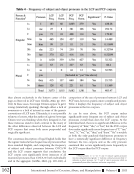
As is discussed above in Part III(C) (appeal outcomes),
some self-represented taxpayers relied on pseudolaw
and/or unorthodox litigation arguments that are
hopeless and therefore abuses of the court (Unrau v
National Dental Examining Board, 2019 ABQB 283).
Those Tax Court of Canada appellants were twice as
likely to appeal their Tax Court of Canada failures than
other self-represented appellants. This difference is
statistically significant (p=0.012). When one includes
all Decision Dataset Tax Court of Canada proceedings,
and groups represented and self-represented litigants
together, then the Distillation Effect is even more
pronounced: 55.6% (N=9) of abusive litigants
continued to conduct an appeal, versus 12.7% (N=55)
of non-abusive litigants, a statistically significant result:
x2(1, N=64)=9.312, p=0.00228.
This example of the Distillation Effect in operation
has limited broader implications. The key relevance
of the appearance of the Distillation Effect in a first
instance court scenario is that this study demonstrates
the Distillation Effect is now known to occur in at
least some first instance court processes. The Decision
Dataset self-represented and represented litigant
populations are a specialized and plausibly unusual
group, all responding to a highly specific law and fact
scenario. The identification of the Distillation Effect
in this study therefore provides little basis to conclude
the Distillation Effect is a commonplace trial court
phenomenon. Instead, the current study provides
meaningful evidence that the Distillation Effect not
only operates in higher appeal courts, but also can
appear in trial court processes. That observation
emphasizes the need for a broader-based quantitative
investigation of first instance litigation, to properly
appreciate the scope and operation of the Distillation
Effect in the Canadian legal system as a whole.
V. Conclusion
This study is the first instance where a Canadian
pseudolaw population has been investigated via
reported court judgments in a manner that provides
advantages. For instance, this low-key direct social
network communications methodology meant Fiscal
Arbitrators would not be as readily detected by
Canadian law enforcement and income tax authorities.
Fiscal Arbitrators could and did operate submerged
and below the radar. Perhaps the same is true for many
other money-based pseudolaw schemes.
The range of, and variety in, participants within
pseudolaw “get rich quick” schemes is poorly
understood. This type of pseudolaw movement is
apparently short-lived. Many operate for only about
one to two years, with new instances appearing on an
apparently annual basis (Netolitzky, 2019a, pp. 1175-
1182). What this study reminds investigators is that
those money-based pseudolaw schemes that operate in
a more public manner, via Internet channels, may only
be a subset of a broader collection of scams of this type.
Other gurus in addition to Fiscal Arbitrators may have
taken a stealthy approach, and, like Fiscal Arbitrators,
operate quietly and in the shadows.
E. Distillation Effect
While this study was not intended to investigate
litigation behaviour, the Decision Dataset, and the
frequency and pattern of Federal Court of Appeal
challenges to unsuccessful Decision Dataset appeals,
appears to confirm a process named the “Distillation
Effect.” The Distillation Effect was proposed in 2019
by Justice Yves-Marie Morissette of the Quebec Court
of Appeal (Morissette, 2019, pp. 285, 306 Netolitzky,
2019b, p. 251), and argues that persons who abuse
court processes and engage in hopeless litigation are
more likely to seek appeals than other litigants. The
result is that as litigation moves through successive
tiers of appeals and reviews, the frequency of valid
litigation decreases as “good faith, fair dealing” actors
drop out. Problematic litigants and abusive litigation
are, instead, more likely to continue. “Bad litigation”
becomes “distilled out” and thus concentrated. The
Distillation Effect has been confirmed to operate in
Canada in Supreme Court of Canada proceedings
(Netolitzky, 2022, pp. 137-139) and in the Federal
Court of Appeal (Netolitzky &Warman, 2021, p. 248).
The Decision Dataset provides the first example of a
“first instance” Distillation Effect in Canadian court
proceedings, i.e., that the Distillation Effect operates
during appeals and/or challenges to the “lowest tier”
of court decisions. Those would usually be called “trial
decisions,” though, technically, Tax Court of Canada
proceedings are a kind of appeal or review of CRA
reassessments and rulings.
As is discussed above in Part III(C) (appeal outcomes),
some self-represented taxpayers relied on pseudolaw
and/or unorthodox litigation arguments that are
hopeless and therefore abuses of the court (Unrau v
National Dental Examining Board, 2019 ABQB 283).
Those Tax Court of Canada appellants were twice as
likely to appeal their Tax Court of Canada failures than
other self-represented appellants. This difference is
statistically significant (p=0.012). When one includes
all Decision Dataset Tax Court of Canada proceedings,
and groups represented and self-represented litigants
together, then the Distillation Effect is even more
pronounced: 55.6% (N=9) of abusive litigants
continued to conduct an appeal, versus 12.7% (N=55)
of non-abusive litigants, a statistically significant result:
x2(1, N=64)=9.312, p=0.00228.
This example of the Distillation Effect in operation
has limited broader implications. The key relevance
of the appearance of the Distillation Effect in a first
instance court scenario is that this study demonstrates
the Distillation Effect is now known to occur in at
least some first instance court processes. The Decision
Dataset self-represented and represented litigant
populations are a specialized and plausibly unusual
group, all responding to a highly specific law and fact
scenario. The identification of the Distillation Effect
in this study therefore provides little basis to conclude
the Distillation Effect is a commonplace trial court
phenomenon. Instead, the current study provides
meaningful evidence that the Distillation Effect not
only operates in higher appeal courts, but also can
appear in trial court processes. That observation
emphasizes the need for a broader-based quantitative
investigation of first instance litigation, to properly
appreciate the scope and operation of the Distillation
Effect in the Canadian legal system as a whole.
V. Conclusion
This study is the first instance where a Canadian
pseudolaw population has been investigated via
reported court judgments in a manner that provides