International Journal of Coercion, Abuse, and Manipulation Volume 6 2023 100
A Ride With My Best Friend: The Fiscal Arbitrators Pseudolaw Tax Evasion
Scheme, Recruitment, and Litigation
Donald J. Netolitzky, PhD, K.C.
Alberta Court of King’s Bench
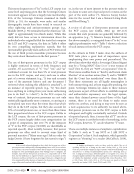
Abstract: Fiscal Arbitrators was a comparative short-lived Canadian pseudolaw tax avoidance scheme that
operated between 2006-2012. Taxpayers made “Strawman Theory” claims to create large but fictitious business
expenses. Taxpayers who employed Fiscal Arbitrators techniques had no legal basis for their claims. The Canada
Revenue Agency assessed “gross negligence” penalties in addition to other automatic charges. At least 500 Fiscal
Arbitrators customers appealed their taxation re-assessments at the Tax Court of Canada. There, these taxpayers
usually claimed their actions, and blatantly false tax returns, had a reasonable basis.
This unusual confluence of factors resulted in a substantial number of written court decisions that include first-hand,
first-person, accounts of how and why Fiscal Arbitrators’ customers were recruited, and that describe this “Detax”
scheme’s operation. Unexpectedly, Fiscal Arbitrators customers were primarily recruited via person-to-person
contacts and through family, social, and workplace networks. No Internet-based recruitment was reported. Fiscal
Arbitrators customers showed little to no interest in or understanding of the basis for their extraordinary claims.
Their sole motivation was greed. These taxpayers were mainly non-ideological “mercenaries” who abandoned
pseudolaw to conduct damage control steps as rational self-interested actors. Most voluntarily terminated their
appeals prior to a full appeal court hearing.
The characteristics of this study’s Fiscal Arbitrators population do not correspond with how legal, media, and
academic sources stereotypically portray and describe pseudolaw adherents. This investigation thus illustrates
pseudolaw’s users are potentially more diverse than is commonly recognized
Keywords: Pseudolaw, Organized Pseudolegal Commercial Arguments, Fiscal Arbitrators, Income Tax, Detaxer
I. Introduction -Pseudolaw and Fiscal Arbitrators
This article investigates an important but little studied
aspect of pseudolaw cultures: how are people recruited
into pseudolaw-using groups. As is expanded on below,
pseudolaw is a set of highly stereotypic not-law rules,
meshed within a conspiratorial matrix, that represent
a legal system (of a kind) that is in competition with
“conventional” or “mainstream” law in many countries,
worldwide.
Pseudolaw is also a minority and/or outlier legal system,
in that pseudolaw is usually adopted by marginal and
dissident populations. Those populations are highly
diverse, but generally have an overarching goal: the
transfer of authority to individuals, and away from
government, law enforcement, institutions, and courts.
The exact objectives of pseudolaw groups range broadly,
from counter-revolutions that seek to overthrow
perceived false authorities, to separation from mass
culture on religious or racial grounds, to what could be
called institutionalized Eric Cartmanism: “I do what I
want!” and “Respect My Authority!”
This article focuses on persons who adopted pseudolaw
promoted by Fiscal Arbitrators, a Canadian pseudolaw
organization led by Lawrence (Larry) Watts and
Aurelius Carlton Branch that promised its customers
dramatic personal income tax advantages. Fiscal
Arbitrators appears to have operated between 2006-
2012, which makes Fiscal Arbitrators one of the final
Canadian “Detaxer” schemes. The Detaxers were a
collection of leadership figures and promoters, “gurus,”
whose applications of pseudolaw were effectively
doi.org/10.54208/1000/0006/005
A Ride With My Best Friend: The Fiscal Arbitrators Pseudolaw Tax Evasion
Scheme, Recruitment, and Litigation
Donald J. Netolitzky, PhD, K.C.
Alberta Court of King’s Bench
Abstract: Fiscal Arbitrators was a comparative short-lived Canadian pseudolaw tax avoidance scheme that
operated between 2006-2012. Taxpayers made “Strawman Theory” claims to create large but fictitious business
expenses. Taxpayers who employed Fiscal Arbitrators techniques had no legal basis for their claims. The Canada
Revenue Agency assessed “gross negligence” penalties in addition to other automatic charges. At least 500 Fiscal
Arbitrators customers appealed their taxation re-assessments at the Tax Court of Canada. There, these taxpayers
usually claimed their actions, and blatantly false tax returns, had a reasonable basis.
This unusual confluence of factors resulted in a substantial number of written court decisions that include first-hand,
first-person, accounts of how and why Fiscal Arbitrators’ customers were recruited, and that describe this “Detax”
scheme’s operation. Unexpectedly, Fiscal Arbitrators customers were primarily recruited via person-to-person
contacts and through family, social, and workplace networks. No Internet-based recruitment was reported. Fiscal
Arbitrators customers showed little to no interest in or understanding of the basis for their extraordinary claims.
Their sole motivation was greed. These taxpayers were mainly non-ideological “mercenaries” who abandoned
pseudolaw to conduct damage control steps as rational self-interested actors. Most voluntarily terminated their
appeals prior to a full appeal court hearing.
The characteristics of this study’s Fiscal Arbitrators population do not correspond with how legal, media, and
academic sources stereotypically portray and describe pseudolaw adherents. This investigation thus illustrates
pseudolaw’s users are potentially more diverse than is commonly recognized
Keywords: Pseudolaw, Organized Pseudolegal Commercial Arguments, Fiscal Arbitrators, Income Tax, Detaxer
I. Introduction -Pseudolaw and Fiscal Arbitrators
This article investigates an important but little studied
aspect of pseudolaw cultures: how are people recruited
into pseudolaw-using groups. As is expanded on below,
pseudolaw is a set of highly stereotypic not-law rules,
meshed within a conspiratorial matrix, that represent
a legal system (of a kind) that is in competition with
“conventional” or “mainstream” law in many countries,
worldwide.
Pseudolaw is also a minority and/or outlier legal system,
in that pseudolaw is usually adopted by marginal and
dissident populations. Those populations are highly
diverse, but generally have an overarching goal: the
transfer of authority to individuals, and away from
government, law enforcement, institutions, and courts.
The exact objectives of pseudolaw groups range broadly,
from counter-revolutions that seek to overthrow
perceived false authorities, to separation from mass
culture on religious or racial grounds, to what could be
called institutionalized Eric Cartmanism: “I do what I
want!” and “Respect My Authority!”
This article focuses on persons who adopted pseudolaw
promoted by Fiscal Arbitrators, a Canadian pseudolaw
organization led by Lawrence (Larry) Watts and
Aurelius Carlton Branch that promised its customers
dramatic personal income tax advantages. Fiscal
Arbitrators appears to have operated between 2006-
2012, which makes Fiscal Arbitrators one of the final
Canadian “Detaxer” schemes. The Detaxers were a
collection of leadership figures and promoters, “gurus,”
whose applications of pseudolaw were effectively
doi.org/10.54208/1000/0006/005