International Journal of Coercion, Abuse, and Manipulation Volume 6 2023 118
insight on that population’s characteristics. This
investigation is not a quantitative study, but several
factors provide some confidence that larger conclusions
can be drawn in relation to Fiscal Arbitrators, and the
characteristics of its customers:
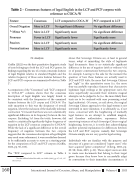
1. the reappearing and consistent characteristics
identified in the Decision Dataset
2. the Docket Dataset provided a broader
context for this Tax Court of Canada litigation
and
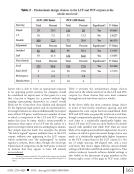
3. outcomes and litigation patterns in the
Decision Dataset and Docket Dataset are
generally the same.
The portrait that emerges is not the usual pseudolaw
adherent or “Sovereign Citizen” stereotypes. Most
Fiscal Arbitrators customers appear to be ordinary
Canadians who were not at all wedded to pseudolaw and
its conspiratorial matrix and counter-law principles.
The defining characteristic of this population was
greed. They were promised quick and easy money,
and seized that opportunity. Their focus was results,
and not how those benefits were obtained. That lack
of investment in pseudolaw is equally apparent in how
rapidly the Fiscal Arbitrators customers abandoned
pseudolaw and shifted to a damage control stance. In
that way, these persons were largely rational actors.
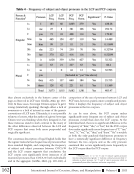
They only appealed the one arguable issue--gross
negligence penalties--and, even then, most taxpayers
discontinued their appeals on a voluntary basis.
The Fiscal Arbitrators scheme recruited, communicated,
and operated outside the Internet. That mode of
operation defies the usual model for how investigators,
judges, and academics have imagined pseudolaw
systems operate. Any assessment of whether Fiscal
Arbitrators is some kind of anomaly, or is an example
of an alternative mechanism for pseudolaw populations
to organize, is premature. What this study does provide
is a warning that Internet-based investigation may: 1)
provide an incomplete understanding of pseudolaw’s
social operation 2) entirely fail to detect some
pseudolaw movements, populations, and gurus and
3) be biased in favour of detecting certain kinds of
pseudolaw groups and schemes, such as ideologically-
linked instances of pseudolaw, rather than pseudolaw
mechanisms motivated by greed.
Pseudolaw programs with a primarily economic focus
might not only be “less visible,” but also potentially have
been neglected because these non-ideological groups
are plausibly less of a social threat, and, therefore,
have not drawn the same kind of attention from
criminologists, and threat assessment and terrorism
investigators. That possibility should be investigated.
Similarly, this article suggests recruitment mechanisms
may be linked to the kinds of benefits promised by a
pseudolaw scheme. Again, this question should be
evaluated in future investigations.
While the rules, ideas, and diversity of pseudolaw is
increasingly well understood, such knowledge is the
equivalent to understanding religious doctrine. How
a religion operates and expresses itself, however, is
something quite different. At present, very much is
unknown about pseudolaw as a social phenomenon.
This article, and others in this Special Issue, are now
starting to chart out some of this largely unexplored
terrain. More remains to be discovered and understood,
and these discoveries and that understanding will be
important, if “mainstream” and “conventional” society
and organizations are to more effectively respond to
pseudolaw and its deleterious effects.
insight on that population’s characteristics. This
investigation is not a quantitative study, but several
factors provide some confidence that larger conclusions
can be drawn in relation to Fiscal Arbitrators, and the
characteristics of its customers:
1. the reappearing and consistent characteristics
identified in the Decision Dataset
2. the Docket Dataset provided a broader
context for this Tax Court of Canada litigation
and
3. outcomes and litigation patterns in the
Decision Dataset and Docket Dataset are
generally the same.
The portrait that emerges is not the usual pseudolaw
adherent or “Sovereign Citizen” stereotypes. Most
Fiscal Arbitrators customers appear to be ordinary
Canadians who were not at all wedded to pseudolaw and
its conspiratorial matrix and counter-law principles.
The defining characteristic of this population was
greed. They were promised quick and easy money,
and seized that opportunity. Their focus was results,
and not how those benefits were obtained. That lack
of investment in pseudolaw is equally apparent in how
rapidly the Fiscal Arbitrators customers abandoned
pseudolaw and shifted to a damage control stance. In
that way, these persons were largely rational actors.
They only appealed the one arguable issue--gross
negligence penalties--and, even then, most taxpayers
discontinued their appeals on a voluntary basis.
The Fiscal Arbitrators scheme recruited, communicated,
and operated outside the Internet. That mode of
operation defies the usual model for how investigators,
judges, and academics have imagined pseudolaw
systems operate. Any assessment of whether Fiscal
Arbitrators is some kind of anomaly, or is an example
of an alternative mechanism for pseudolaw populations
to organize, is premature. What this study does provide
is a warning that Internet-based investigation may: 1)
provide an incomplete understanding of pseudolaw’s
social operation 2) entirely fail to detect some
pseudolaw movements, populations, and gurus and
3) be biased in favour of detecting certain kinds of
pseudolaw groups and schemes, such as ideologically-
linked instances of pseudolaw, rather than pseudolaw
mechanisms motivated by greed.
Pseudolaw programs with a primarily economic focus
might not only be “less visible,” but also potentially have
been neglected because these non-ideological groups
are plausibly less of a social threat, and, therefore,
have not drawn the same kind of attention from
criminologists, and threat assessment and terrorism
investigators. That possibility should be investigated.
Similarly, this article suggests recruitment mechanisms
may be linked to the kinds of benefits promised by a
pseudolaw scheme. Again, this question should be
evaluated in future investigations.
While the rules, ideas, and diversity of pseudolaw is
increasingly well understood, such knowledge is the
equivalent to understanding religious doctrine. How
a religion operates and expresses itself, however, is
something quite different. At present, very much is
unknown about pseudolaw as a social phenomenon.
This article, and others in this Special Issue, are now
starting to chart out some of this largely unexplored
terrain. More remains to be discovered and understood,
and these discoveries and that understanding will be
important, if “mainstream” and “conventional” society
and organizations are to more effectively respond to
pseudolaw and its deleterious effects.