International Journal of Coercion, Abuse, and Manipulation Volume 6 2023 10
Researchers have observed that the relationship
between Sovereign Citizens and Child Protective
Services (CPS) is inherently antagonistic (Hines,
2021). A number of high-profile CPS cases indicate that
QAnon adherents are increasingly adopting sovereign
citizen tactics in an effort to regain custody of their
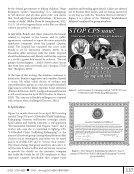
children. Conspiracy-oriented activists target CPS
agencies with the false claim that instead of helping
children, they are killing them, and selling their blood
and harvested organs. In “Sovereign Citizens, QAnon,
and Child Protective Services (CPS): Exploring the
Overlaps,” Christine Sarteschi examines the ways in
which the two ideologies intersect in child custody
disputes. Violence, or its threat, often accompanies
these encounters. In at least one instance, this strategy
has resulted in death. Relevant case studies are
explored using extensive news accounts and court
documents.
The mechanisms and factors by which pseudolaw’s
adherents are recruited are largely unexplored,
though published sources commonly assume social
media is the primary medium that introduces
people to pseudolaw. Donald Netolitzky, “A Ride
With My Best Friend: Recruitment into the Fiscal
Arbitrators Tax Denial Pseudolaw Movement,” is the
first examination of how a pseudolaw movement
recruited members/customers. In Tax Court of
Canada court proceedings, customers of the anti-tax
Fiscal Arbitrators scheme described how and why they
employed Fiscal Arbitrators to prepare and file their
income tax returns. Those tax returns illegally rejected
tax obligations, and also typically made retroactive
demands for very large tax refunds from previous
years. Interestingly, this study population describe
their introduction to pseudolaw was via personal
“real world” contacts. Monetary benefits were the
chief inducement and recruitment factor. The Fiscal
Arbitrators clientele were largely non-ideological, and
abandoned pseudolaw when confronted with negative
consequences.
Documents are pseudolaw users’ primary mechanism
to communicate with opposing actors: institutions,
government, law enforcement, and courts. Pseudolaw
documents often include atypical features that both
reflect pseudolaw theory (Meads v Meads, 2012
ABQB 571, paras. 203-241), but also appear to have
ceremonial functions (Netolitzky, 2018d). However,
to date, little investigation has occurred on how the
language used in pseudolaw documents illustrates
the perspectives and beliefs of pseudolaw adherents.
While the documents produced by members of the
Sovereign Citizen movement are not legitimate legal
documents, there is a distinctly legal character to them.
David Griffin, “‘I Hereby and Herein Claim Liberties’:
Identity and Power in Sovereign Citizen Pseudolegal
Courtroom Filings,” examines the ways that Sovereign
Citizen pseudolegal documents acquire that legal-
seeming character by considering the degree to which
the language present in pseudolaw materials resembles
that of documents written by actual attorneys.
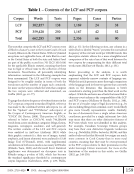
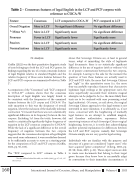
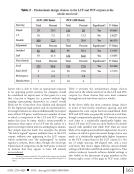
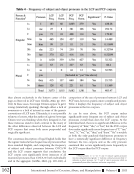
A comparison of a corpus of Sovereign Citizen
documents filed in an American courthouse to a
corpus of attorney-authored documents obtained from
that same courthouse reveals that while the authors of
the pseudolegal courtroom filings (PCFs) examined
are generally adept at identifying those features of
legitimate courtroom filings (LCFs) that most clearly
differentiate LCFs from documents written in more
“standard” varieties of English, these Sovereign Citizen
authors did more than simply imitate. They frequently
heighten or in some way emphasize those features
of LCFs that appear to them to be the most legally
or authoritatively salient. By considering both the
features of LCFs that have been heightened in this way,
and those features of PCFs that have no immediately
clear legitimate legal analogue, several trends became
apparent: 1) PCFs are highly and perhaps primarily
concerned with establishing the identity and power of
their authors as individuals 2) PCFs frame judges and
other representatives of the legitimate legal system as a
single collective out-group and 3) PCFs present their
authors as the representatives of the true legal system
while simultaneously, if grudgingly, acknowledging
the real-world power that the legitimate legal system
wields over them.
Collectively, these articles significantly expand our
“insiders’ perspective” understanding of pseudolaw
as a social phenomenon. These publications also
demonstrate that, despite its unifying elements,
pseudolaw, expressions of pseudolaw, and pseudolaw’s
hosts, exhibit significant variation, both internally,
and with other cult-like belief systems.
Researchers have observed that the relationship
between Sovereign Citizens and Child Protective
Services (CPS) is inherently antagonistic (Hines,
2021). A number of high-profile CPS cases indicate that
QAnon adherents are increasingly adopting sovereign
citizen tactics in an effort to regain custody of their
children. Conspiracy-oriented activists target CPS
agencies with the false claim that instead of helping
children, they are killing them, and selling their blood
and harvested organs. In “Sovereign Citizens, QAnon,
and Child Protective Services (CPS): Exploring the
Overlaps,” Christine Sarteschi examines the ways in
which the two ideologies intersect in child custody
disputes. Violence, or its threat, often accompanies
these encounters. In at least one instance, this strategy
has resulted in death. Relevant case studies are
explored using extensive news accounts and court
documents.
The mechanisms and factors by which pseudolaw’s
adherents are recruited are largely unexplored,
though published sources commonly assume social
media is the primary medium that introduces
people to pseudolaw. Donald Netolitzky, “A Ride
With My Best Friend: Recruitment into the Fiscal
Arbitrators Tax Denial Pseudolaw Movement,” is the
first examination of how a pseudolaw movement
recruited members/customers. In Tax Court of
Canada court proceedings, customers of the anti-tax
Fiscal Arbitrators scheme described how and why they
employed Fiscal Arbitrators to prepare and file their
income tax returns. Those tax returns illegally rejected
tax obligations, and also typically made retroactive
demands for very large tax refunds from previous
years. Interestingly, this study population describe
their introduction to pseudolaw was via personal
“real world” contacts. Monetary benefits were the
chief inducement and recruitment factor. The Fiscal
Arbitrators clientele were largely non-ideological, and
abandoned pseudolaw when confronted with negative
consequences.
Documents are pseudolaw users’ primary mechanism
to communicate with opposing actors: institutions,
government, law enforcement, and courts. Pseudolaw
documents often include atypical features that both
reflect pseudolaw theory (Meads v Meads, 2012
ABQB 571, paras. 203-241), but also appear to have
ceremonial functions (Netolitzky, 2018d). However,
to date, little investigation has occurred on how the
language used in pseudolaw documents illustrates
the perspectives and beliefs of pseudolaw adherents.
While the documents produced by members of the
Sovereign Citizen movement are not legitimate legal
documents, there is a distinctly legal character to them.
David Griffin, “‘I Hereby and Herein Claim Liberties’:
Identity and Power in Sovereign Citizen Pseudolegal
Courtroom Filings,” examines the ways that Sovereign
Citizen pseudolegal documents acquire that legal-
seeming character by considering the degree to which
the language present in pseudolaw materials resembles
that of documents written by actual attorneys.
A comparison of a corpus of Sovereign Citizen
documents filed in an American courthouse to a
corpus of attorney-authored documents obtained from
that same courthouse reveals that while the authors of
the pseudolegal courtroom filings (PCFs) examined
are generally adept at identifying those features of
legitimate courtroom filings (LCFs) that most clearly
differentiate LCFs from documents written in more
“standard” varieties of English, these Sovereign Citizen
authors did more than simply imitate. They frequently
heighten or in some way emphasize those features
of LCFs that appear to them to be the most legally
or authoritatively salient. By considering both the
features of LCFs that have been heightened in this way,
and those features of PCFs that have no immediately
clear legitimate legal analogue, several trends became
apparent: 1) PCFs are highly and perhaps primarily
concerned with establishing the identity and power of
their authors as individuals 2) PCFs frame judges and
other representatives of the legitimate legal system as a
single collective out-group and 3) PCFs present their
authors as the representatives of the true legal system
while simultaneously, if grudgingly, acknowledging
the real-world power that the legitimate legal system
wields over them.
Collectively, these articles significantly expand our
“insiders’ perspective” understanding of pseudolaw
as a social phenomenon. These publications also
demonstrate that, despite its unifying elements,
pseudolaw, expressions of pseudolaw, and pseudolaw’s
hosts, exhibit significant variation, both internally,
and with other cult-like belief systems.