International Journal of Coercion, Abuse, and Manipulation Volume 6 2023 8
a pseudolaw scheme may not align with the policy--
and rules-based structure--of “conventional” law. For
example, Muniesa (2022) recently examined the One
People’s Public Trust money-for-nothing Strawman
scheme as a metaphysical narrative on the nature and
origin of wealth.
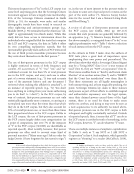
In other instances, religion-like trappings are more
mythmaking than anything else. For example,
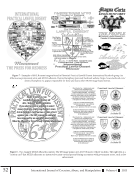
the Sovran Unity Nations Embassy claimed
supraconstitutional religion- and marijuana-based
matriarchal authority via an obviously fictitious and
absurd document, the “Camel’s Eye Treaty” (Camel’s
Eye, n.d.) that supposedly dated from 408 AD.
Subsequently, the leader of this faction, “Maitreya Isis
Maryjane Blackshear,” sued Canada for blasphemy
against her and $108 quadrillion (Netolitzky, 2021, p.
176 Netolitzky, 2023a, p. 830).
However, in one critical sense, pseudolaw schemes
derived from the Sovereign Citizen parent memeplex
have a religion-like character. The story of pseudolaw,
as the hidden, secret, true law, masked behind a
superficial false law, has a strongly Gnostic flavour
(Palmer, 2021). Oddly, to date, no pseudolaw scheme
has been identified that explicitly presents itself in that
manner.
IV. Examining Pseudolaw in a Social Context
Despite decades of investigation, there remains a
significant gap in our understanding of the pseudolaw
phenomenon, worldwide. We know that pseudolaw is a
social phenomenon. In theory, a person could become
involved in and adopt pseudolaw by simply reading
books, or, in the more recent environment, by watching
Internet YouTube videos (Netolitzky, 2021, pp. 184-
185). That said, true “lone wolf” pseudolaw users are
very unusual. Instead, investigation of pseudolaw’s
adherents almost always reveals these persons are part
of an often sequestered and/or marginalized social
community where the pseudolaw adherent interacts
with other aligned parties (Netolitzky, 2016a, pp. 635-
636). Many of these “meeting spaces” are located on
the Internet, and are publicly visible.
But what are those social interactions? Are there
leadership figures? How are these communities
structured, or are these groups structured at all? Some
prior investigation has commented on facets of this
subject. The conventional hypothesis is pseudolaw
is “guru-centric.” That model is most clearly laid out
by Alberta Court of King’s Bench Associate Chief
Justice Rooke in the 2012 court judgment of Meads
v Meads (2012 ABQB 571). Associate Chief Justice
Rooke describes that pseudolaw-using groups have
an obvious central organizing figure, who holds
that position based on (claimed) special privileged
knowledge of law, conspiratorial government control
structures, and secret hidden histories (Meads v
Meads, 2012 ABQB 571, paras. 85-158). The usual
practice is to call these persons “gurus.” However,
the social activity of these gurus is little studied,
as are the mechanisms by which in-group identity
and membership are established in pseudolaw
communities, and how discipline and orthodoxy are
maintained. More recent research (Netolitzky, 2021,
pp. 183-186) argues that gurus are now less significant
as organizer and leader figures, since pseudolaw’s
incorporation within the cultic milieu has created an
information ecosystem where pseudolaw is readily
available, in numerous forms, to persons who seek
its extraordinary authority and advantages. At least in
Canada, entirely new variations on pseudolaw have
emerged during the COVID-19 pandemic (Netolitzky,
2023e), and have taken on forms very different from
their pre pandemic predecessors.
Investigators have drawn parallels between “religious
cults” and pseudolaw’s expressions as “legal cults”
(Kent &Willey, 2013 Netolitzky, 2023a). A further
larger parallel likely exists with terrorist communities
(Banisadr, 2009 Centner, 2003 Challacombe, 2022
Levine, 1999). But are these social groupings really
equivalents? Or is our understanding of pseudolaw
social communities perhaps distorted by the fact some
pseudolaw groups have, or have adopted, a religious
aspect, as discussed above?
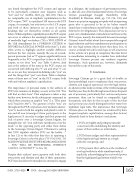
This special issue the International Journal of
Coercion, Abuse, and Manipulation cannot provide a
comprehensive answer in response to these questions,
but, instead, presents a set of detailed studies:
1. that attempt to look inside specific
pseudolaw communities, and describe
their structure, and organization
a pseudolaw scheme may not align with the policy--
and rules-based structure--of “conventional” law. For
example, Muniesa (2022) recently examined the One
People’s Public Trust money-for-nothing Strawman
scheme as a metaphysical narrative on the nature and
origin of wealth.
In other instances, religion-like trappings are more
mythmaking than anything else. For example,
the Sovran Unity Nations Embassy claimed
supraconstitutional religion- and marijuana-based
matriarchal authority via an obviously fictitious and
absurd document, the “Camel’s Eye Treaty” (Camel’s
Eye, n.d.) that supposedly dated from 408 AD.
Subsequently, the leader of this faction, “Maitreya Isis
Maryjane Blackshear,” sued Canada for blasphemy
against her and $108 quadrillion (Netolitzky, 2021, p.
176 Netolitzky, 2023a, p. 830).
However, in one critical sense, pseudolaw schemes
derived from the Sovereign Citizen parent memeplex
have a religion-like character. The story of pseudolaw,
as the hidden, secret, true law, masked behind a
superficial false law, has a strongly Gnostic flavour
(Palmer, 2021). Oddly, to date, no pseudolaw scheme
has been identified that explicitly presents itself in that
manner.
IV. Examining Pseudolaw in a Social Context
Despite decades of investigation, there remains a
significant gap in our understanding of the pseudolaw
phenomenon, worldwide. We know that pseudolaw is a
social phenomenon. In theory, a person could become
involved in and adopt pseudolaw by simply reading
books, or, in the more recent environment, by watching
Internet YouTube videos (Netolitzky, 2021, pp. 184-
185). That said, true “lone wolf” pseudolaw users are
very unusual. Instead, investigation of pseudolaw’s
adherents almost always reveals these persons are part
of an often sequestered and/or marginalized social
community where the pseudolaw adherent interacts
with other aligned parties (Netolitzky, 2016a, pp. 635-
636). Many of these “meeting spaces” are located on
the Internet, and are publicly visible.
But what are those social interactions? Are there
leadership figures? How are these communities
structured, or are these groups structured at all? Some
prior investigation has commented on facets of this
subject. The conventional hypothesis is pseudolaw
is “guru-centric.” That model is most clearly laid out
by Alberta Court of King’s Bench Associate Chief
Justice Rooke in the 2012 court judgment of Meads
v Meads (2012 ABQB 571). Associate Chief Justice
Rooke describes that pseudolaw-using groups have
an obvious central organizing figure, who holds
that position based on (claimed) special privileged
knowledge of law, conspiratorial government control
structures, and secret hidden histories (Meads v
Meads, 2012 ABQB 571, paras. 85-158). The usual
practice is to call these persons “gurus.” However,
the social activity of these gurus is little studied,
as are the mechanisms by which in-group identity
and membership are established in pseudolaw
communities, and how discipline and orthodoxy are
maintained. More recent research (Netolitzky, 2021,
pp. 183-186) argues that gurus are now less significant
as organizer and leader figures, since pseudolaw’s
incorporation within the cultic milieu has created an
information ecosystem where pseudolaw is readily
available, in numerous forms, to persons who seek
its extraordinary authority and advantages. At least in
Canada, entirely new variations on pseudolaw have
emerged during the COVID-19 pandemic (Netolitzky,
2023e), and have taken on forms very different from
their pre pandemic predecessors.
Investigators have drawn parallels between “religious
cults” and pseudolaw’s expressions as “legal cults”
(Kent &Willey, 2013 Netolitzky, 2023a). A further
larger parallel likely exists with terrorist communities
(Banisadr, 2009 Centner, 2003 Challacombe, 2022
Levine, 1999). But are these social groupings really
equivalents? Or is our understanding of pseudolaw
social communities perhaps distorted by the fact some
pseudolaw groups have, or have adopted, a religious
aspect, as discussed above?
This special issue the International Journal of
Coercion, Abuse, and Manipulation cannot provide a
comprehensive answer in response to these questions,
but, instead, presents a set of detailed studies:
1. that attempt to look inside specific
pseudolaw communities, and describe
their structure, and organization