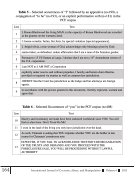
International Journal of Coercion, Abuse, and Manipulation Volume 6 2023 114
were obtained. Only around one in ten (12.7%, n=7)
testified they understood the pseudolaw scheme they
had signed off on.
This pattern puzzled the Tax Court of Canada justices,
who repeatedly questioned how educated persons,
individuals in management roles, and those who
operated businesses, either private or larger, could
possibly subscribe to and adopt the Fiscal Arbitrators
scheme. Taxpayers who completed their appeals and
challenged gross negligence penalties were almost
entirely consistent about their understanding of the
“Sub contracts and labour ...AMT TO PRINCIPAL
FOR AGENT” business losses. The appellants admitted
those loss claims had no basis, there was no such
business, and offered no explanation at all for these
sums. The repeated excuse was the taxpayer had simply
not paid any attention to the tax return paperwork
prepared by Fiscal Arbitrators, that the taxpayer then
signed off, with no evaluation or assessment of the tax
return’s contents.
All this evidence pointed the Tax Court of Canada and
this investigation to the same conclusion. The Fiscal
Arbitrators taxpayers were largely persons who ought to
have known better, but whose choice(s) were guided by
greed, with little concern about the means to that end.
As the Decision Dataset judgments repeatedly observe,
Fiscal Arbitrators customers chose to ignore numerous
“red flags” that this tax scheme was problematic. These
taxpayers only investigated the basis for their tax
returns after the CRA had caught up with them.
C. Most Fiscal Arbitrators Customers were
“Mercenary” Pseudolaw Litigants Motivated by
Greed
Prior Canadian investigations have proposed that
pseudolaw adherents can be divided into a number
of subtypes (e.g., McCoy, Jones, &Hastings, 2019
Netolitzky, 2016b Perry, Hofmann, &Scrivens, 2017).
These schemes all recognize a distinction between
persons who adopt pseudolaw at least in part because
pseudolaw’s political and counter-history narrative(s)
match personal ideology, versus pseudolaw adherents
who are “mercenaries” and engage these schemes
for their predicted results, rather than any personal,
political, or philosophical beliefs.
As was proposed in an earlier investigation (Netolitzky,
2018a, pp. 430-434), the large majority of Fiscal
Arbitrators taxpayers were “mercenaries.” Multiple
indicia support that conclusion:
1. Only a small fraction of the Decision Dataset
taxpayers continued to advance pseudolaw
arguments or other unconventional schemes
during their Tax Court of Canada appeals.
Instead, most appellants acknowledged the
Fiscal Arbitrators scheme was, factually and
legally, false and baseless.
2. Most Fiscal Arbitrators clientele only
employed that scheme for one income tax year.
Pseudolaw was abandoned when the CRA’s
response was negative, or the CRA demanded
information to substantiate business loss claims.
3. Fiscal Arbitrators appellants usually retained
representatives (60.4%, n=306), and over two
thirds (68%, n=345) of Fiscal Arbitrators
taxpayers either withdrew their appeal, or
reached a consent agreement with the CRA to
conclude their appeal.
4. No motive other than greed and additional
money was identified in any of the Decision
Dataset Fiscal Arbitrators judgments.
5. A very large fraction of the Decision Dataset
taxpayers indicated they had no idea what was
the basis for their extraordinary tax refund and
evasion claims. Most said they simply signed
whatever was placed in front of them.
As predicted for mercenary pseudolaw litigants, the
Fiscal Arbitrators taxpayers abandoned their pseudolaw
scheme, then adopted damage control steps. These
persons were opportunists. They were promised an
advantage, and seized it. If anything is surprising, it
is that so many people adopted the high questionable
Fiscal Arbitrators scheme, apparently as a “money for
nothing” “get rich quick” tactic.
Investigation of pseudolaw litigation in Canada has
strongly suggested that most pseudolaw activity has
four foci: 1) “Detaxing” (tax avoidance and evasion)
2) pseudolaw-based attacks on government and
were obtained. Only around one in ten (12.7%, n=7)
testified they understood the pseudolaw scheme they
had signed off on.
This pattern puzzled the Tax Court of Canada justices,
who repeatedly questioned how educated persons,
individuals in management roles, and those who
operated businesses, either private or larger, could
possibly subscribe to and adopt the Fiscal Arbitrators
scheme. Taxpayers who completed their appeals and
challenged gross negligence penalties were almost
entirely consistent about their understanding of the
“Sub contracts and labour ...AMT TO PRINCIPAL
FOR AGENT” business losses. The appellants admitted
those loss claims had no basis, there was no such
business, and offered no explanation at all for these
sums. The repeated excuse was the taxpayer had simply
not paid any attention to the tax return paperwork
prepared by Fiscal Arbitrators, that the taxpayer then
signed off, with no evaluation or assessment of the tax
return’s contents.
All this evidence pointed the Tax Court of Canada and
this investigation to the same conclusion. The Fiscal
Arbitrators taxpayers were largely persons who ought to
have known better, but whose choice(s) were guided by
greed, with little concern about the means to that end.
As the Decision Dataset judgments repeatedly observe,
Fiscal Arbitrators customers chose to ignore numerous
“red flags” that this tax scheme was problematic. These
taxpayers only investigated the basis for their tax
returns after the CRA had caught up with them.
C. Most Fiscal Arbitrators Customers were
“Mercenary” Pseudolaw Litigants Motivated by
Greed
Prior Canadian investigations have proposed that
pseudolaw adherents can be divided into a number
of subtypes (e.g., McCoy, Jones, &Hastings, 2019
Netolitzky, 2016b Perry, Hofmann, &Scrivens, 2017).
These schemes all recognize a distinction between
persons who adopt pseudolaw at least in part because
pseudolaw’s political and counter-history narrative(s)
match personal ideology, versus pseudolaw adherents
who are “mercenaries” and engage these schemes
for their predicted results, rather than any personal,
political, or philosophical beliefs.
As was proposed in an earlier investigation (Netolitzky,
2018a, pp. 430-434), the large majority of Fiscal
Arbitrators taxpayers were “mercenaries.” Multiple
indicia support that conclusion:
1. Only a small fraction of the Decision Dataset
taxpayers continued to advance pseudolaw
arguments or other unconventional schemes
during their Tax Court of Canada appeals.
Instead, most appellants acknowledged the
Fiscal Arbitrators scheme was, factually and
legally, false and baseless.
2. Most Fiscal Arbitrators clientele only
employed that scheme for one income tax year.
Pseudolaw was abandoned when the CRA’s
response was negative, or the CRA demanded
information to substantiate business loss claims.
3. Fiscal Arbitrators appellants usually retained
representatives (60.4%, n=306), and over two
thirds (68%, n=345) of Fiscal Arbitrators
taxpayers either withdrew their appeal, or
reached a consent agreement with the CRA to
conclude their appeal.
4. No motive other than greed and additional
money was identified in any of the Decision
Dataset Fiscal Arbitrators judgments.
5. A very large fraction of the Decision Dataset
taxpayers indicated they had no idea what was
the basis for their extraordinary tax refund and
evasion claims. Most said they simply signed
whatever was placed in front of them.
As predicted for mercenary pseudolaw litigants, the
Fiscal Arbitrators taxpayers abandoned their pseudolaw
scheme, then adopted damage control steps. These
persons were opportunists. They were promised an
advantage, and seized it. If anything is surprising, it
is that so many people adopted the high questionable
Fiscal Arbitrators scheme, apparently as a “money for
nothing” “get rich quick” tactic.
Investigation of pseudolaw litigation in Canada has
strongly suggested that most pseudolaw activity has
four foci: 1) “Detaxing” (tax avoidance and evasion)
2) pseudolaw-based attacks on government and