International Journal of Coercion, Abuse, and Manipulation Volume 6 2023 64
“get out jail free” (Netolitzky, 2018c, p. 6 Netolitzky,
2023a, pp. 812-813).10 Contrary to that pattern, CERI
affiliates have for nearly two decades misused the
Criminal Code sections 504, 507.1 private information
procedure to attack those who breach CERI’s foisted
unilateral pseudolegal agreements, or who intrude on
CERI’s purported religious activities (Meads v Meads,
2012 ABQB 571, paras. 139, 188). As is reviewed below
in Part IV, CERI members now also unsuccessfully use
civil lawsuits to not only retaliate against perceived
opponents, but, additionally, as an ineffective
mechanism to subvert and evade unfavorable court
rulings.
This aggression has occasionally translated into physical
action. For example, a group of CERI members went
so far as to attend the Edmonton Law Courts annual
“Law Day” and were ejected by Sheriffs for their
disruptive and threatening conduct. The group then
tried to retaliate with criminal proceedings (Meads
v Meads, 2012, paras. 139, 188, see also Paraclete,
2012a for Belanger’s version of events). In at least one
other instance, CERI has unsuccessful sought military
intervention against allegedly treasonous judges
(Paraclete, 2010a).
A. CERI Pseudolegal Theory
CERI’s pseudolaw theories have remained largely
unchanged since Belanger founded the group circa
2001. Aside from their religious hook, CERI not-
law concepts are unremarkable and parallel those
employed within the pseudolaw phenomenon world-
wide. Netolitzky (2018c 2021) has reviewed the core
elements of the “pseudolaw memeplex.” CERI employs
all these motifs.
In brief, CERI holds that the King James Bible has
supraconstitutional status since: 1) the (now previous)
head of the Canadian state, Queen Elizabeth II, swore
her Coronation Oath on the King James Bible, 2) the
Coronation Oath is (purportedly) a contract, and 3)
the Queen, as the Supreme Governor of the Church
of England, held the title “Defender of the Faith” (CP
(Re), 2019 ABQB 310, para. 23 Meads v Meads, 2012
ABQB 571, paras. 184-185 Netolitzky, 2016, pp. 627-
10 In contrast, US pseudolaw populations aggressively engage in
“paper terrorism” via spurious liens, abusive litigation, fake vigilante courts,
and even violence (Kalinowski, 2019, pp. 154-155 Kent &Willey, 2013, pp.
319-324 March-Safbom, 2018 McRoberts, 2019, pp. 645-648 Sarteschi,
2021 Sarteschi 2022).
628 Potvin (Re), 2018 ABQB 652, paras. 102-134). To
date, Belanger has not commented on the implications
of the change of UK monarch. CERI members claim
to be strict King James Bible literalists, and, as true
Christian believers, say they have special legal status
on that basis.
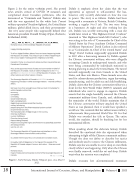
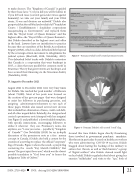
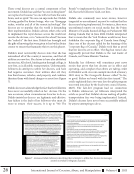
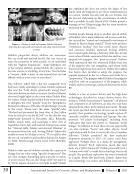
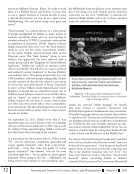
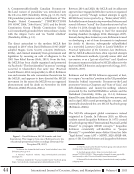
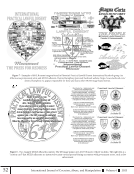
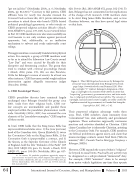
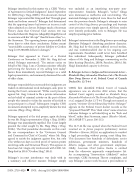
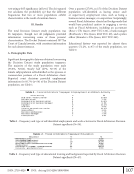
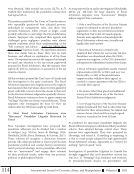
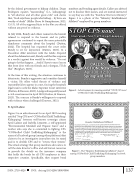
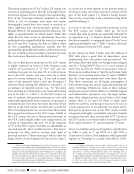
Figure 1 -This CERI logo has been in use by Belanger for
at least 20 years (downloaded from Belanger’s Facebook
page: https://www.facebook.com/Romans1129). Note
the copyright “©” symbol. Belanger’s designation of this
logo as copyright is inconsistent with CERI’s doctrine that
“respecting” government, government actors, and state-made
law, is religiously prohibited and necrophilia. The concept of
copyright, and associated creator’s rights, are solely created by
legislation enacted by government, in Canada that being the
Copyright Act, RSC 1985, c C-42.
Their purported religious advantage works three
ways. First, CERI members claim immunity from
“conventional” law, state authority, and government
regulation. These authorities supposedly contravene
practices and activities identified as Christian. CERI
claims Canadian law is inherently Christian, pointing
to the Coronation Oath. For example, CERI members
cite biblical prohibitions against usury, and claim that
means mortgage contacts cannot bind them (“Alberta
minister,” 2017 Canada Trustco Mortgage Company v
Belanger, 2002b).
However, CERI expands the scope of what is “religious”
far beyond its usual limits. Practically any activity may
be designated as a self-proclaimed “ministerial” duty.
For example, CERI “ministers” claim to be exempt
from motor vehicle legislation any time they operate