ISSN: 2710-4028 DOI: doi.org/10.54208/1000/0006 65
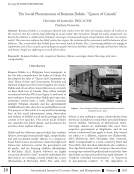
their motor vehicles, a.k.a. “Ecclesiastical Pursuit
Chariots” (Blais, 2012 Meads v Meads, 2012 ABQB
571, para. 186). CERI members similarly claim they
are immune from drug production and trafficking
charges (R v Belanger (20 September 2018), Edmonton
180222747P1 (Alta PC)). Residences and apartments
are designated as inviolate CERI “Ecclesia.” These
supposedly religious locations are then purportedly
exempt from search or entry by “de facto” government
actors (Kent &Willey, 2013, pp. 327-328).
Second, CERI claims any interference by law
enforcement or regulatory agencies is a breach of
Criminal Code section 176(1): “Obstructing or violence
to or arrest of officiating clergyman.” CERI members
complain they are “intimidated” from the unrestricted
practice of their so-called Christian religious beliefs
(Potvin (Re), 2018 ABQB 834, paras. 17-18). CERI
members then file Criminal Code sections 504, 507.1
“private informations” that attempt to initiate criminal
proceedings against police, court, and government
actors who dare intrude into the “ministry of Christ,”
whose scope CERI, itself, defines (Meads v Meads,
2012 ABQB 571, para. 186 Potvin (Re), 2018 ABQB
652, paras. 110-120 Potvin (Re), 2018 ABQB 834, para.
18 Unrau v National Dental Examining Board, 2019
ABQB 283, para. 881).
The third way CERI pseudolaw purportedly provides
immunity to state action is a variation of “Strawman
Theory,” a misconception that, in law, individuals
have two separate and distinct aspects: a flesh and
blood human identified by a name in mixed case
letters, and an immaterial legal doppelganger, the
“Strawman,” identified by a name in all uppercase
letters (d’Abadie v Her Majesty the Queen, 2018 ABQB
298, paras. 57-70 Meads v Meads, 2012, paras. 417-
446 Netolitzky, 2018d, pp. 1069-78 Pomerleau v
Canada (Revenue Agency), 2017 ABQB 123, paras. 67-
88 Rothweiler v Payette, 2018 ABQB 134, paras. 10-17
Rothweiler v Payette, 2018 ABQB 399, paras. 25-33).
The Strawman is supposedly created by, or related to,
birth documentation. Governments allegedly have no
legal authority over a human being, unless the human
is linked to the government via “joinder” through
his or her Strawman. Strawman Theory is so utterly
rejected and denounced by Canadian courts that any
reference to this concept establishes, by default, that
the pseudolaw litigant acts in bad faith and for an
abusive, ulterior motive (Fiander v Mills, 2015 NLCA
31, paras. 20-21, 40). Despite the courts’ consistent
rejection, the Strawman concept is all but universal in
pseudolaw communities, both in Canada and world-
wide (Netolitzky, 2016, pp. 633-635 Netolitzky, 2019,
pp. 1182-1183).
CERI’s variation on Strawman Theory centres around a
number of King James Bible passages that use the word
“person,” but, in particular, James 2:9, that commands
“if ye have respect to persons, ye commit sin, and are
convinced of the law as transgressors.” (CP (Re), 2019
ABQB 310, Appendix B Paraclete, 2014b Potvin (Re),
2018 ABQB 651, Appendix F). Belanger claims this
passage creates an absolute religious prohibition against
any interactions with “persons,” a word Belanger says
is defined in Black’s Law Dictionary as dead or non-
human things, including the Strawman, corporations,
government, government actors, courts, and so on.
Obviously, that “person” is the legal definition of
“artificial person,” but Belanger misrepresents that fact.
The “no persons” rule has extravagant aspects. CERI
materials sometimes include pictures of tombstones
with names in all upper-case letters. That, purportedly,
proves “the all-capitalization form denotes a dead,
corporate entity, AKA “Person”” (Potvin (Re), 2018
ABQB 651, para. 119). How a dead human being
could be a corporation is unclear for example, who
would be the corporation/corpse’s shareholders?
Prohibited interactions with dead “persons” are
frequently described as sex or magic: “necrophilia,” and
“necromancy” (Potvin (Re), 2018 ABQB 651, paras.
112-113, 121, 128-131). The “no persons” prohibition
supposedly means CERI members: 1) cannot pay taxes
(“Notice of,” n.d. “Persistent religious,” 2006), 2) honor
their debts to banks (Potvin (Re), 2018 ABQB 652,
para. 112), 3) are not subject to legislation (CP (Re),
2019 ABQB 310, paras. 21, 32 R v Berg, 2019 ABQB
541, paras. 48-56) or court processes (Potvin (Re), 2018
ABQB 652, para. 111 R v Berg, 2019 ABQB 541, paras.
48-56), and so on. All that is “respecting” a “person,”
is a “sin,” and strictly forbidden per these supposed
Christian beliefs.
Like most pseudolaw systems (Meads v Meads, 2012
ABQB 571, paras. 379-416, 447-528 Netolitzky,
2018c, pp. 10-13), CERI’s theories includes rules
that “everything is a contract” and that “silence
their motor vehicles, a.k.a. “Ecclesiastical Pursuit
Chariots” (Blais, 2012 Meads v Meads, 2012 ABQB
571, para. 186). CERI members similarly claim they
are immune from drug production and trafficking
charges (R v Belanger (20 September 2018), Edmonton
180222747P1 (Alta PC)). Residences and apartments
are designated as inviolate CERI “Ecclesia.” These
supposedly religious locations are then purportedly
exempt from search or entry by “de facto” government
actors (Kent &Willey, 2013, pp. 327-328).
Second, CERI claims any interference by law
enforcement or regulatory agencies is a breach of
Criminal Code section 176(1): “Obstructing or violence
to or arrest of officiating clergyman.” CERI members
complain they are “intimidated” from the unrestricted
practice of their so-called Christian religious beliefs
(Potvin (Re), 2018 ABQB 834, paras. 17-18). CERI
members then file Criminal Code sections 504, 507.1
“private informations” that attempt to initiate criminal
proceedings against police, court, and government
actors who dare intrude into the “ministry of Christ,”
whose scope CERI, itself, defines (Meads v Meads,
2012 ABQB 571, para. 186 Potvin (Re), 2018 ABQB
652, paras. 110-120 Potvin (Re), 2018 ABQB 834, para.
18 Unrau v National Dental Examining Board, 2019
ABQB 283, para. 881).
The third way CERI pseudolaw purportedly provides
immunity to state action is a variation of “Strawman
Theory,” a misconception that, in law, individuals
have two separate and distinct aspects: a flesh and
blood human identified by a name in mixed case
letters, and an immaterial legal doppelganger, the
“Strawman,” identified by a name in all uppercase
letters (d’Abadie v Her Majesty the Queen, 2018 ABQB
298, paras. 57-70 Meads v Meads, 2012, paras. 417-
446 Netolitzky, 2018d, pp. 1069-78 Pomerleau v
Canada (Revenue Agency), 2017 ABQB 123, paras. 67-
88 Rothweiler v Payette, 2018 ABQB 134, paras. 10-17
Rothweiler v Payette, 2018 ABQB 399, paras. 25-33).
The Strawman is supposedly created by, or related to,
birth documentation. Governments allegedly have no
legal authority over a human being, unless the human
is linked to the government via “joinder” through
his or her Strawman. Strawman Theory is so utterly
rejected and denounced by Canadian courts that any
reference to this concept establishes, by default, that
the pseudolaw litigant acts in bad faith and for an
abusive, ulterior motive (Fiander v Mills, 2015 NLCA
31, paras. 20-21, 40). Despite the courts’ consistent
rejection, the Strawman concept is all but universal in
pseudolaw communities, both in Canada and world-
wide (Netolitzky, 2016, pp. 633-635 Netolitzky, 2019,
pp. 1182-1183).
CERI’s variation on Strawman Theory centres around a
number of King James Bible passages that use the word
“person,” but, in particular, James 2:9, that commands
“if ye have respect to persons, ye commit sin, and are
convinced of the law as transgressors.” (CP (Re), 2019
ABQB 310, Appendix B Paraclete, 2014b Potvin (Re),
2018 ABQB 651, Appendix F). Belanger claims this
passage creates an absolute religious prohibition against
any interactions with “persons,” a word Belanger says
is defined in Black’s Law Dictionary as dead or non-
human things, including the Strawman, corporations,
government, government actors, courts, and so on.
Obviously, that “person” is the legal definition of
“artificial person,” but Belanger misrepresents that fact.
The “no persons” rule has extravagant aspects. CERI
materials sometimes include pictures of tombstones
with names in all upper-case letters. That, purportedly,
proves “the all-capitalization form denotes a dead,
corporate entity, AKA “Person”” (Potvin (Re), 2018
ABQB 651, para. 119). How a dead human being
could be a corporation is unclear for example, who
would be the corporation/corpse’s shareholders?
Prohibited interactions with dead “persons” are
frequently described as sex or magic: “necrophilia,” and
“necromancy” (Potvin (Re), 2018 ABQB 651, paras.
112-113, 121, 128-131). The “no persons” prohibition
supposedly means CERI members: 1) cannot pay taxes
(“Notice of,” n.d. “Persistent religious,” 2006), 2) honor
their debts to banks (Potvin (Re), 2018 ABQB 652,
para. 112), 3) are not subject to legislation (CP (Re),
2019 ABQB 310, paras. 21, 32 R v Berg, 2019 ABQB
541, paras. 48-56) or court processes (Potvin (Re), 2018
ABQB 652, para. 111 R v Berg, 2019 ABQB 541, paras.
48-56), and so on. All that is “respecting” a “person,”
is a “sin,” and strictly forbidden per these supposed
Christian beliefs.
Like most pseudolaw systems (Meads v Meads, 2012
ABQB 571, paras. 379-416, 447-528 Netolitzky,
2018c, pp. 10-13), CERI’s theories includes rules
that “everything is a contract” and that “silence