International Journal of Coercion, Abuse, and Manipulation Volume 6 2023 60
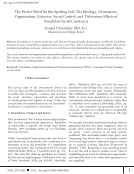
Jesus Built My Strawman: The Church of the Ecumenical Redemption
International and “minister” Edward Jay Robin Belanger
Donald J. Netolitzky, PhD, K.C.
Alberta Court of King’s Bench
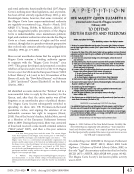
Abstract: The Canada-based Church of the Ecumenical Redemption International [CERI] falsely purports to be
a community of strict King James Bible literalists. CERI’s religious claims are a strategic mask for the “church’s”
true nature and objectives. CERI is a “legal cult,” a group organized around a central guru figure: “minister”
Edward Jay Robin Belanger. This fake church’s doctrine combines stereotypic pseudolaw concepts derived from the
US Sovereign Citizen movement, conspiratorial anti-government and anti-Semitic beliefs, with passages from the
1611 King James Bible. CERI and Belanger make no faith-based promises, but, instead, claim that a combination
of esoteric paperwork, proclamations of Christian status, and demands for international treaty-based religious
accommodation, grants CERI’s members special and extraordinary advantages (e.g., to defy and neutralize
government authority, eliminate debts, and escape sanction for criminal misconduct).
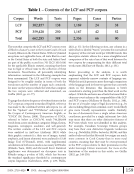
This study investigates CERI and Belanger’s nearly 25-year history of pseudolaw and criminal activity, using 21
Canadian legal proceedings conducted between 2009-2019 to develop a profile of CERI’s followers, CERI litigation
tactics, and to explore the usually short-lived relationships between Belanger and his followers. CERI is the most
aggressive and litigious Canadian pseudolaw group, but CERI adherents and Belanger consistently fail in court.
CERI and Belanger are relevant to the developing understanding of the broader social impact and operation of
pseudolaw, as an example of a long-duration but small population group. While many pseudolaw groups are true
social communities, CERI functions primarily as a parasite/host pairing, where Belanger exploits those who adopt
CERI strategies. This legal cult of personality operates chiefly within the broader Canadian pseudolaw ecosystem,
but in a marginal, though remarkably persistent, manner.
Keywords: Pseudolaw, Law, Organized Pseudolegal Commercial Arguments, OPCA, Sovereign Citizen,
Church of the Ecumenical Redemption International, CERI, Edward Jay Robin Belanger, minister Belanger,
paraclete Belanger, King James Bible
I. Introduction
Pseudolaw is a collection of concepts that sound like
law, and that often include legal language (McRoberts,
2019, pp. 637-644 Netolitzky, 2018a, pp. 420-421
Netolitzky, 2021, pp. 164-170), but that are false and
rejected by courts worldwide (Kalinowski, 2019
McRoberts, 2019 Netolitzky, 2019). Pseudolaw is a
product that is marketed to gullible and conspiratorial
individuals, who are promised pseudolaw will replace
and displace “conventional” law, granting marginal
and dissident populations extraordinary authority and
other benefits (Netolitzky, 2021).
The underlying conceptual skeleton of pseudolaw
is startlingly consistent and conserved, world-wide
(Netolitzky, 2021). A kind of evolutionary pressure
explains why only one school of not-law at present
dominates the worldwide ecosystem of counter-
authority and unreasonable beliefs. Modern pseudolaw
incubated in US Sovereign Citizen communities
for decades, and perhaps over a hundred years.1
Around 2000, the resulting mature “Sovereign Citizen
1 Reviewed in Sarteschi (2020, pp. 1-8) and Cash (2022, pp. 3-9). At
this point a detailed understanding of the antecedents to US pseudolaw is
probably out of reach. Berger (2016, pp. 6, 13) observes that investigation
of pre-Internet precursors to the modern Sovereign Citizen movement leads
to “an incomplete [record] contained in ephemeral small-press publications
and pamphlets.” Sullivan (1999, p. 818) stresses the small-scale and informal
character of these publications. For at least a decade much US pseudolaw
activity primarily occurred in “dial up” computer BBS (bulletin board
systems). Needless to say, very little of the BBS period resources, records,
and in-group discussions remain accessible.
doi.org/10.54208/1000/0006/004
Jesus Built My Strawman: The Church of the Ecumenical Redemption
International and “minister” Edward Jay Robin Belanger
Donald J. Netolitzky, PhD, K.C.
Alberta Court of King’s Bench
Abstract: The Canada-based Church of the Ecumenical Redemption International [CERI] falsely purports to be
a community of strict King James Bible literalists. CERI’s religious claims are a strategic mask for the “church’s”
true nature and objectives. CERI is a “legal cult,” a group organized around a central guru figure: “minister”
Edward Jay Robin Belanger. This fake church’s doctrine combines stereotypic pseudolaw concepts derived from the
US Sovereign Citizen movement, conspiratorial anti-government and anti-Semitic beliefs, with passages from the
1611 King James Bible. CERI and Belanger make no faith-based promises, but, instead, claim that a combination
of esoteric paperwork, proclamations of Christian status, and demands for international treaty-based religious
accommodation, grants CERI’s members special and extraordinary advantages (e.g., to defy and neutralize
government authority, eliminate debts, and escape sanction for criminal misconduct).
This study investigates CERI and Belanger’s nearly 25-year history of pseudolaw and criminal activity, using 21
Canadian legal proceedings conducted between 2009-2019 to develop a profile of CERI’s followers, CERI litigation
tactics, and to explore the usually short-lived relationships between Belanger and his followers. CERI is the most
aggressive and litigious Canadian pseudolaw group, but CERI adherents and Belanger consistently fail in court.
CERI and Belanger are relevant to the developing understanding of the broader social impact and operation of
pseudolaw, as an example of a long-duration but small population group. While many pseudolaw groups are true
social communities, CERI functions primarily as a parasite/host pairing, where Belanger exploits those who adopt
CERI strategies. This legal cult of personality operates chiefly within the broader Canadian pseudolaw ecosystem,
but in a marginal, though remarkably persistent, manner.
Keywords: Pseudolaw, Law, Organized Pseudolegal Commercial Arguments, OPCA, Sovereign Citizen,
Church of the Ecumenical Redemption International, CERI, Edward Jay Robin Belanger, minister Belanger,
paraclete Belanger, King James Bible
I. Introduction
Pseudolaw is a collection of concepts that sound like
law, and that often include legal language (McRoberts,
2019, pp. 637-644 Netolitzky, 2018a, pp. 420-421
Netolitzky, 2021, pp. 164-170), but that are false and
rejected by courts worldwide (Kalinowski, 2019
McRoberts, 2019 Netolitzky, 2019). Pseudolaw is a
product that is marketed to gullible and conspiratorial
individuals, who are promised pseudolaw will replace
and displace “conventional” law, granting marginal
and dissident populations extraordinary authority and
other benefits (Netolitzky, 2021).
The underlying conceptual skeleton of pseudolaw
is startlingly consistent and conserved, world-wide
(Netolitzky, 2021). A kind of evolutionary pressure
explains why only one school of not-law at present
dominates the worldwide ecosystem of counter-
authority and unreasonable beliefs. Modern pseudolaw
incubated in US Sovereign Citizen communities
for decades, and perhaps over a hundred years.1
Around 2000, the resulting mature “Sovereign Citizen
1 Reviewed in Sarteschi (2020, pp. 1-8) and Cash (2022, pp. 3-9). At
this point a detailed understanding of the antecedents to US pseudolaw is
probably out of reach. Berger (2016, pp. 6, 13) observes that investigation
of pre-Internet precursors to the modern Sovereign Citizen movement leads
to “an incomplete [record] contained in ephemeral small-press publications
and pamphlets.” Sullivan (1999, p. 818) stresses the small-scale and informal
character of these publications. For at least a decade much US pseudolaw
activity primarily occurred in “dial up” computer BBS (bulletin board
systems). Needless to say, very little of the BBS period resources, records,
and in-group discussions remain accessible.
doi.org/10.54208/1000/0006/004