International Journal of Coercion, Abuse, and Manipulation Volume 6 2023 160
IV. Analysis
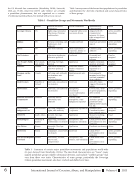
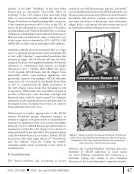
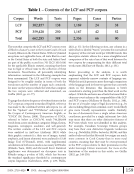
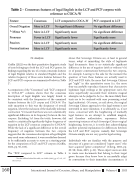
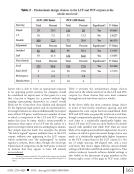
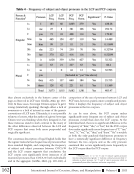
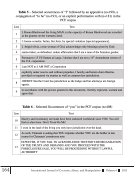
Griffin (2022) was the first quantitative linguistic study
of texts belonging to both the LCF and PCF genres. Its
findings regarding the use of certain consensus features
of legal English relative to standard English and the
relative frequency of those same features between the
LCF and PCF corpora are summarized below in Table
27:
1
A comparison of the “Consensus” and “LCF compared
to COCA-W” columns shows that the consensus
description of legal English was largely found to
be consistent with the frequencies of the examined
features between the LCF corpus and COCA-W. The
only exception to this was the frequency of overall
negation, where the inclusion of the markedly informal
contraction *n’t meant that there was not a statistically
significant difference in its frequency between the two
corpora. Excluding *n’t from the totals, however, did
result in a statistically significantly higher frequency of
negation in the LCF corpus as compared to COCA-W.
While the lack of a significant difference in the overall
frequency of negation between the two corpora
suggests that the consensus description of legal English
may need some refinement, it was nonetheless deemed
to be sufficiently accurate to serve as a starting point
for the comparison of LCF and PCF corpora (Griffin,
2022, pp. 96–103).
The “PCF compared to LCF” column in Table 2
7 For the full data behind this table, see Griffin (2022), pp. 97, 105, 117-
118, 123-124.
shows that Sovereign Citizens are, at least in general
terms, adept at mimicking the style of legitimate
legal documents: there is no statistically significant
difference in the use of negation (with or without *n’t)
or of passive constructions between the two corpora,
for example. Leaving to the side for the moment the
question of how these features are actually used in
LCF and PCF texts, the more that Sovereign Citizens
get “right” in this quantitative sense (i.e. the more
they successfully reproduce features that characterize
legitimate legal writings at the appropriate rate), the
more superficially successful their imitative magical
attempts can be judged to be (i.e. the more likely their
texts are to be confused with ones possessing actual
legal authority). Of course, as said above, the magical
Sovereign Citizen approach to the legal system is not
interested in mere imitation it is ultimately as, if not
more, concerned with the heightening of markedly
legal features in an attempt to establish magical,
and therefore authoritative, supremacy. Before
examining instances of such Sovereign Citizen magical
heightening, however, it is worth first acknowledging
another potential explanation for differences between
the LCF and PCF corpora: namely, that Sovereign
Citizens simply are not very good at legal writing.
Individuals who are familiar with the purpose and
structure of a genre are considered “expert users” who
have acquired “genre competence” (Cheng, 2010, pp.
89–90 Stein, 2015, p. 61). These expert users are able
to create new documents that belong to their target
genre because they know how to successfully adapt
its conventions to their immediate circumstances. A
IV. Analysis
Griffin (2022) was the first quantitative linguistic study
of texts belonging to both the LCF and PCF genres. Its
findings regarding the use of certain consensus features
of legal English relative to standard English and the
relative frequency of those same features between the
LCF and PCF corpora are summarized below in Table
27:
1
A comparison of the “Consensus” and “LCF compared
to COCA-W” columns shows that the consensus
description of legal English was largely found to
be consistent with the frequencies of the examined
features between the LCF corpus and COCA-W. The
only exception to this was the frequency of overall
negation, where the inclusion of the markedly informal
contraction *n’t meant that there was not a statistically
significant difference in its frequency between the two
corpora. Excluding *n’t from the totals, however, did
result in a statistically significantly higher frequency of
negation in the LCF corpus as compared to COCA-W.
While the lack of a significant difference in the overall
frequency of negation between the two corpora
suggests that the consensus description of legal English
may need some refinement, it was nonetheless deemed
to be sufficiently accurate to serve as a starting point
for the comparison of LCF and PCF corpora (Griffin,
2022, pp. 96–103).
The “PCF compared to LCF” column in Table 2
7 For the full data behind this table, see Griffin (2022), pp. 97, 105, 117-
118, 123-124.
shows that Sovereign Citizens are, at least in general
terms, adept at mimicking the style of legitimate
legal documents: there is no statistically significant
difference in the use of negation (with or without *n’t)
or of passive constructions between the two corpora,
for example. Leaving to the side for the moment the
question of how these features are actually used in
LCF and PCF texts, the more that Sovereign Citizens
get “right” in this quantitative sense (i.e. the more
they successfully reproduce features that characterize
legitimate legal writings at the appropriate rate), the
more superficially successful their imitative magical
attempts can be judged to be (i.e. the more likely their
texts are to be confused with ones possessing actual
legal authority). Of course, as said above, the magical
Sovereign Citizen approach to the legal system is not
interested in mere imitation it is ultimately as, if not
more, concerned with the heightening of markedly
legal features in an attempt to establish magical,
and therefore authoritative, supremacy. Before
examining instances of such Sovereign Citizen magical
heightening, however, it is worth first acknowledging
another potential explanation for differences between
the LCF and PCF corpora: namely, that Sovereign
Citizens simply are not very good at legal writing.
Individuals who are familiar with the purpose and
structure of a genre are considered “expert users” who
have acquired “genre competence” (Cheng, 2010, pp.
89–90 Stein, 2015, p. 61). These expert users are able
to create new documents that belong to their target
genre because they know how to successfully adapt
its conventions to their immediate circumstances. A