Cultic Studies Review, Vol. 2, No. 2, 2003, Page 80
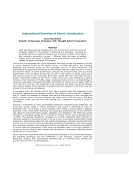
International Churches of Christ: Introduction
Carol Giambalvo
Director of Recovery Programs, AFF Thought Reform Consultant
Abstract
After providing historical background on the International Churches of Christ,
troubling aspects of the group‘s functioning are described, including its
pyramidal structure, totalistic influence over members, isolation of members,
and unhealthy personality changes. Although there are signs of positive
reform within the group, it remains to be seen whether such reforms will
change the abusive character of the group.
Let me start this workshop with a brief description and history of the International Churches
of Christ, formerly known as the Boston Church of Christ Movement, aka Discipling
Ministries, and formerly known as the Crossroads Church of Christ Movement. The
International Churches of Christ should not be confused with the United Church of Christ or
the mainline Church of Christ brotherhood, although the movement did grow out of that
denomination. The movement actually has its roots in the ministry of Chuck Lucas, and it
first became known as the Crossroads Movement, named after the Crossroads Church of
Christ in Gainesville, Florida. It was there, in 1967, that Lucas, while working as a campus
minister at the University of Florida, began employing what are known as shepherding, or
discipling, techniques. Following Crossroads‘ termination of Chuck Lucas in August 1985 for
―recurring sins in his life,‖ the leadership of the movement was taken over by Kip McKean,
who, while a student at the University of Florida, had been baptized in 1972 by Lucas and
trained in the discipling methodology.
In November 2001, Kip McKean and his wife, Elena, stepped down from leadership in the
movement, replaced by two leadership couples. The reason for Kip to take this ―sabbatical‖
was to ―enable the McKeans to address some serious shortcomings in their marriage and
family.‖ Rumors have it that their daughter had ―fallen away‖ from the church. One thing
the McKeans made clear was that their leaving was a sabbatical—meaning it would be
temporary.
However, on November 6, 2002, Kip McKean tendered his resignation from leadership. The
movement quickly rallied a ―Unity‖ Conference and issued a statement of Unity on
November 15th. On February 2, 2003, however, Henry Kriete, a church leader in England,
published a very critical letter describing the abuses and authoritarianism of the movement
and calling for movement-wide changes, apologies, and repentance. This letter was quickly
followed by a published apology by the movement‘s mother church, the Los Angeles Church
of Christ. This apology recognized: arrogance in its staff, weakening other churches by
calling for people and money to be sent to the LA church, encouraging contributions through
compulsion, authoritarian leadership and discipling techniques, improper teaching that they
are the one (and only) true church, measuring spirituality of members by how many people
they recruited, improper (and unbiblical) hierarchy of leadership, and abusive accountability
to church rules and attendance. While these are definitely steps in the right direction, it
remains to be seen whether such changes can take place in a movement sullied by abusive
dynamics for so many years.
Hence, we remain concerned about the International Churches of Christ movement because
the discipling techniques are well established in the hierarchy. Concerns about the
movement emanate from observations indicating that the following have reflected the
group‘s functioning to a troubling degree:
International Churches of Christ: Introduction
Carol Giambalvo
Director of Recovery Programs, AFF Thought Reform Consultant
Abstract
After providing historical background on the International Churches of Christ,
troubling aspects of the group‘s functioning are described, including its
pyramidal structure, totalistic influence over members, isolation of members,
and unhealthy personality changes. Although there are signs of positive
reform within the group, it remains to be seen whether such reforms will
change the abusive character of the group.
Let me start this workshop with a brief description and history of the International Churches
of Christ, formerly known as the Boston Church of Christ Movement, aka Discipling
Ministries, and formerly known as the Crossroads Church of Christ Movement. The
International Churches of Christ should not be confused with the United Church of Christ or
the mainline Church of Christ brotherhood, although the movement did grow out of that
denomination. The movement actually has its roots in the ministry of Chuck Lucas, and it
first became known as the Crossroads Movement, named after the Crossroads Church of
Christ in Gainesville, Florida. It was there, in 1967, that Lucas, while working as a campus
minister at the University of Florida, began employing what are known as shepherding, or
discipling, techniques. Following Crossroads‘ termination of Chuck Lucas in August 1985 for
―recurring sins in his life,‖ the leadership of the movement was taken over by Kip McKean,
who, while a student at the University of Florida, had been baptized in 1972 by Lucas and
trained in the discipling methodology.
In November 2001, Kip McKean and his wife, Elena, stepped down from leadership in the
movement, replaced by two leadership couples. The reason for Kip to take this ―sabbatical‖
was to ―enable the McKeans to address some serious shortcomings in their marriage and
family.‖ Rumors have it that their daughter had ―fallen away‖ from the church. One thing
the McKeans made clear was that their leaving was a sabbatical—meaning it would be
temporary.
However, on November 6, 2002, Kip McKean tendered his resignation from leadership. The
movement quickly rallied a ―Unity‖ Conference and issued a statement of Unity on
November 15th. On February 2, 2003, however, Henry Kriete, a church leader in England,
published a very critical letter describing the abuses and authoritarianism of the movement
and calling for movement-wide changes, apologies, and repentance. This letter was quickly
followed by a published apology by the movement‘s mother church, the Los Angeles Church
of Christ. This apology recognized: arrogance in its staff, weakening other churches by
calling for people and money to be sent to the LA church, encouraging contributions through
compulsion, authoritarian leadership and discipling techniques, improper teaching that they
are the one (and only) true church, measuring spirituality of members by how many people
they recruited, improper (and unbiblical) hierarchy of leadership, and abusive accountability
to church rules and attendance. While these are definitely steps in the right direction, it
remains to be seen whether such changes can take place in a movement sullied by abusive
dynamics for so many years.
Hence, we remain concerned about the International Churches of Christ movement because
the discipling techniques are well established in the hierarchy. Concerns about the
movement emanate from observations indicating that the following have reflected the
group‘s functioning to a troubling degree: