Cultic Studies Review, Vol. 2, No. 2, 2003, Page 24
Freedom of Mind Foundation
New England Institute of Religious Research
Maine Cult Information Network
Cult Hotline and Clinic of the New York Jewish Board of Family and Children‘s
Services
Cult Awareness and Information Center (Australia)
Cult Awareness Center
Cult Information &Family Support (Australia)
Edmonton Society Against Mind Abuse
Ex-Cult Resource Center
FACTNet
FAPES (Argentina)
Forum Against Cults (Israel)
Free Minds
Wellspring Retreat and Resource Center
reFOCUS
Religious Movement Resource Center
REVEAL
The Ross Institute (RI)
Saskatchewan Citizens Against Mind Control
Mind Control Research Center (Japan)
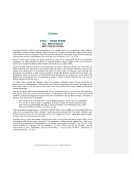
I have not listed the dozens of organizations that fall under Dr. Barker‘s ―Countercult
Groups.‖ Nor have I listed European organizations that are members of FECRIS (Fédération
Européene des Centres de Recherche et d‘Information sur le Sectarisme – European
Federation of Centres of Research and Information on Sectarianism) and other European
organizations. Moreover, I could have listed hundreds of individuals who have written about
cultic groups and/or who offer services to people believing such groups have harmed them.
Hence, scholars who generalize about ―the‖ ―anti-cult movement,‖ when they have had at
best superficial contact with only a few organizations and individuals, make the same error
as laymen and helping professionals who generalize from their limited experience to the
wide world of cults/NRMs, in which there are thousands of groups.
What is clearly needed is systematic and reliable research on individual cult awareness
groups. As Dr. Barker has noted, even though it may be difficult, ―to have direct access to
certain groups or members of the ACM does not excuse us for characterizing them by the
very methods that we accuse them of using in their characterization of us and the NRMs‖
(Barker, 1995, p. 307). In addition, any such study should take into account the socio-
cultural-linguistic milieu of each group. For example, someone who does not understand
French can miss important information when undertaking an in-depth study of a group that
operates in the province of Quebec, Canada.
4. Know thyself!
In making a fair and informed evaluation about an individual or group, we should first ask
ourselves the following questions:
1. To what extent have we accepted the accusatory assessments made by certain
individuals or groups, about the ―ACM‖ or ―PCM‖ without checking for ourselves and
critically evaluating the accuracy of allegations made? Do we ask for documents or
other empirical facts in order to make an informed evaluation?
2. Do we readily accept allegations against those with an opposing point of view
because we believe they are capable of what they are accused of?
Freedom of Mind Foundation
New England Institute of Religious Research
Maine Cult Information Network
Cult Hotline and Clinic of the New York Jewish Board of Family and Children‘s
Services
Cult Awareness and Information Center (Australia)
Cult Awareness Center
Cult Information &Family Support (Australia)
Edmonton Society Against Mind Abuse
Ex-Cult Resource Center
FACTNet
FAPES (Argentina)
Forum Against Cults (Israel)
Free Minds
Wellspring Retreat and Resource Center
reFOCUS
Religious Movement Resource Center
REVEAL
The Ross Institute (RI)
Saskatchewan Citizens Against Mind Control
Mind Control Research Center (Japan)
I have not listed the dozens of organizations that fall under Dr. Barker‘s ―Countercult
Groups.‖ Nor have I listed European organizations that are members of FECRIS (Fédération
Européene des Centres de Recherche et d‘Information sur le Sectarisme – European
Federation of Centres of Research and Information on Sectarianism) and other European
organizations. Moreover, I could have listed hundreds of individuals who have written about
cultic groups and/or who offer services to people believing such groups have harmed them.
Hence, scholars who generalize about ―the‖ ―anti-cult movement,‖ when they have had at
best superficial contact with only a few organizations and individuals, make the same error
as laymen and helping professionals who generalize from their limited experience to the
wide world of cults/NRMs, in which there are thousands of groups.
What is clearly needed is systematic and reliable research on individual cult awareness
groups. As Dr. Barker has noted, even though it may be difficult, ―to have direct access to
certain groups or members of the ACM does not excuse us for characterizing them by the
very methods that we accuse them of using in their characterization of us and the NRMs‖
(Barker, 1995, p. 307). In addition, any such study should take into account the socio-
cultural-linguistic milieu of each group. For example, someone who does not understand
French can miss important information when undertaking an in-depth study of a group that
operates in the province of Quebec, Canada.
4. Know thyself!
In making a fair and informed evaluation about an individual or group, we should first ask
ourselves the following questions:
1. To what extent have we accepted the accusatory assessments made by certain
individuals or groups, about the ―ACM‖ or ―PCM‖ without checking for ourselves and
critically evaluating the accuracy of allegations made? Do we ask for documents or
other empirical facts in order to make an informed evaluation?
2. Do we readily accept allegations against those with an opposing point of view
because we believe they are capable of what they are accused of?