Cultic Studies Review, Vol. 2, No. 2, 2003, Page 223
of family ties, and breaking of individual critical thinking will continue to find vocabulary that
assists in distinctions that can lead to release and freedom.
Positive reviews see this book as a multifaceted and multidisciplinary inspection of
millenarian ideas from a comparative and historical perspective. It is that indeed, and we
can be glad for this important starting point in understanding the importance of ideas about
history‘s culmination. This will enable our further consideration as to how ―end-time
thinking‖ can move in helpful or destructive directions.
Rev. Dean Borgman
Gordon-Conwell Theological Seminary
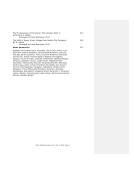
The Fundamentals of Extremism: The Christian Right in America.
Blaker, K. (Ed.) (2003) New Boston MI: New Boston Books. 287 page paperback,
$15.95.
The author is ―a syndicated writer and columnist, social advocate, and staunch supporter of
the separation of church and state‖ (p. 286). She assures us in Chapter 1: ―most
fundamentalists and those with similar characteristics are good people, but we should have
―greater awareness of how fundamentalist beliefs and practices harm its adherents, its
detractors, and everyone in between‖ (p. 24). The book is written in a style more
journalistic than scientific. References to chapter content are in an impressive 68 pages of
end notes and a 12-page two-column index, 20% of the book. That would seem to justify
the foreword‘s claim of being ―well documented.‖ However, many references are to
newspaper and magazine articles, newsletters, online websites, and books by authors with
similar views. This lessens the impact of the book, since religious fundamentalists also rely
on selected references.
Three of the eight chapters (1, 4, and 5) are written by the author the others are by
different writers. Chapter 2 is by Edwin Frederick Kagin, an attorney and ―son of a
Presbyterian minister‖ and director of Camp Quest, ―a residential summer camp for children
of atheists and freethinkers.‖ Chapter 3 is by Bobbie Kirkhart, a retired teacher and
―president of Atheist Alliance International.‖ Chapter 6 is by John M. Suarez, a psychiatrist
and board member of Americans United for the Separation of Church and State. Chapter 7
is by Herb Silverman, a math professor on the board of the American Humanist Association.
Chapter 8 is by Edward M. Buckner, editor of The Secular Humanist. The writers‘ affiliations
presage what is to come.
Chapter 1 charges: ―Christian fundamentalist schooling is known for indoctrinating children
through recitation and memorization of the Bible and prayers, reinforced with hellfire and
brimstone lectures‖ (p. 8). The Army of God's Bombing and shooting at abortion clinics
show the ―strong relationship between fundamentalism and violence‖ (p. 9). It is
―imperative to our safety‖ to ―recognize the threat‖ of Christian extremist factions on the
increase in militias and training camps (p. 11). Though the Catholic League is ―less violent
in nature‖ than Christian Identity or the Army of God, it is ―one of the main organizers and
supporters behind the Christian right‖ (p. 13). Its effort to have the author fired for what it
considered ―patently reckless and arguable libelous accusations‖ and a cartoonist who
alluded to priest pedophiles are offered as examples of ―bully tactics‖ (pp. 14-16). An
example of the Christian right's use of ―misinformation and half-truths‖ to influence public
opinion is the alleged over diagnosing and drug treatment of ADHD. Chapter 1 ends by
warning us that ―this invasion‖ seeks to ―slowly infiltrate all arenas from public schools and
local governments to Congress and even the presidency‖ (p. 24).
Chapter 2 describes ―the gathering storm‖ of fundamentalist Christians, Muslims, Hindus,
and Jews who are increasing worldwide and who ―have probably been around as long as
of family ties, and breaking of individual critical thinking will continue to find vocabulary that
assists in distinctions that can lead to release and freedom.
Positive reviews see this book as a multifaceted and multidisciplinary inspection of
millenarian ideas from a comparative and historical perspective. It is that indeed, and we
can be glad for this important starting point in understanding the importance of ideas about
history‘s culmination. This will enable our further consideration as to how ―end-time
thinking‖ can move in helpful or destructive directions.
Rev. Dean Borgman
Gordon-Conwell Theological Seminary
The Fundamentals of Extremism: The Christian Right in America.
Blaker, K. (Ed.) (2003) New Boston MI: New Boston Books. 287 page paperback,
$15.95.
The author is ―a syndicated writer and columnist, social advocate, and staunch supporter of
the separation of church and state‖ (p. 286). She assures us in Chapter 1: ―most
fundamentalists and those with similar characteristics are good people, but we should have
―greater awareness of how fundamentalist beliefs and practices harm its adherents, its
detractors, and everyone in between‖ (p. 24). The book is written in a style more
journalistic than scientific. References to chapter content are in an impressive 68 pages of
end notes and a 12-page two-column index, 20% of the book. That would seem to justify
the foreword‘s claim of being ―well documented.‖ However, many references are to
newspaper and magazine articles, newsletters, online websites, and books by authors with
similar views. This lessens the impact of the book, since religious fundamentalists also rely
on selected references.
Three of the eight chapters (1, 4, and 5) are written by the author the others are by
different writers. Chapter 2 is by Edwin Frederick Kagin, an attorney and ―son of a
Presbyterian minister‖ and director of Camp Quest, ―a residential summer camp for children
of atheists and freethinkers.‖ Chapter 3 is by Bobbie Kirkhart, a retired teacher and
―president of Atheist Alliance International.‖ Chapter 6 is by John M. Suarez, a psychiatrist
and board member of Americans United for the Separation of Church and State. Chapter 7
is by Herb Silverman, a math professor on the board of the American Humanist Association.
Chapter 8 is by Edward M. Buckner, editor of The Secular Humanist. The writers‘ affiliations
presage what is to come.
Chapter 1 charges: ―Christian fundamentalist schooling is known for indoctrinating children
through recitation and memorization of the Bible and prayers, reinforced with hellfire and
brimstone lectures‖ (p. 8). The Army of God's Bombing and shooting at abortion clinics
show the ―strong relationship between fundamentalism and violence‖ (p. 9). It is
―imperative to our safety‖ to ―recognize the threat‖ of Christian extremist factions on the
increase in militias and training camps (p. 11). Though the Catholic League is ―less violent
in nature‖ than Christian Identity or the Army of God, it is ―one of the main organizers and
supporters behind the Christian right‖ (p. 13). Its effort to have the author fired for what it
considered ―patently reckless and arguable libelous accusations‖ and a cartoonist who
alluded to priest pedophiles are offered as examples of ―bully tactics‖ (pp. 14-16). An
example of the Christian right's use of ―misinformation and half-truths‖ to influence public
opinion is the alleged over diagnosing and drug treatment of ADHD. Chapter 1 ends by
warning us that ―this invasion‖ seeks to ―slowly infiltrate all arenas from public schools and
local governments to Congress and even the presidency‖ (p. 24).
Chapter 2 describes ―the gathering storm‖ of fundamentalist Christians, Muslims, Hindus,
and Jews who are increasing worldwide and who ―have probably been around as long as