Cultic Studies Review, Vol. 2, No. 2, 2003, Page 225
fraction‖ become terrorists ―the number holding such attitudes is undoubtedly significant‖
(p. 141). All these factors cause a ―fundamentalist ripple‖ through society with ―negative
consequences‖ (p. 153).
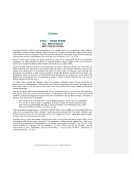
Chapter 6 examines Christian fundamentalism in the context of the First Amendment. It
alleges ―most wars, conquests, and bloodsheds (sic) throughout history have featured a
strong religious element‖ (p. 155). The First Amendment has kept us from ―the bottomless
pit of religious war.‖ A ―key argument‖ of Christian fundamentalists is that a Christian nation
has ―lost touch with its Christian origins‖ (p. 159). This is a myth allowing religion ―into all
aspects of public and governmental endeavors.‖ The First Amendment ensures freedom of
and also from religion, thus encompassing all citizens. Supreme Court decisions relating to
it are explored, such as school busing, religious clubs or classes in public schools, school
prayer, public funds for parochial teacher salaries, school vouchers, creationism as science
―almost exclusively an American phenomenon‖ (p. 162), and the latest, the faith-based
initiative (p. 162). Challenges to the First Amendment have ―skyrocketed over the past
decade‖ (p. 164). The strategy of the religious right is to ―flaunt symbolic challenges‖ as a
―distraction from substantive matters.‖ Both should be opposed ―but the resources are not
there‖ (p. 165).
Chapter 7 describes political tactics of the Christian right, mainly political activism such as
endorsing conservative candidates, supporting restrictive legislation, media saturation and
manipulation, and strategic alliances. ―Politics is the art of negotiation and compromise
while fundamentalism espouses an uncompromising and absolutist worldview‖ (p. 192).
―They would like to replace our secular democracy with a fundamentalist theocracy‖ (p.
204). Dissenters are considered ―not true Christians‖ or as attacking religion. The author‘s
gubernatorial candidacy confronting fundamentalist politics is detailed as a kind of case
study. The ―religious right is currently much better organized than the political left‖ (p.
206). It is a minority ―though an energized and outspoken one‖ (p. 208), and the author
recommends more cooperation in challenging extremist claims.
Chapter 8 repeats the warning: ―fundamentalism presents real dangers to the lives and
liberties of all Americans‖ (p. 209). Repeated also is the disclaimer that not all
fundamentalists are dangerous but those who are behave more emotionally than rationally
they are unyielding, militaristic and militant absolutists, who demand strict obedience and
unquestioning loyalty They are ―willing to be violent in the course of doing ‗battle royal‘‖ (p.
210). Islamic extremism is described as similar but not identical, despite ―brusque dismissal
by Christian fundamentalists‖ (p. 212). Similarities are their treatment of women,
opposition to abortion and homosexuality, censorship, and intolerance of dissent. ―Paranoid
and extremist thoughts of vengeance are common among fundamentalists‖ (p.227). We
should empathize with their ―needs, fears, and anxieties‖ (p. 227). Secularists ―looking
beyond their own beliefs or lack of beliefs are the only hope for combating the perils of
fundamentalism‖ (p. 211). ―Secularism is quintessentially the American way‖ (p. 222). It
accepts differences, cultural diversity, social complexity, alternative explanations, a
scientific approach ―where all religions and philosophies compete in the marketplace of
ideas‖ (p. 240).
This book is an encyclopedic indictment of the extreme Christian right, but its content can
be applied to any extremist belief system. It and the current world situation can help
awaken us to the need to consider and better understand all sides of religious differences
and see them in total and true perspective. The book is recommended for what it is: a well-
articulated informative secular presentation in the debate between liberal and conservative
views of religion and the danger in extremes.
Frank MacHovec, Ph.D.
Center for the Study of Self
fraction‖ become terrorists ―the number holding such attitudes is undoubtedly significant‖
(p. 141). All these factors cause a ―fundamentalist ripple‖ through society with ―negative
consequences‖ (p. 153).
Chapter 6 examines Christian fundamentalism in the context of the First Amendment. It
alleges ―most wars, conquests, and bloodsheds (sic) throughout history have featured a
strong religious element‖ (p. 155). The First Amendment has kept us from ―the bottomless
pit of religious war.‖ A ―key argument‖ of Christian fundamentalists is that a Christian nation
has ―lost touch with its Christian origins‖ (p. 159). This is a myth allowing religion ―into all
aspects of public and governmental endeavors.‖ The First Amendment ensures freedom of
and also from religion, thus encompassing all citizens. Supreme Court decisions relating to
it are explored, such as school busing, religious clubs or classes in public schools, school
prayer, public funds for parochial teacher salaries, school vouchers, creationism as science
―almost exclusively an American phenomenon‖ (p. 162), and the latest, the faith-based
initiative (p. 162). Challenges to the First Amendment have ―skyrocketed over the past
decade‖ (p. 164). The strategy of the religious right is to ―flaunt symbolic challenges‖ as a
―distraction from substantive matters.‖ Both should be opposed ―but the resources are not
there‖ (p. 165).
Chapter 7 describes political tactics of the Christian right, mainly political activism such as
endorsing conservative candidates, supporting restrictive legislation, media saturation and
manipulation, and strategic alliances. ―Politics is the art of negotiation and compromise
while fundamentalism espouses an uncompromising and absolutist worldview‖ (p. 192).
―They would like to replace our secular democracy with a fundamentalist theocracy‖ (p.
204). Dissenters are considered ―not true Christians‖ or as attacking religion. The author‘s
gubernatorial candidacy confronting fundamentalist politics is detailed as a kind of case
study. The ―religious right is currently much better organized than the political left‖ (p.
206). It is a minority ―though an energized and outspoken one‖ (p. 208), and the author
recommends more cooperation in challenging extremist claims.
Chapter 8 repeats the warning: ―fundamentalism presents real dangers to the lives and
liberties of all Americans‖ (p. 209). Repeated also is the disclaimer that not all
fundamentalists are dangerous but those who are behave more emotionally than rationally
they are unyielding, militaristic and militant absolutists, who demand strict obedience and
unquestioning loyalty They are ―willing to be violent in the course of doing ‗battle royal‘‖ (p.
210). Islamic extremism is described as similar but not identical, despite ―brusque dismissal
by Christian fundamentalists‖ (p. 212). Similarities are their treatment of women,
opposition to abortion and homosexuality, censorship, and intolerance of dissent. ―Paranoid
and extremist thoughts of vengeance are common among fundamentalists‖ (p.227). We
should empathize with their ―needs, fears, and anxieties‖ (p. 227). Secularists ―looking
beyond their own beliefs or lack of beliefs are the only hope for combating the perils of
fundamentalism‖ (p. 211). ―Secularism is quintessentially the American way‖ (p. 222). It
accepts differences, cultural diversity, social complexity, alternative explanations, a
scientific approach ―where all religions and philosophies compete in the marketplace of
ideas‖ (p. 240).
This book is an encyclopedic indictment of the extreme Christian right, but its content can
be applied to any extremist belief system. It and the current world situation can help
awaken us to the need to consider and better understand all sides of religious differences
and see them in total and true perspective. The book is recommended for what it is: a well-
articulated informative secular presentation in the debate between liberal and conservative
views of religion and the danger in extremes.
Frank MacHovec, Ph.D.
Center for the Study of Self