Cultic Studies Review, Vol. 2, No. 2, 2003, Page 48
News Summaries
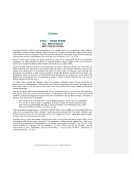
Aum Shinrikyo
Internet Recruiting
Aum (now called Aleph) is reportedly using female members who go on to Internet match-
making sites to ―lure‖ new male members. Aum has been making a comeback of sorts since
2001 and denies the allegation.
Police gave an example of how a man answered a female Aum member‘s matchmaking site
message, met her, and went to a class with her to learn yoga. He became a regular yoga
practitioner. Later, the woman approached him and asked if he would like to meet Joyu, a
notorious Aum leader. The man declined, but relented when she told him that meeting Joyu
would lead to advanced yoga study. He soon began attending ―cult‖ meetings and
eventually became a member, but left when he developed doubts about the group‘s
teachings. (Mainichi Shimbun, Internet, 1/29/03)
Compensation for Rejection
The Mwito District Court ordered the city government to pay two Aum members 600,000
yen [$5,000] for rejecting their application to register as residents. The judge said that the
two, one 36 and the other 54, were emotionally distressed by the rejection, which meant
that they were not able to ―register their personal seals‖ or renew their driver‘s licenses.
(Daily Yomiuri, Internet, 1/29/03)
―Still a Threat‖
A government report released in April says that Aum Shinrikyo, which attacked the Tokyo
subway in 1995 with poison gas, ―remains a danger of inflicting indiscriminate mass
murder.‖ According to the report, Aum has tried to avoid Public Security Investigation
inspectors by encoding computer data, hiding leader Shoko Ashahara’s sermons, and
covering up evidence of members still worshipping him. (Mainichi Shimbun, Internet,
4/11/03)
Said to Be Failing
While Aum Shinrikyo says that it still has hundreds of followers, the long absence of leader
Shoko Asahara, now on trial, has ―apparently left die-hard members wondering whether
there is any point in preserving the group.‖ The fact that 30% of the 30,000 ―hits‖ on a new
web page containing Asahara‘s lectures were from Aum members suggests that they are
―starving for direct messages‖ from him, according to a former member.
In 1995, when the Aum poison gas attacks occurred, Aum had 1,000 members living
communally and 10,000 who lived and worked in the outside world. Today, 522 live
together and some 672 regularly visit one or another of Aum‘s 21 facilities for religious
observances or seminars, or to donate their income, according to an Aum report to the
government security agency. The average age of members is now over 35, with few young
people joining. Asahara‘s refusal to speak during his trial has also led to the departure of
many disenchanted followers, former members believe. (Hiroshi Matsubara, Japan Times,
Internet, 4/23/03)
Use of ―Mind Control‖ Kept Recruits
Journalist Shoko Egawa thinks that many bright students from prestigious universities
became involved with Aum Shinrikyo because of the group‘s system of ―mind control.‖ The
methods included food and sleep deprivation, long hours of ―ascetic training,‖ sometimes
solitary confinement, rituals that used hallucinogenic drugs and meditation, all of which
News Summaries
Aum Shinrikyo
Internet Recruiting
Aum (now called Aleph) is reportedly using female members who go on to Internet match-
making sites to ―lure‖ new male members. Aum has been making a comeback of sorts since
2001 and denies the allegation.
Police gave an example of how a man answered a female Aum member‘s matchmaking site
message, met her, and went to a class with her to learn yoga. He became a regular yoga
practitioner. Later, the woman approached him and asked if he would like to meet Joyu, a
notorious Aum leader. The man declined, but relented when she told him that meeting Joyu
would lead to advanced yoga study. He soon began attending ―cult‖ meetings and
eventually became a member, but left when he developed doubts about the group‘s
teachings. (Mainichi Shimbun, Internet, 1/29/03)
Compensation for Rejection
The Mwito District Court ordered the city government to pay two Aum members 600,000
yen [$5,000] for rejecting their application to register as residents. The judge said that the
two, one 36 and the other 54, were emotionally distressed by the rejection, which meant
that they were not able to ―register their personal seals‖ or renew their driver‘s licenses.
(Daily Yomiuri, Internet, 1/29/03)
―Still a Threat‖
A government report released in April says that Aum Shinrikyo, which attacked the Tokyo
subway in 1995 with poison gas, ―remains a danger of inflicting indiscriminate mass
murder.‖ According to the report, Aum has tried to avoid Public Security Investigation
inspectors by encoding computer data, hiding leader Shoko Ashahara’s sermons, and
covering up evidence of members still worshipping him. (Mainichi Shimbun, Internet,
4/11/03)
Said to Be Failing
While Aum Shinrikyo says that it still has hundreds of followers, the long absence of leader
Shoko Asahara, now on trial, has ―apparently left die-hard members wondering whether
there is any point in preserving the group.‖ The fact that 30% of the 30,000 ―hits‖ on a new
web page containing Asahara‘s lectures were from Aum members suggests that they are
―starving for direct messages‖ from him, according to a former member.
In 1995, when the Aum poison gas attacks occurred, Aum had 1,000 members living
communally and 10,000 who lived and worked in the outside world. Today, 522 live
together and some 672 regularly visit one or another of Aum‘s 21 facilities for religious
observances or seminars, or to donate their income, according to an Aum report to the
government security agency. The average age of members is now over 35, with few young
people joining. Asahara‘s refusal to speak during his trial has also led to the departure of
many disenchanted followers, former members believe. (Hiroshi Matsubara, Japan Times,
Internet, 4/23/03)
Use of ―Mind Control‖ Kept Recruits
Journalist Shoko Egawa thinks that many bright students from prestigious universities
became involved with Aum Shinrikyo because of the group‘s system of ―mind control.‖ The
methods included food and sleep deprivation, long hours of ―ascetic training,‖ sometimes
solitary confinement, rituals that used hallucinogenic drugs and meditation, all of which