Cultic Studies Review, Vol. 2, No. 2, 2003, Page 113
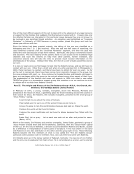
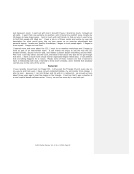
Sugar is always found in liquid form in NATURE. Sugar has a very strong
relationship to fire as we saw in our experiment (the nature of sugar). We
saw how when we placed some sugar into a crucible, it burst into flame
(highly combustible after advancing [to] its middle form a caramel -like
substance). It also has an affinity to air (as we saw from the smoke that
arose) and water because we saw that it was highly soluble. Not very strong
relationship to earth.
[Teacher‘s note] Perfect!
Parents might feel proud that their elementary school student had a class in organic
chemistry. On the face of it, it sounds advanced. Who‘d imagine the class would be about
―the four elements‖?
Denial
In the private Waldorf schools, it‘s always been necessary to appeal to mainstream parents.
There aren‘t enough Anthroposophists to support the schools, so the majority of the
students will be from ―outside‖ the group. From the beginning, the schools have taken care
to conceal and deny the Anthroposophical content of the education. In a brochure given to
parents in San Francisco, where my son attended, and also used by some other schools,
there is only one mention of Anthroposophy. Board of Directors member John Bloom wrote:
Anthroposophy informs the education, the curriculum, and the teacher
training. It is the basis for the school‘s values, priorities, and organization.
However, it is not taught in the school. (Bloom, 1991, p. 2)
Let‘s deconstruct this a bit. If A is ―the basis for‖ B, then we can say that B is based on A.
But when A ―informs‖ B, what is that relationship? It‘s an intentionally vague statement. It
must mean that at least some of the content of B comes from A. Expanding Bloom‘s
statement, then:
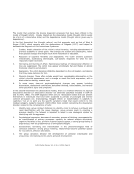
The school‘s values are based on Anthroposophy.
The school‘s priorities are based on Anthroposophy.
The school‘s organization is based on Anthroposophy.
Some of the teacher training is Anthroposophy
Some of the curriculum is Anthroposophy
Some of the education is Anthroposophy
Anthroposophy is not taught in the school.
At which point a loud clang of cognitive dissonance should sound. Regarding the aspect of
church-state separation, would a public school be acceptable if it stated:
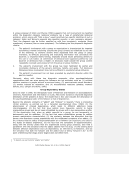
The school‘s values are based on Catholicism.
The school‘s priorities are based on Catholicism.
The school‘s organization is based on Catholicism.
Some of the teacher training is Catholicism
Some of the curriculum is Catholicism
Some of the education is Catholicism
Catholicism is not taught in the school.
Sugar is always found in liquid form in NATURE. Sugar has a very strong
relationship to fire as we saw in our experiment (the nature of sugar). We
saw how when we placed some sugar into a crucible, it burst into flame
(highly combustible after advancing [to] its middle form a caramel -like
substance). It also has an affinity to air (as we saw from the smoke that
arose) and water because we saw that it was highly soluble. Not very strong
relationship to earth.
[Teacher‘s note] Perfect!
Parents might feel proud that their elementary school student had a class in organic
chemistry. On the face of it, it sounds advanced. Who‘d imagine the class would be about
―the four elements‖?
Denial
In the private Waldorf schools, it‘s always been necessary to appeal to mainstream parents.
There aren‘t enough Anthroposophists to support the schools, so the majority of the
students will be from ―outside‖ the group. From the beginning, the schools have taken care
to conceal and deny the Anthroposophical content of the education. In a brochure given to
parents in San Francisco, where my son attended, and also used by some other schools,
there is only one mention of Anthroposophy. Board of Directors member John Bloom wrote:
Anthroposophy informs the education, the curriculum, and the teacher
training. It is the basis for the school‘s values, priorities, and organization.
However, it is not taught in the school. (Bloom, 1991, p. 2)
Let‘s deconstruct this a bit. If A is ―the basis for‖ B, then we can say that B is based on A.
But when A ―informs‖ B, what is that relationship? It‘s an intentionally vague statement. It
must mean that at least some of the content of B comes from A. Expanding Bloom‘s
statement, then:
The school‘s values are based on Anthroposophy.
The school‘s priorities are based on Anthroposophy.
The school‘s organization is based on Anthroposophy.
Some of the teacher training is Anthroposophy
Some of the curriculum is Anthroposophy
Some of the education is Anthroposophy
Anthroposophy is not taught in the school.
At which point a loud clang of cognitive dissonance should sound. Regarding the aspect of
church-state separation, would a public school be acceptable if it stated:
The school‘s values are based on Catholicism.
The school‘s priorities are based on Catholicism.
The school‘s organization is based on Catholicism.
Some of the teacher training is Catholicism
Some of the curriculum is Catholicism
Some of the education is Catholicism
Catholicism is not taught in the school.