Cultic Studies Review, Vol. 2, No. 2, 2003, Page 6
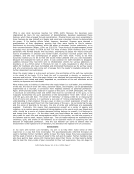
In the two years prior to the publication of the article, I had slowly and painfully begun to
acknowledge to myself and others that there were aspects of SYDA and its leaders that I
found unethical and disturbing. In particular, I had witnessed and personally experienced
Gurumayi verbally and emotionally abusing her followers, publicly shaming and humiliating
those with whom she was displeased in cruel and harsh ways. I had heard her tell lies and
witnessed her deliberately deceiving others. I witnessed her condoning and encouraging
illegal and unethical business and labor practices, such as smuggling gold and U.S. dollars in
and out of India, and exploiting workers without providing adequate housing, food, health
care, or social security. I was aware that for many years, Gurumayi, and her predecessor,
Swami Muktananda, had been using spies, hidden cameras, and microphones to gather
information about followers in the ashram. I had heard whispers that Muktananda, contrary
to his claims of celibacy and renunciation, had extensive sexual relations with female
followers, which he then lied about and which he attempted to cover up with threats of
violence to those who sought to expose him. Later, after I exited Siddha Yoga in 1994, I
came to recognize in Muktananda‘s and Gurumayi‘s behavior toward their followers the
hallmarks of abuse: the use of power to seduce, coerce, belittle, humiliate, and intimidate
others for the ultimate purpose of psychological enslavement and parasitic exploitation.
I had deeply suppressed my doubts about SYDA for many years, but they suddenly and
dramatically crystallized when I heard the story of the young woman I knew. In the phrase,
―Don‘t ever tell anyone about this, especially not your mother,‖ I heard a chilling echo of the
voice of the incestuous father, the battering husband, the sexual harasser, the rapist. As
Judith Herman says, in her seminal work entitled Trauma and Recovery (1992), ―secrecy
and silence are the perpetrator‘s first line of defense‖ (p. 8). It was hearing these words,
―Don‘t ever tell,‖ that broke for me what Ernst Becker (1973) has called ―the spell cast by
persons --the nexus of unfreedom.‖ I recognized that, like many of my social work clients
who were abused as children by their parents, I too had been subjected to abuse—by the
person I called my guru.
In this paper I will: 1) present a psychoanalytic conceptualization of the psychopathology of
the cult leader 2) discuss ways that cult leaders manipulate, abuse, and exploit followers
and 3) present theories about individual relational and also broader cultural factors that
influence the individual‘s psychological organization in ways that may contribute to
vulnerability to cult participation. I draw from various psychoanalytic schools, including
object relations (both Kleinian and Middle School), interpersonal, self psychology,
intersubjectivity and contemporary relational schools. As a former participant in a cult, and
now an observer of cults working as a psychoanalytic therapist with former cult members, it
is my hope that the psychoanalytic formulations I discuss here will be helpful to others
concerned with understanding cult phenomena.
What Is a Cult, and Why Do People Get Involved in Them?
Cult experts estimate that there are several thousand cultic groups in the United States
today and that at least four million people have at some point in recent years been in one or
more of such groups (Langone, 1993, p. 29). The former Cult Awareness Network, before
being taken over by the Church of Scientology in the late ‗90s, reported that it received
about 18,000 inquiries a year (Tobias &Lalich, 1994). Those of us interested in the
phenomenon of cults have attempted to define our terms in various ways (see, e.g.,
Langone, 1993, p. 5). In this paper, I am defining a cult largely on the basis of the
personality of its leader. In my definition, a cult is a group that is led by a person who
claims, explicitly or implicitly, to have reached human perfection or, in the case of a
religious cult, who claims unity with the divine and therefore claims to be exempt from
social or moral limitations or restrictions. In the language of psychoanalytic diagnostics,
such people would be called pathological narcissists, with paranoid and megalomaniacal
tendencies. Without the cult leader, there is no cult, and from my perspective, in order to
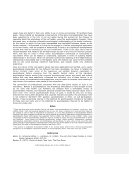
In the two years prior to the publication of the article, I had slowly and painfully begun to
acknowledge to myself and others that there were aspects of SYDA and its leaders that I
found unethical and disturbing. In particular, I had witnessed and personally experienced
Gurumayi verbally and emotionally abusing her followers, publicly shaming and humiliating
those with whom she was displeased in cruel and harsh ways. I had heard her tell lies and
witnessed her deliberately deceiving others. I witnessed her condoning and encouraging
illegal and unethical business and labor practices, such as smuggling gold and U.S. dollars in
and out of India, and exploiting workers without providing adequate housing, food, health
care, or social security. I was aware that for many years, Gurumayi, and her predecessor,
Swami Muktananda, had been using spies, hidden cameras, and microphones to gather
information about followers in the ashram. I had heard whispers that Muktananda, contrary
to his claims of celibacy and renunciation, had extensive sexual relations with female
followers, which he then lied about and which he attempted to cover up with threats of
violence to those who sought to expose him. Later, after I exited Siddha Yoga in 1994, I
came to recognize in Muktananda‘s and Gurumayi‘s behavior toward their followers the
hallmarks of abuse: the use of power to seduce, coerce, belittle, humiliate, and intimidate
others for the ultimate purpose of psychological enslavement and parasitic exploitation.
I had deeply suppressed my doubts about SYDA for many years, but they suddenly and
dramatically crystallized when I heard the story of the young woman I knew. In the phrase,
―Don‘t ever tell anyone about this, especially not your mother,‖ I heard a chilling echo of the
voice of the incestuous father, the battering husband, the sexual harasser, the rapist. As
Judith Herman says, in her seminal work entitled Trauma and Recovery (1992), ―secrecy
and silence are the perpetrator‘s first line of defense‖ (p. 8). It was hearing these words,
―Don‘t ever tell,‖ that broke for me what Ernst Becker (1973) has called ―the spell cast by
persons --the nexus of unfreedom.‖ I recognized that, like many of my social work clients
who were abused as children by their parents, I too had been subjected to abuse—by the
person I called my guru.
In this paper I will: 1) present a psychoanalytic conceptualization of the psychopathology of
the cult leader 2) discuss ways that cult leaders manipulate, abuse, and exploit followers
and 3) present theories about individual relational and also broader cultural factors that
influence the individual‘s psychological organization in ways that may contribute to
vulnerability to cult participation. I draw from various psychoanalytic schools, including
object relations (both Kleinian and Middle School), interpersonal, self psychology,
intersubjectivity and contemporary relational schools. As a former participant in a cult, and
now an observer of cults working as a psychoanalytic therapist with former cult members, it
is my hope that the psychoanalytic formulations I discuss here will be helpful to others
concerned with understanding cult phenomena.
What Is a Cult, and Why Do People Get Involved in Them?
Cult experts estimate that there are several thousand cultic groups in the United States
today and that at least four million people have at some point in recent years been in one or
more of such groups (Langone, 1993, p. 29). The former Cult Awareness Network, before
being taken over by the Church of Scientology in the late ‗90s, reported that it received
about 18,000 inquiries a year (Tobias &Lalich, 1994). Those of us interested in the
phenomenon of cults have attempted to define our terms in various ways (see, e.g.,
Langone, 1993, p. 5). In this paper, I am defining a cult largely on the basis of the
personality of its leader. In my definition, a cult is a group that is led by a person who
claims, explicitly or implicitly, to have reached human perfection or, in the case of a
religious cult, who claims unity with the divine and therefore claims to be exempt from
social or moral limitations or restrictions. In the language of psychoanalytic diagnostics,
such people would be called pathological narcissists, with paranoid and megalomaniacal
tendencies. Without the cult leader, there is no cult, and from my perspective, in order to