Cultic Studies Review, Vol. 2, No. 2, 2003, Page 75
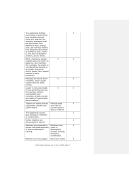
or required to live and/or
socialize only with other
group members.
the enemy camp
for operations,
but socialization
limited and
restricted.
Lessons for the Future
If a cult leader dies or is disgraced, a cult will either founder or move toward the
mainstream (Kahler, 1999). If Usama bin Laden is killed, then a man who organized an
effective militant arm of the Islamist movement will have been eliminated and the
effectiveness of al Qaeda perhaps irreparably harmed. However, the Islamist movement will
continue because it is a major thread of contemporary Islamic theory.
A Civil War is occurring in Islam over how to construct a successful Islamic society. While
bin Laden‘s major violence has been against the West, his ultimate goal is to cleanse the
Islamic world of corrupt secular governments and replace them with Islamic law. His
terrorist acts are against the West, but his focus is on the Islamic world. Whether his vision
has any future within Islam will be up to Islam itself.
This war for the heart and meaning of Islam could continue for generations. As one pro-bin
Laden Website, Azzam.com, stated on 20 November, 2001:
The war in Afghanistan is the beginning of a long war that will last several
years, perhaps decades, and eventually end with victory for the believers and
a good outcome for the Muslim Ummah. This is not just an optimistic opinion,
but it is part of our religious belief to believe that Islam will eventually
become victorious even though the disbelievers may detest it.
The West must concede the author is probably right about the length of the conflict it must
earnestly hope he is wrong regarding the outcome.
There is little outside political forces can do to mold the future of Islam. They can attempt to
enhance the stability of moderate Islamic states by increasing trade and improving
relations, even with countries they have hitherto excluded. Iran may be an Islamic society
hostile toward the United States, but it is also struggling to build democracy and, for that
alone, deserves diplomatic and political recognition.
Foreign assistance could also be used build schools that provide the intellectual foundations
needed for secular states. Al Qaeda found ready recruits from Arab and Muslim schools,
which often teach hatred for Jews and Christians and the virtues of violence and war
(Center for the Monitoring of the Impact of Peace, 2001). Pakistani officials estimate that 10
to 15 percent of the country‘s tens of thousands of madrasahs were simply inculcation
factories for jihad warriors (Stern, J., 2000).
Countries and peoples build national narratives that tell them not only where they have
been, but what ideals are important to the society. These national narratives point the
youth toward their stars. The West can help shape the narratives within Arab history books
away from conflict and more toward humanist values. Moreover, the West should look both
at Islamic popular culture, and at its own, for ways to reduce the view that violence is a
viable option.
Al Qaeda will not be the last threat to modern secular culture. We must concede that
armed fanaticism, spawned by religious or blind ideological fervor, probably represents
some of the greatest threats today. Fanaticism is immune to rational debate, dismissive of
evidence, and incapable of compromise.
or required to live and/or
socialize only with other
group members.
the enemy camp
for operations,
but socialization
limited and
restricted.
Lessons for the Future
If a cult leader dies or is disgraced, a cult will either founder or move toward the
mainstream (Kahler, 1999). If Usama bin Laden is killed, then a man who organized an
effective militant arm of the Islamist movement will have been eliminated and the
effectiveness of al Qaeda perhaps irreparably harmed. However, the Islamist movement will
continue because it is a major thread of contemporary Islamic theory.
A Civil War is occurring in Islam over how to construct a successful Islamic society. While
bin Laden‘s major violence has been against the West, his ultimate goal is to cleanse the
Islamic world of corrupt secular governments and replace them with Islamic law. His
terrorist acts are against the West, but his focus is on the Islamic world. Whether his vision
has any future within Islam will be up to Islam itself.
This war for the heart and meaning of Islam could continue for generations. As one pro-bin
Laden Website, Azzam.com, stated on 20 November, 2001:
The war in Afghanistan is the beginning of a long war that will last several
years, perhaps decades, and eventually end with victory for the believers and
a good outcome for the Muslim Ummah. This is not just an optimistic opinion,
but it is part of our religious belief to believe that Islam will eventually
become victorious even though the disbelievers may detest it.
The West must concede the author is probably right about the length of the conflict it must
earnestly hope he is wrong regarding the outcome.
There is little outside political forces can do to mold the future of Islam. They can attempt to
enhance the stability of moderate Islamic states by increasing trade and improving
relations, even with countries they have hitherto excluded. Iran may be an Islamic society
hostile toward the United States, but it is also struggling to build democracy and, for that
alone, deserves diplomatic and political recognition.
Foreign assistance could also be used build schools that provide the intellectual foundations
needed for secular states. Al Qaeda found ready recruits from Arab and Muslim schools,
which often teach hatred for Jews and Christians and the virtues of violence and war
(Center for the Monitoring of the Impact of Peace, 2001). Pakistani officials estimate that 10
to 15 percent of the country‘s tens of thousands of madrasahs were simply inculcation
factories for jihad warriors (Stern, J., 2000).
Countries and peoples build national narratives that tell them not only where they have
been, but what ideals are important to the society. These national narratives point the
youth toward their stars. The West can help shape the narratives within Arab history books
away from conflict and more toward humanist values. Moreover, the West should look both
at Islamic popular culture, and at its own, for ways to reduce the view that violence is a
viable option.
Al Qaeda will not be the last threat to modern secular culture. We must concede that
armed fanaticism, spawned by religious or blind ideological fervor, probably represents
some of the greatest threats today. Fanaticism is immune to rational debate, dismissive of
evidence, and incapable of compromise.