Cultic Studies Review, Vol. 2, No. 2, 2003, Page 218
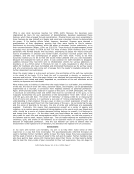
Fred Newman also fused 1960s‘ radical politics with 1970s‘ New Age therapy to form the
New Alliance Party and its practice called ―social therapy.‖ Behind NAP is Newman‘s
secretive International Workers Party (IWP). NAP has been extremely active on the political
scene for some time now. Members run for various political posts, from Lenora Fulani for
President to all kinds of state and local seats. If nothing else, this chapter should alert
readers to making sure they know whom they‘re voting for in the next election. If you‘re not
familiar with a name, it pays to do a good background check and look for connections to
NAP or any of its front groups or affiliates. Did you know, for example, that NAP has been
identified with both the Reverend Al Sharpton (currently a Presidential candidate) and Louis
Farrakhan of the Nation of Islam? Did you know that NAP formed the Rainbow Lobby just at
the time Jesse Jackson‘s Rainbow Coalition was becoming known? Some people found this
very confusing. Did you know that NAP and Fulani worked with Ross Perot and the Reform
Party? Or that NAP has also worked in alliance with Pat Buchanen? In the authors‘
estimation, one with which I concur, the New Alliance Party and its various mutations, front
groups, and personalities are worthy of our attention. Despite its small size (probably no
more than 100 members in all), NAP seems capable of ongoing interventions into U.S.
democratic and electoral processes, while bringing (albeit surreptitiously) their cultic agenda
to greater fruition.
A flaw in the book that troubled me at times was the authors‘ occasional use of disparaging
language when referring to cult members. Our understanding of these complex issues and
interactions is not enhanced by referring to dedicated believers as ―political automatons‖ (p.
204), likening them to drunks (p. 5), or describing members of religious cults as content to
live ―chanting their mantras and eating brown rice‖ (p. 205). Given that Tourish and
Wohlforth seem to understand how uncritical obedience is engendered within a cult‘s social
environment, I was surprised to read such belittling descriptions and phrases. That said, I
highly recommend the book to everyone who wants a complete library on the subject, to
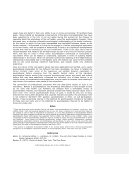
On the Edge‘s middle section is devoted to therapy cults with a political bent. Here readers
will learn about Reevaluation Counseling (RC), the New Alliance Party (NAP), and the now-
defunct Synanon, The chapters on RC and NAP are the most useful in this section because
they are still functioning. RC, sometimes also known as co-counseling, was a product of the
1950s. Founder and leader Harvey Jackins had been involved with the Communist Party,
Maoism, and Scientology. What began as an innovative therapy eventually evolved into an
openly political movement. RC ―combines individual reemergence with a political action
program‖ – or the merger of what is called ―liberation theory‖ and ―liberation work‖ (p. 91).
Purportedly, RC has approximately 10,000 supporters, despite decades of crises, splits, and
sexual intrigue (p. 86).
Interestingly, NAP leader Fred Newman emerged out of the same political milieus as did
Lyndon LaRouche, DWP founder and leader Marlene Dixon, and NATLFD founder and leader
Gino Perente. Throughout the book, the authors bring to light these and other noteworthy
connections between people and ideas. In part, such historical connections led the authors
to conclude in the final chapter that Leninism itself must take responsibility for the growth
of political cultism, at least on the Left. In sum, Tourish and Wohlforth assert that in our
political organizations we must be on alert for the cultic symptoms of ―authoritarianism,
conformity, ideological rigidity, and a fetishistic dwelling on apocalyptic fantasies‖ (p. 213).
They suggest also that citizens acquire ―stronger awareness of techniques of social influence
and greater skepticism toward totalistic philosophies of change‖ (p. 217). This is good
advice at a time when we might expect a resurgence of political activity. The effects of
globalization, economic restructuring, and recession, plus incessant and threatening
geopolitical crises, may well spark a new round of public activism – either left or right,
depending on one‘s point of view. We would do well to study the groups, analogies, and
lessons in this useful book.
Fred Newman also fused 1960s‘ radical politics with 1970s‘ New Age therapy to form the
New Alliance Party and its practice called ―social therapy.‖ Behind NAP is Newman‘s
secretive International Workers Party (IWP). NAP has been extremely active on the political
scene for some time now. Members run for various political posts, from Lenora Fulani for
President to all kinds of state and local seats. If nothing else, this chapter should alert
readers to making sure they know whom they‘re voting for in the next election. If you‘re not
familiar with a name, it pays to do a good background check and look for connections to
NAP or any of its front groups or affiliates. Did you know, for example, that NAP has been
identified with both the Reverend Al Sharpton (currently a Presidential candidate) and Louis
Farrakhan of the Nation of Islam? Did you know that NAP formed the Rainbow Lobby just at
the time Jesse Jackson‘s Rainbow Coalition was becoming known? Some people found this
very confusing. Did you know that NAP and Fulani worked with Ross Perot and the Reform
Party? Or that NAP has also worked in alliance with Pat Buchanen? In the authors‘
estimation, one with which I concur, the New Alliance Party and its various mutations, front
groups, and personalities are worthy of our attention. Despite its small size (probably no
more than 100 members in all), NAP seems capable of ongoing interventions into U.S.
democratic and electoral processes, while bringing (albeit surreptitiously) their cultic agenda
to greater fruition.
A flaw in the book that troubled me at times was the authors‘ occasional use of disparaging
language when referring to cult members. Our understanding of these complex issues and
interactions is not enhanced by referring to dedicated believers as ―political automatons‖ (p.
204), likening them to drunks (p. 5), or describing members of religious cults as content to
live ―chanting their mantras and eating brown rice‖ (p. 205). Given that Tourish and
Wohlforth seem to understand how uncritical obedience is engendered within a cult‘s social
environment, I was surprised to read such belittling descriptions and phrases. That said, I
highly recommend the book to everyone who wants a complete library on the subject, to
On the Edge‘s middle section is devoted to therapy cults with a political bent. Here readers
will learn about Reevaluation Counseling (RC), the New Alliance Party (NAP), and the now-
defunct Synanon, The chapters on RC and NAP are the most useful in this section because
they are still functioning. RC, sometimes also known as co-counseling, was a product of the
1950s. Founder and leader Harvey Jackins had been involved with the Communist Party,
Maoism, and Scientology. What began as an innovative therapy eventually evolved into an
openly political movement. RC ―combines individual reemergence with a political action
program‖ – or the merger of what is called ―liberation theory‖ and ―liberation work‖ (p. 91).
Purportedly, RC has approximately 10,000 supporters, despite decades of crises, splits, and
sexual intrigue (p. 86).
Interestingly, NAP leader Fred Newman emerged out of the same political milieus as did
Lyndon LaRouche, DWP founder and leader Marlene Dixon, and NATLFD founder and leader
Gino Perente. Throughout the book, the authors bring to light these and other noteworthy
connections between people and ideas. In part, such historical connections led the authors
to conclude in the final chapter that Leninism itself must take responsibility for the growth
of political cultism, at least on the Left. In sum, Tourish and Wohlforth assert that in our
political organizations we must be on alert for the cultic symptoms of ―authoritarianism,
conformity, ideological rigidity, and a fetishistic dwelling on apocalyptic fantasies‖ (p. 213).
They suggest also that citizens acquire ―stronger awareness of techniques of social influence
and greater skepticism toward totalistic philosophies of change‖ (p. 217). This is good
advice at a time when we might expect a resurgence of political activity. The effects of
globalization, economic restructuring, and recession, plus incessant and threatening
geopolitical crises, may well spark a new round of public activism – either left or right,
depending on one‘s point of view. We would do well to study the groups, analogies, and
lessons in this useful book.