Cultic Studies Journal, Vol. 15, No. 2, 1998, page 75
Book Reviews
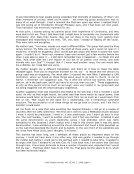
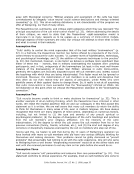
RELIGION AND THE SOCIAL ORDER, (vol 3) D. G. Bromley and J. K. Hadden
(Eds.) THE HANDBOOK ON CULTS AND SECTS IN AMERICA. JAI Press, Inc.,
Greenwich, Conn.. 1993 Part A 292 pages, Part B 229 pages.
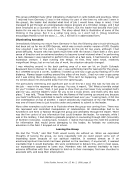
―To caricature somewhat: ‗John was an innocent victim who was brainwashed into an
exploitative cult which promoted ideas that no one in their right mind could believe. He was
forced to lead an unnatural life, renouncing his childhood sweetheart. His anguished
parents had to pay an undisclosed sum, said to involve the mortgage of their family home,
for John to be rescued and given the opportunity to see for himself how he had been
deceived and manipulated.‖ (E. Barker, p. 208)
So British sociologist Eileen Barker illustrated some of the ways in which the media,
influenced by the anti-cult movement (ACM), employ language to promote ―loaded images.‖
In my opinion, Barker and the 30 other contributors to this two volume handbook provide
both a critical, distorted, and peculiar perspective on the ACM and yet a valuable,
sociological approach to cults. Their treatment of cult critics—CAN and AFF—tends to be
irritatingly one-sided. On the other hand they provide much scholarly materials about the
new religious movements which is valuable in understanding trends and issues.
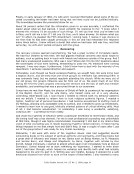
In this official publication of the Association for the Study of Religion, editors Bromley and
Hadden assembled chapters designed to assess the state of knowledge about new religious
movements. Part A purports to explore issues relating to the organization and development
of sects and cults and their sociocultural environments. Part B concentrates on
epistemological and methodological issues. Oddly, the first chapter of Part A by Bromley
and Hadden, which is an overview of perspectives and issues, is repeated in Part B. A
waste of paper! I was pleased to learn that among a large group of experts who were
consulted were AFF‘s Herbert Rosedale and James Rudin but disappointed by the absence of
an index.
Among the contributors, 15 are associated with sociology departments and 7 with religious
studies only 4 were women. The specialized approach to cults is suggested b y the fact
that the topic, sociology of new religious movements, is a subdivision of the sociology of
religion which in turn is but one of 38 sections (special fields) of the American Sociological
Association. In consequence, many of these contributors tend to slight the relevant
literatures in law, psychiatry, clinical and social psychology, anthropology, social work,
political science, and investigative journalism. As is typical of handbooks, the writing is long
on theory, interpretation, and generalization and short on first hand observation and data.
Chapters often repeat one another and are uneven in quality and objectivity.
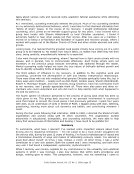
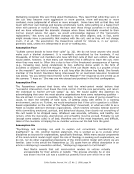
As illustrated by the quotation above from Barker, another serious flaw is the handbooks‘
handling of the long standing and bitter controversies with ACM (their term). First, there is
almost no mention of the disagreements in court and in professional meetings (e.g. Singer,
Offshe, Rosedale, Langone et al vs. Richardson, Melton, Robbins, Malony and others. See,
for instance, various issues of The Cult Observer since 1984.) If an objective and informed
writer could be found, he or she might have prepared a fascinating chapter about this
controversy. Second, the handbook fails to spell out the personal positions of the
contributors. The American Psychological Association, for example, is considering conflicts
of interest when authors have a financial relationship or affiliation with their subject. APA
recommends disclosure. Specifically, which of these contributors, if any, accepted a free
trip from Rev. Moon or appeared as an expert witness paid by Scientology?
Book Reviews
RELIGION AND THE SOCIAL ORDER, (vol 3) D. G. Bromley and J. K. Hadden
(Eds.) THE HANDBOOK ON CULTS AND SECTS IN AMERICA. JAI Press, Inc.,
Greenwich, Conn.. 1993 Part A 292 pages, Part B 229 pages.
―To caricature somewhat: ‗John was an innocent victim who was brainwashed into an
exploitative cult which promoted ideas that no one in their right mind could believe. He was
forced to lead an unnatural life, renouncing his childhood sweetheart. His anguished
parents had to pay an undisclosed sum, said to involve the mortgage of their family home,
for John to be rescued and given the opportunity to see for himself how he had been
deceived and manipulated.‖ (E. Barker, p. 208)
So British sociologist Eileen Barker illustrated some of the ways in which the media,
influenced by the anti-cult movement (ACM), employ language to promote ―loaded images.‖
In my opinion, Barker and the 30 other contributors to this two volume handbook provide
both a critical, distorted, and peculiar perspective on the ACM and yet a valuable,
sociological approach to cults. Their treatment of cult critics—CAN and AFF—tends to be
irritatingly one-sided. On the other hand they provide much scholarly materials about the
new religious movements which is valuable in understanding trends and issues.
In this official publication of the Association for the Study of Religion, editors Bromley and
Hadden assembled chapters designed to assess the state of knowledge about new religious
movements. Part A purports to explore issues relating to the organization and development
of sects and cults and their sociocultural environments. Part B concentrates on
epistemological and methodological issues. Oddly, the first chapter of Part A by Bromley
and Hadden, which is an overview of perspectives and issues, is repeated in Part B. A
waste of paper! I was pleased to learn that among a large group of experts who were
consulted were AFF‘s Herbert Rosedale and James Rudin but disappointed by the absence of
an index.
Among the contributors, 15 are associated with sociology departments and 7 with religious
studies only 4 were women. The specialized approach to cults is suggested b y the fact
that the topic, sociology of new religious movements, is a subdivision of the sociology of
religion which in turn is but one of 38 sections (special fields) of the American Sociological
Association. In consequence, many of these contributors tend to slight the relevant
literatures in law, psychiatry, clinical and social psychology, anthropology, social work,
political science, and investigative journalism. As is typical of handbooks, the writing is long
on theory, interpretation, and generalization and short on first hand observation and data.
Chapters often repeat one another and are uneven in quality and objectivity.
As illustrated by the quotation above from Barker, another serious flaw is the handbooks‘
handling of the long standing and bitter controversies with ACM (their term). First, there is
almost no mention of the disagreements in court and in professional meetings (e.g. Singer,
Offshe, Rosedale, Langone et al vs. Richardson, Melton, Robbins, Malony and others. See,
for instance, various issues of The Cult Observer since 1984.) If an objective and informed
writer could be found, he or she might have prepared a fascinating chapter about this
controversy. Second, the handbook fails to spell out the personal positions of the
contributors. The American Psychological Association, for example, is considering conflicts
of interest when authors have a financial relationship or affiliation with their subject. APA
recommends disclosure. Specifically, which of these contributors, if any, accepted a free
trip from Rev. Moon or appeared as an expert witness paid by Scientology?