Cultic Studies Journal, Vol. 15, No. 2, 1998, page 27
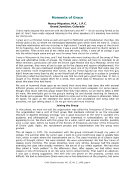
also actively recruiting. I was exposed to the Unification Church at the University of
Pennsylvania and went to some of their meetings in Powellton Village. I met members of
The Way International on the New Jersey Turnpike, and got into lengthy discussions about
tongues and gifts of the spirit, and the way they teach you how they do it. I was really
bothered that to them it was a very mechanistic thing. But what really struck me --I
wasn‘t looking for this, but it emerged as a result of my being exposed to these different
groups --were the common themes and experiences that people reported to me.
I was invited to go to Senator Dole‘s 1976 gathering in Washington. That experience was a
defining moment for me, because I ran into families at the Dole gathering, including Rev.
George Swope, a Baptist minister, along with other cult afflicted families and former
members of other groups. And I heard carbon-copy experiences in terms of the dynamics
that were going on in those groups, even though their doctrines varied greatly. Most of the
people were young, college age, encouraged to live with other group members, under
authoritarian leaders, in isolation from families and friends, financially dependent on the
group, and urged to quit whatever job they had and work for the group. I could go through
an entire laundry list that would become quite redundant if I just kept repeating the
dynamics each time. Here I heard experts for the first time talk about the issue of mind
control. I was not looking for mind control explanations when I went to this gathering in
Washington D.C. But, when I heard the explanation, it resonated with me in terms of the
experience I have just described and the experiences of other cult members. I also saw
families who were in crisis over this. This was 1975, a year before I went to seminary. I
was being approached by families of young people in the Forever Family because I had
debated Stewart Trail, the founding leader of the Forever Family. The families that
approached me had concerns that this group was a cult. I debated back and forth with
those leaders, on their turf.
Forging a Career
Parents were wondering where their young people were, and they knew that I had traveled
around and debated with these people. So they asked if I would be willing to talk to their
son or daughter. By 1976, I decided that seminary was appropriate for me. The
educational aspect of it was critical in terms of my recovery and critical-thinking abilities. It
also was critical to answering many other basic questions that my various attempts had
failed to give me. So as I was going to school, I was also learning about mind control. I
was exposed to the formative stages of what we know now as the Cult Awareness Network.
One thing that really impressed me about the former members and their parents was the
level of commitment they had to help those who were really in distress.
But the mind control element was a critical part of why I got involved and why I kept
moving in the direction of exit counseling. After my experience with a cult and exposure to
other cults, I found there was a tremendous need to communicate to others and educate
those victimized by this phenomenon. My knowledge on this issue came the hard way
through painful, first-hand experience. Once the process model of mind control became
clearer, I tried to reach friends who were still in the cult I had belonged to in my home area.
I was one of the first who did voluntary family interventions with Bible-based mind control
cults. While I was in seminary, the parents and former cult members were networking into
cult awareness support groups that grew out of the Dole gathering in 1976. The mind
control issue was just beginning to take hold in the wider culture and I was moving in the
direction of full-time intervention work as a profession. Certainly, I had not consciously
planned this as a career path. Ideally, I wish I had finished my seminary training (I had
only one semester to go). But the need for exit counseling was so compelling at the time --
and it still is a compelling need for people who are in crisis concerning this mind-control
matter --that I chose to focus on exit counseling. After seminary I became a leading exit
also actively recruiting. I was exposed to the Unification Church at the University of
Pennsylvania and went to some of their meetings in Powellton Village. I met members of
The Way International on the New Jersey Turnpike, and got into lengthy discussions about
tongues and gifts of the spirit, and the way they teach you how they do it. I was really
bothered that to them it was a very mechanistic thing. But what really struck me --I
wasn‘t looking for this, but it emerged as a result of my being exposed to these different
groups --were the common themes and experiences that people reported to me.
I was invited to go to Senator Dole‘s 1976 gathering in Washington. That experience was a
defining moment for me, because I ran into families at the Dole gathering, including Rev.
George Swope, a Baptist minister, along with other cult afflicted families and former
members of other groups. And I heard carbon-copy experiences in terms of the dynamics
that were going on in those groups, even though their doctrines varied greatly. Most of the
people were young, college age, encouraged to live with other group members, under
authoritarian leaders, in isolation from families and friends, financially dependent on the
group, and urged to quit whatever job they had and work for the group. I could go through
an entire laundry list that would become quite redundant if I just kept repeating the
dynamics each time. Here I heard experts for the first time talk about the issue of mind
control. I was not looking for mind control explanations when I went to this gathering in
Washington D.C. But, when I heard the explanation, it resonated with me in terms of the
experience I have just described and the experiences of other cult members. I also saw
families who were in crisis over this. This was 1975, a year before I went to seminary. I
was being approached by families of young people in the Forever Family because I had
debated Stewart Trail, the founding leader of the Forever Family. The families that
approached me had concerns that this group was a cult. I debated back and forth with
those leaders, on their turf.
Forging a Career
Parents were wondering where their young people were, and they knew that I had traveled
around and debated with these people. So they asked if I would be willing to talk to their
son or daughter. By 1976, I decided that seminary was appropriate for me. The
educational aspect of it was critical in terms of my recovery and critical-thinking abilities. It
also was critical to answering many other basic questions that my various attempts had
failed to give me. So as I was going to school, I was also learning about mind control. I
was exposed to the formative stages of what we know now as the Cult Awareness Network.
One thing that really impressed me about the former members and their parents was the
level of commitment they had to help those who were really in distress.
But the mind control element was a critical part of why I got involved and why I kept
moving in the direction of exit counseling. After my experience with a cult and exposure to
other cults, I found there was a tremendous need to communicate to others and educate
those victimized by this phenomenon. My knowledge on this issue came the hard way
through painful, first-hand experience. Once the process model of mind control became
clearer, I tried to reach friends who were still in the cult I had belonged to in my home area.
I was one of the first who did voluntary family interventions with Bible-based mind control
cults. While I was in seminary, the parents and former cult members were networking into
cult awareness support groups that grew out of the Dole gathering in 1976. The mind
control issue was just beginning to take hold in the wider culture and I was moving in the
direction of full-time intervention work as a profession. Certainly, I had not consciously
planned this as a career path. Ideally, I wish I had finished my seminary training (I had
only one semester to go). But the need for exit counseling was so compelling at the time --
and it still is a compelling need for people who are in crisis concerning this mind-control
matter --that I chose to focus on exit counseling. After seminary I became a leading exit