Cultic Studies Journal, Vol. 15, No. 2, 1998, page 48
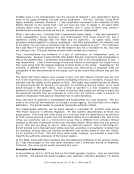
illustration of this ―victim‖ mentality. We find it surprising that the Passantinos should object
to this in light of the Apostle Paul‘s admonition to the Colossians, ―Make sure that no one
traps you and deprives you of your freedom by some second-hand, empty, rational
philosophy based on the principles of this world instead of on Christ‖ (Col. 2:8, Jerusalem
Bible, emphasis added). Elsewhere, Paul reproaches the Christians of Corinth for ―tolerating
somebody who makes slaves of you, makes you feed him, imposes on you, orders you
about and slaps you in the face‖ (2 Corinthians 11:20, Jerusalem Bible, emphasis added).
Next, the Passantinos appear to digress into a victim-bashing section in which they take
potshots at John Bradshaw and his dysfunctional family theory, adult children of alcoholics,
the various 12-step programs, and claims of repressed memories that later proved to be
false memories.
Some would argue that in some cases mind-control by unethical or incompetent therapists
caused false memories of abuse to arise. But that is only one of many possible
explanations. We agree with the Passantinos that a person‘s developing false memories in
therapy does not necessarily mean the therapist was practicing thought reform. Yet
ironically, false memories are sometimes produced by thought reform. So the Passantinos
confront a dilemma: how can they believe in the creation of false memories (and they
clearly do) and, yet deny powerful influence techniques, such as thought reform? The
Passantinos seem to believe that psychological influence can be so powerful that in a few
sessions a therapist can (sometimes unwittingly) convince a client that her parents are
really members of a satanic cult that sexually abused her for years. Yet, they deride the
notion that a group led by a skillful, psychopathic leader can cause radical behavioral
changes in people who may be under the group‘s influence 24 hours a day for many months
or years.
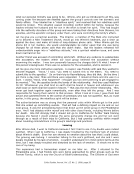
The Passantinos again quote Barker, who says: ―Research has shown that, unlike those who
have been deprogrammed (and thereby taught that they had been brainwashed), those who
leave voluntarily are extremely unlikely to believe that they were ever the victims of mind-
control‖ (p. 39, citing Barker, 1989, emphasis in original). Yet, this is precisely what we
would expect. If someone has no knowledge of what happened to him, how could he
conclude he was a victim of mind-control? One must be exposed to the information.
Barker‘s conclusion is that this belief in mind-control is inculcated into hapless victims, that
they have been deceived again into believing that they were under mind-control. Another
alternative, however, is that these people are sufficiently responsible individuals that when
presented with information about the techniques of mind-control and examples of it they
are able to compare their own experience with that information and reach their own
conclusion that ―that‘s exactly what happened to me.‖11 Moreover, Barker faces the same
quandary the Passantinos confront regarding false memory: in three days an exit counselor
can completely change a person‘s outlook, but a group over a period of years allegedly
cannot.
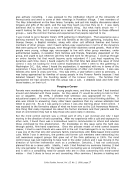
Perhaps the Passantinos‘ rejection of the ―victim‖ label for cult members stems from their
partially correct criticism of today‘s pop psychology in which
everyone is a victim. One doesn‘t need to be saved from one‘s own sins as
much as from the sins of others. Psychology and sociology have replaced
Scripture for understanding human behavior and developing emotionally and
spiritually healthy persons. Yet nowhere in Scripture do we find support for
the complaint first voiced by Eve that ‗the devil --or the cult leader --made
me do it.‘ One cannot remove human responsibility without also destroying
human morality (p. 40).
Once again, these remarks are based on a distorted view of mind-control and an either/or
approach to understanding human behavior: either psychology and sociology, or the Bible.
illustration of this ―victim‖ mentality. We find it surprising that the Passantinos should object
to this in light of the Apostle Paul‘s admonition to the Colossians, ―Make sure that no one
traps you and deprives you of your freedom by some second-hand, empty, rational
philosophy based on the principles of this world instead of on Christ‖ (Col. 2:8, Jerusalem
Bible, emphasis added). Elsewhere, Paul reproaches the Christians of Corinth for ―tolerating
somebody who makes slaves of you, makes you feed him, imposes on you, orders you
about and slaps you in the face‖ (2 Corinthians 11:20, Jerusalem Bible, emphasis added).
Next, the Passantinos appear to digress into a victim-bashing section in which they take
potshots at John Bradshaw and his dysfunctional family theory, adult children of alcoholics,
the various 12-step programs, and claims of repressed memories that later proved to be
false memories.
Some would argue that in some cases mind-control by unethical or incompetent therapists
caused false memories of abuse to arise. But that is only one of many possible
explanations. We agree with the Passantinos that a person‘s developing false memories in
therapy does not necessarily mean the therapist was practicing thought reform. Yet
ironically, false memories are sometimes produced by thought reform. So the Passantinos
confront a dilemma: how can they believe in the creation of false memories (and they
clearly do) and, yet deny powerful influence techniques, such as thought reform? The
Passantinos seem to believe that psychological influence can be so powerful that in a few
sessions a therapist can (sometimes unwittingly) convince a client that her parents are
really members of a satanic cult that sexually abused her for years. Yet, they deride the
notion that a group led by a skillful, psychopathic leader can cause radical behavioral
changes in people who may be under the group‘s influence 24 hours a day for many months
or years.
The Passantinos again quote Barker, who says: ―Research has shown that, unlike those who
have been deprogrammed (and thereby taught that they had been brainwashed), those who
leave voluntarily are extremely unlikely to believe that they were ever the victims of mind-
control‖ (p. 39, citing Barker, 1989, emphasis in original). Yet, this is precisely what we
would expect. If someone has no knowledge of what happened to him, how could he
conclude he was a victim of mind-control? One must be exposed to the information.
Barker‘s conclusion is that this belief in mind-control is inculcated into hapless victims, that
they have been deceived again into believing that they were under mind-control. Another
alternative, however, is that these people are sufficiently responsible individuals that when
presented with information about the techniques of mind-control and examples of it they
are able to compare their own experience with that information and reach their own
conclusion that ―that‘s exactly what happened to me.‖11 Moreover, Barker faces the same
quandary the Passantinos confront regarding false memory: in three days an exit counselor
can completely change a person‘s outlook, but a group over a period of years allegedly
cannot.
Perhaps the Passantinos‘ rejection of the ―victim‖ label for cult members stems from their
partially correct criticism of today‘s pop psychology in which
everyone is a victim. One doesn‘t need to be saved from one‘s own sins as
much as from the sins of others. Psychology and sociology have replaced
Scripture for understanding human behavior and developing emotionally and
spiritually healthy persons. Yet nowhere in Scripture do we find support for
the complaint first voiced by Eve that ‗the devil --or the cult leader --made
me do it.‘ One cannot remove human responsibility without also destroying
human morality (p. 40).
Once again, these remarks are based on a distorted view of mind-control and an either/or
approach to understanding human behavior: either psychology and sociology, or the Bible.