Cultic Studies Journal, Vol. 15, No. 2, 1998, page 71
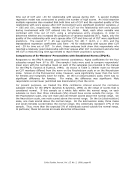
Although the sample‘s neuroticism scores did not significantly differ from established norms,
there was a significant negative correlation between neuroticism and time since leaving
CUT: Respondents who were out longer scored lower on neuroticism.
Changes in Close Personal Relationships
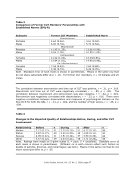
The ratings respondents gave to the quality of their close relationships reveal a clear pattern
across all relationship categories. The rated quality of relationships was consistently lowest
during CUT involvement. A comparison of before and after ratings showed higher ratings
for the quality of post-CUT parental relationships. This was not the case for spouse
relationships, which were about the same before and after CUT, nor for other relationships,
which were worse after than before CUT. Based on additional comments that respondents
made on the survey, it appears that some individuals had rated their relationships with
friends who had joined the group with them or someone they had met during their
involvement. In either case, these relationships may, as a result of their exit, be strained at
best and non-existent at worst. This may be the reason why the post-involvement mean for
the category other is lower than the pre-involvement mean.
Several respondents commented that divorces were related to their cult involvement. Some
indicated that they were completely cut off from their former spouse and therefore did not
give a post-involvement rating for the spouse category. Others who remarried since their
exit rated their current marriage. Thus, the relatively high mean for post-cult ratings of
spousal relationships appears to be partly attributable to post-CUT marriages.
Unfortunately, we did not ask respondents to indicate the year they divorced. This
prevented an exact determination of how many marriage dissolutions might have been
related to CUT involvement, which marriages dissolved prior to CUT involvement, and which
dissolved considerably later.
Respondents‘ ratings of the quality of their relationship with a spouse after CUT involvement
probably reflect the relationship with the individual‘s current spouse (whether or not the
individual refers to the same spouse in each time period). As far as having used the
variable as a predictor for one of the regression models, when the marriage was entered
into seems less of an issue than whether or not a good relationship with one‘s spouse after
cult involvement is likely to contribute to a decrease in psychological distress.
Limitations, Unanswered Questions, and Suggestions for Future Research
One weakness of the present study was the sample itself, because the majority of the
respondents were recipients of a newsletter primarily sent to former CUT members. In this
newsletter, grievances about the group and its leadership are freely expressed.
Additionally, each issue of the newsletter includes a list of recommended publications about
CUT as well as more general cult educational materials. Thus, the sample‘s
representativeness of ex-members may be questioned. Sixty-one individuals represent a
small proportion of the hundreds who have left CUT during the 29 years since it was
founded. The majority of those who participated in the study had been exposed to the
newsletter‘s anti-CUT and anti-cult stance. Although this is a legitimate concern, a lack of
understanding about cult-related issues does not necessarily mean that people‘s perceptions
are more valid. Put differently, more information and education, which is generally
regarded as an advantage in discovering the truth, may be a desirable quality in
respondents. The present sample offered just that. Additionally, one cannot assume that
former members who may not be aware of the newsletter or fear being on its mailing list
perceive the group as any less abusive. Representativeness with regard to the level of past
group involvement and commitment to the group, as well as the time spent in the group,
was remarkably good.
Although the sample‘s neuroticism scores did not significantly differ from established norms,
there was a significant negative correlation between neuroticism and time since leaving
CUT: Respondents who were out longer scored lower on neuroticism.
Changes in Close Personal Relationships
The ratings respondents gave to the quality of their close relationships reveal a clear pattern
across all relationship categories. The rated quality of relationships was consistently lowest
during CUT involvement. A comparison of before and after ratings showed higher ratings
for the quality of post-CUT parental relationships. This was not the case for spouse
relationships, which were about the same before and after CUT, nor for other relationships,
which were worse after than before CUT. Based on additional comments that respondents
made on the survey, it appears that some individuals had rated their relationships with
friends who had joined the group with them or someone they had met during their
involvement. In either case, these relationships may, as a result of their exit, be strained at
best and non-existent at worst. This may be the reason why the post-involvement mean for
the category other is lower than the pre-involvement mean.
Several respondents commented that divorces were related to their cult involvement. Some
indicated that they were completely cut off from their former spouse and therefore did not
give a post-involvement rating for the spouse category. Others who remarried since their
exit rated their current marriage. Thus, the relatively high mean for post-cult ratings of
spousal relationships appears to be partly attributable to post-CUT marriages.
Unfortunately, we did not ask respondents to indicate the year they divorced. This
prevented an exact determination of how many marriage dissolutions might have been
related to CUT involvement, which marriages dissolved prior to CUT involvement, and which
dissolved considerably later.
Respondents‘ ratings of the quality of their relationship with a spouse after CUT involvement
probably reflect the relationship with the individual‘s current spouse (whether or not the
individual refers to the same spouse in each time period). As far as having used the
variable as a predictor for one of the regression models, when the marriage was entered
into seems less of an issue than whether or not a good relationship with one‘s spouse after
cult involvement is likely to contribute to a decrease in psychological distress.
Limitations, Unanswered Questions, and Suggestions for Future Research
One weakness of the present study was the sample itself, because the majority of the
respondents were recipients of a newsletter primarily sent to former CUT members. In this
newsletter, grievances about the group and its leadership are freely expressed.
Additionally, each issue of the newsletter includes a list of recommended publications about
CUT as well as more general cult educational materials. Thus, the sample‘s
representativeness of ex-members may be questioned. Sixty-one individuals represent a
small proportion of the hundreds who have left CUT during the 29 years since it was
founded. The majority of those who participated in the study had been exposed to the
newsletter‘s anti-CUT and anti-cult stance. Although this is a legitimate concern, a lack of
understanding about cult-related issues does not necessarily mean that people‘s perceptions
are more valid. Put differently, more information and education, which is generally
regarded as an advantage in discovering the truth, may be a desirable quality in
respondents. The present sample offered just that. Additionally, one cannot assume that
former members who may not be aware of the newsletter or fear being on its mailing list
perceive the group as any less abusive. Representativeness with regard to the level of past
group involvement and commitment to the group, as well as the time spent in the group,
was remarkably good.