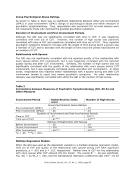
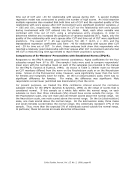
Cultic Studies Journal, Vol. 15, No. 2, 1998, page 56
Cult Experience: Psychological Abuse, Distress, Personality
Characteristics,
And Changes in Personal Relationships
Reported by Former Members of Church Universal and
Triumphant
Irene Gasde, M.S.
Fielding Institute
Richard A. Block, Ph.D.
Montana State University
Abstract
Do cultic groups, such as the Church Universal and Triumphant (CUT), differ
from benign groups in their use of unethical means of persuasion, control,
and exploitation? We investigated 61 former members of CUT, evaluating
their perceptions of the group‘s abusiveness, level of psychological distress,
personality characteristics, and reported quality of close personal
relationships. Respondents reported non-abusive pre-involvement
perceptions of CUT, but post-involvement perceptions reflected high
abusiveness. Many respondents reported a relatively high level of
psychological distress, which was reduced by strong spousal relationships
during and after CUT involvement and which decreased after leaving CUT.
Respondents‘ scores on a personality questionnaire were mostly normal.
Personal relationships tended to deteriorate during CUT involvement. These
findings suggest that cult involvement may adversely affect members‘ lives.
Most people view cults as strange, marginal groups in which only problem-ridden, weak-
minded, and psychologically deranged people get involved. This kind of thinking reflects the
not-me myth (Singer &Lalich, 1995), a mind set that marginalizes and blames those who
fall prey to such groups. Even some psychologists and other mental health professionals
assume that people who join cults are ―socially or psychologically inadequate‖ (Walsh,
Russell, &Wells, 1995, p. 339). Researchers and clinicians have called this the most
disturbing and persistent myth about those who join cults (West &Martin, 1994). Others
have asserted that cult members come from ―over-enmeshed,‖ or troubled, families
(Schwartz &Kaslow, 1979), or that they have histories of psychological problems that
predispose them to cult involvement as well as post-cult psychological distress (Spero,
1982). The Group for the Advancement of Psychotherapy (GAP, 1992) proposed that cult
membership should be viewed as a maladaptive attempt to achieve adulthood, arising from
developmental challenges of late adolescence. These youths are thought to have been
raised in cultogenic families that foster exaggerated and unhealthy dependency in their
children. GAP also suggested that one motive for joining cults is a counter-dependent
rebellion against the family, and that cults provide a relational environment with dynamic
characteristics similar to that of the family. GAP argued that remaining in a cult is a sign of
pervasive and fixed problems, such as borderline personality disorder, or is the result of the
attainment of positions of power and influence within the cult.
In contrast, Singer &Lalich (1995) proposed that some families may be pushing their
children too much and too quickly to grow up and make decisions without providing
appropriate guidance, thereby unwittingly fostering a need in their children to seek security
and guidance elsewhere. By offering ―instant, simplistic, and focused solutions to life‘s
problems‖ (Singer &Lalich, 1995, p. 17), cults can fulfill that need. Singer &Lalich
Cult Experience: Psychological Abuse, Distress, Personality
Characteristics,
And Changes in Personal Relationships
Reported by Former Members of Church Universal and
Triumphant
Irene Gasde, M.S.
Fielding Institute
Richard A. Block, Ph.D.
Montana State University
Abstract
Do cultic groups, such as the Church Universal and Triumphant (CUT), differ
from benign groups in their use of unethical means of persuasion, control,
and exploitation? We investigated 61 former members of CUT, evaluating
their perceptions of the group‘s abusiveness, level of psychological distress,
personality characteristics, and reported quality of close personal
relationships. Respondents reported non-abusive pre-involvement
perceptions of CUT, but post-involvement perceptions reflected high
abusiveness. Many respondents reported a relatively high level of
psychological distress, which was reduced by strong spousal relationships
during and after CUT involvement and which decreased after leaving CUT.
Respondents‘ scores on a personality questionnaire were mostly normal.
Personal relationships tended to deteriorate during CUT involvement. These
findings suggest that cult involvement may adversely affect members‘ lives.
Most people view cults as strange, marginal groups in which only problem-ridden, weak-
minded, and psychologically deranged people get involved. This kind of thinking reflects the
not-me myth (Singer &Lalich, 1995), a mind set that marginalizes and blames those who
fall prey to such groups. Even some psychologists and other mental health professionals
assume that people who join cults are ―socially or psychologically inadequate‖ (Walsh,
Russell, &Wells, 1995, p. 339). Researchers and clinicians have called this the most
disturbing and persistent myth about those who join cults (West &Martin, 1994). Others
have asserted that cult members come from ―over-enmeshed,‖ or troubled, families
(Schwartz &Kaslow, 1979), or that they have histories of psychological problems that
predispose them to cult involvement as well as post-cult psychological distress (Spero,
1982). The Group for the Advancement of Psychotherapy (GAP, 1992) proposed that cult
membership should be viewed as a maladaptive attempt to achieve adulthood, arising from
developmental challenges of late adolescence. These youths are thought to have been
raised in cultogenic families that foster exaggerated and unhealthy dependency in their
children. GAP also suggested that one motive for joining cults is a counter-dependent
rebellion against the family, and that cults provide a relational environment with dynamic
characteristics similar to that of the family. GAP argued that remaining in a cult is a sign of
pervasive and fixed problems, such as borderline personality disorder, or is the result of the
attainment of positions of power and influence within the cult.
In contrast, Singer &Lalich (1995) proposed that some families may be pushing their
children too much and too quickly to grow up and make decisions without providing
appropriate guidance, thereby unwittingly fostering a need in their children to seek security
and guidance elsewhere. By offering ―instant, simplistic, and focused solutions to life‘s
problems‖ (Singer &Lalich, 1995, p. 17), cults can fulfill that need. Singer &Lalich