Cultic Studies Journal, Vol. 15, No. 2, 1998, page 51
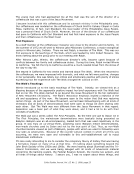
human condition and subverts the unmerited grace of God. Humans, then, are only
responsible for thoughtfully and purposely rejecting revelation and resisting grace, not for
making ―flawed choices from bad data.‖
Assuming, for the sake of argument, that somehow there is a spiritual hierarchy in which
some are less susceptible to cults than others, on what basis are they less susceptible? If it
is based on works (acquiring information and critical-thinking skills), then, according to the
Reformation tradition it has no spiritual value.13 But if cult-avoiding discernment is based on
faith, then all Christians have that and should be able to avoid cults. Thus, the Passantinos
have a grave problem, because the empirical evidence unequivocally shows that numerous
Christians have joined a variety of cults. Where, then, does discernment come from? Is it
always a sin issue in the Scripture, or is it an issue of education, knowledge, and
awareness?
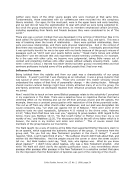
Discernment may be lost because one willfully chooses to sin, but discernment may also be
lacking because one has not been educated or warned. Is one group (cult victims) culpable,
but the other (the church or society that fails to warn about cults) not? Is evil the
underlying process and factor with both kinds of discernment deficits? In other words, is our
ability to be deceived part of the human condition, part of our fallen nature? If so, and we
believe it is, then the cult victim and the silent church and society alike suffer from Adam‘s
fallen nature. But in saying this we are not saying that cult joining is a sin problem that
must be dealt with evangelistically. Rather, we are saying that the cult problem for the
church and the cult victim alike is akin to the problem of physical disease. Illness, as well as
death, is a direct result of the Fall. But the cure for disease is not evangelization leading to
spiritual redemption. The cure for disease consists of medicine and education. Through
much of history, the church has been largely responsible for the advancement of medical
science in the world. Likewise, the church needs to see the problem of cults fundamentally
as a problem of evil whose solution is, to be sure, bathed in the prayers of believers, but
realized via science and education as well as theology.
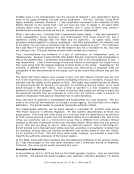
The Passantinos‘ conclusion is a call for evangelization of cult members. But their vision in
this regard is a truncated view of Judeo-Christian ethics and theology. Christians and others
have traditionally had an interest in opposing sinful systems as well as providing spiritual
comfort for those caught in them. The desire for the salvation of the souls of those bound in
the literal chains of slavery was admirable, but without the courage of Christian statesmen
like William Wilberforce, strongly supported by John Wesley and other Christian leaders, we
might still have slavery in Britain and America. Evangelizing those ―who have very real
spiritual, emotional, and social needs‖ and who ―are looking for fulfillment and significance
for their lives‖ (p. 40) without working against the oppression that enslaves them is
hypocrisy. We believe God loves cult members and wants us to work for their freedom,
whether or not they choose to follow him.
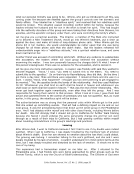
Notes
1. In a letter to the editor of Cornerstone Magazine from Douglas Groothuis, he
demonstrates some of the same errors as found in the original article to which he
was responding. Groothuis focuses on two points: first, ―the mind-control theory is
antithetical to biblical anthropology.‖ We contend that only in its extreme form, as
set up as a straw man by Bob and Gretchen Passantino, could mind-control be
regarded as antithetical to biblical anthropology. We agree that men and women are
―responsible moral agents,‖ but we also argue that humans can occasionally and
under the right (or wrong?) circumstances be led into unwise, bad, or downright evil
decisions for which God will hold us, if not totally guiltless, at least minimally
culpable. We briefly refer to a few such instances in this article: mitigation of guilt by
reason of diminished capacity due to youthfulness (Dt. 1:39), demonization, or other
human condition and subverts the unmerited grace of God. Humans, then, are only
responsible for thoughtfully and purposely rejecting revelation and resisting grace, not for
making ―flawed choices from bad data.‖
Assuming, for the sake of argument, that somehow there is a spiritual hierarchy in which
some are less susceptible to cults than others, on what basis are they less susceptible? If it
is based on works (acquiring information and critical-thinking skills), then, according to the
Reformation tradition it has no spiritual value.13 But if cult-avoiding discernment is based on
faith, then all Christians have that and should be able to avoid cults. Thus, the Passantinos
have a grave problem, because the empirical evidence unequivocally shows that numerous
Christians have joined a variety of cults. Where, then, does discernment come from? Is it
always a sin issue in the Scripture, or is it an issue of education, knowledge, and
awareness?
Discernment may be lost because one willfully chooses to sin, but discernment may also be
lacking because one has not been educated or warned. Is one group (cult victims) culpable,
but the other (the church or society that fails to warn about cults) not? Is evil the
underlying process and factor with both kinds of discernment deficits? In other words, is our
ability to be deceived part of the human condition, part of our fallen nature? If so, and we
believe it is, then the cult victim and the silent church and society alike suffer from Adam‘s
fallen nature. But in saying this we are not saying that cult joining is a sin problem that
must be dealt with evangelistically. Rather, we are saying that the cult problem for the
church and the cult victim alike is akin to the problem of physical disease. Illness, as well as
death, is a direct result of the Fall. But the cure for disease is not evangelization leading to
spiritual redemption. The cure for disease consists of medicine and education. Through
much of history, the church has been largely responsible for the advancement of medical
science in the world. Likewise, the church needs to see the problem of cults fundamentally
as a problem of evil whose solution is, to be sure, bathed in the prayers of believers, but
realized via science and education as well as theology.
The Passantinos‘ conclusion is a call for evangelization of cult members. But their vision in
this regard is a truncated view of Judeo-Christian ethics and theology. Christians and others
have traditionally had an interest in opposing sinful systems as well as providing spiritual
comfort for those caught in them. The desire for the salvation of the souls of those bound in
the literal chains of slavery was admirable, but without the courage of Christian statesmen
like William Wilberforce, strongly supported by John Wesley and other Christian leaders, we
might still have slavery in Britain and America. Evangelizing those ―who have very real
spiritual, emotional, and social needs‖ and who ―are looking for fulfillment and significance
for their lives‖ (p. 40) without working against the oppression that enslaves them is
hypocrisy. We believe God loves cult members and wants us to work for their freedom,
whether or not they choose to follow him.
Notes
1. In a letter to the editor of Cornerstone Magazine from Douglas Groothuis, he
demonstrates some of the same errors as found in the original article to which he
was responding. Groothuis focuses on two points: first, ―the mind-control theory is
antithetical to biblical anthropology.‖ We contend that only in its extreme form, as
set up as a straw man by Bob and Gretchen Passantino, could mind-control be
regarded as antithetical to biblical anthropology. We agree that men and women are
―responsible moral agents,‖ but we also argue that humans can occasionally and
under the right (or wrong?) circumstances be led into unwise, bad, or downright evil
decisions for which God will hold us, if not totally guiltless, at least minimally
culpable. We briefly refer to a few such instances in this article: mitigation of guilt by
reason of diminished capacity due to youthfulness (Dt. 1:39), demonization, or other