Cultic Studies Journal, Vol. 15, No. 2, 1998, page 53
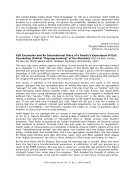
explain such behavior.
9. Dr. Daniel Langer (former military intelligence officer in Vietnam) in personal
conversation with Ron Burks.
10. Although there are general allusions to the failed methods to resist brainwashing in a
number of our references, Dr. Louis J. West, who participated in the devising of
procedures and experiments for resisting brainwashing, told the senior author of the
difficulties in teaching people to resist brainwashing. Dr. West also spoke on this
subject at a plenary session, ―Towards a Better Understanding of Mind-control,‖
given at the National Cult Awareness Network Conference at the Lincolnshire Marriott
in Deerfield, Illinois, November 3, 1990.
11. We are aware that authorities later determined that as many as several hundred of
the cult members actually died of gunshot wounds, including Jones himself. The
question still remains if there is no such thing as mind-control, what was it that
drove the 600 or 700 others to drink the poison and administer it to their children?
What induced them to stay in the group through dozens of suicide drills at which no
guns were present?
12. In a footnote (n. 57), the Passantinos refer to work by Anthony and Robbins as
further support of their contention that most mind-control advocates discount human
susceptibilities as a factor in cult recruitment. However, this is a matter for empirical
study, not mere opining. Unfortunately, almost no research has been done on
susceptibility to cultic environments.
13. Ex-cult members are not likely to say, ―I‘ve been under mind-control‖ unless they
know what mind-control is. A person who feels physically sick often does not know
the cause until he hears a doctor‘s diagnosis.
14. Denver Seminary in Colorado, and Southern Evangelical Seminary, in Charlotte,
North Carolina, are two rare exceptions we know of that offer more than a cursory
glance at cults.
15. Works, or human endeavor, in this sense has no spiritual value in relation to one‘s
standing with God. Or the Passantinos may argue that works are simply a religious
requirement of moral obedience. But moral obedience implies that one knows what is
moral or correct. But the problem is that the uniform testimony of former cultists is
that there was absolutely nothing they saw that was immoral, illegal, or suggestive
of disobedience to God. Consequently, the Passantinos have to answer the following
questions: (1) What moral or doctrinal mandates have the cultists disobeyed? (2)
Are these moral and/or spiritual mandates sufficiently clear that any reasonable
person would still act knowingly in a reckless and negligent manner to join a cult in
spite of hearing and understanding the mandates? (3) Who is responsible to present
these moral or doctrinal mandates to the potential cultist?
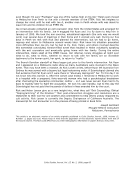
References
Barker, E. (1989) New religious movements: A practical introduction. London: Her Majesty‘s
Stationery Office.
Bauer, W., Arndt, W. F., &Gingrich, F. W. (eds.). (1979). A Greek-English lexicon of the
New Testament and other early Christian literature. Chicago: University of Chicago
Press.
Bromley, D. G., &Shupe, A. D. (1981), Strange Gods: The great American cult scare.
Boston: Beacon Press.
Chambers, W., Langone, M., Dole, A., &Grice. W. (1994). The Group Psychological Abuse
Scale: A Measure of the Varieties of Cultic Abuse. Cultic Studies Journal, 11(1), (88-
117).
Chen, T. E. H. (1960). Thought reform of the Chinese intellectuals. Hong Kong: Hong Kong
University Press.
explain such behavior.
9. Dr. Daniel Langer (former military intelligence officer in Vietnam) in personal
conversation with Ron Burks.
10. Although there are general allusions to the failed methods to resist brainwashing in a
number of our references, Dr. Louis J. West, who participated in the devising of
procedures and experiments for resisting brainwashing, told the senior author of the
difficulties in teaching people to resist brainwashing. Dr. West also spoke on this
subject at a plenary session, ―Towards a Better Understanding of Mind-control,‖
given at the National Cult Awareness Network Conference at the Lincolnshire Marriott
in Deerfield, Illinois, November 3, 1990.
11. We are aware that authorities later determined that as many as several hundred of
the cult members actually died of gunshot wounds, including Jones himself. The
question still remains if there is no such thing as mind-control, what was it that
drove the 600 or 700 others to drink the poison and administer it to their children?
What induced them to stay in the group through dozens of suicide drills at which no
guns were present?
12. In a footnote (n. 57), the Passantinos refer to work by Anthony and Robbins as
further support of their contention that most mind-control advocates discount human
susceptibilities as a factor in cult recruitment. However, this is a matter for empirical
study, not mere opining. Unfortunately, almost no research has been done on
susceptibility to cultic environments.
13. Ex-cult members are not likely to say, ―I‘ve been under mind-control‖ unless they
know what mind-control is. A person who feels physically sick often does not know
the cause until he hears a doctor‘s diagnosis.
14. Denver Seminary in Colorado, and Southern Evangelical Seminary, in Charlotte,
North Carolina, are two rare exceptions we know of that offer more than a cursory
glance at cults.
15. Works, or human endeavor, in this sense has no spiritual value in relation to one‘s
standing with God. Or the Passantinos may argue that works are simply a religious
requirement of moral obedience. But moral obedience implies that one knows what is
moral or correct. But the problem is that the uniform testimony of former cultists is
that there was absolutely nothing they saw that was immoral, illegal, or suggestive
of disobedience to God. Consequently, the Passantinos have to answer the following
questions: (1) What moral or doctrinal mandates have the cultists disobeyed? (2)
Are these moral and/or spiritual mandates sufficiently clear that any reasonable
person would still act knowingly in a reckless and negligent manner to join a cult in
spite of hearing and understanding the mandates? (3) Who is responsible to present
these moral or doctrinal mandates to the potential cultist?
References
Barker, E. (1989) New religious movements: A practical introduction. London: Her Majesty‘s
Stationery Office.
Bauer, W., Arndt, W. F., &Gingrich, F. W. (eds.). (1979). A Greek-English lexicon of the
New Testament and other early Christian literature. Chicago: University of Chicago
Press.
Bromley, D. G., &Shupe, A. D. (1981), Strange Gods: The great American cult scare.
Boston: Beacon Press.
Chambers, W., Langone, M., Dole, A., &Grice. W. (1994). The Group Psychological Abuse
Scale: A Measure of the Varieties of Cultic Abuse. Cultic Studies Journal, 11(1), (88-
117).
Chen, T. E. H. (1960). Thought reform of the Chinese intellectuals. Hong Kong: Hong Kong
University Press.