Cultic Studies Journal, Vol. 15, No. 2, 1998, page 66
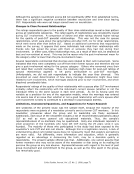
time out of CUT and -.33 for relationship with spouse during CUT. A second multiple
regression model was constructed to predict the number of high scores. An initial stepwise
multiple regression also revealed that both time out of CUT and the reported quality of the
relationship with one‘s spouse after CUT involvement were significant predictor variables, p
=.005 and .011, respectively. Neither time in CUT nor the relationship with one‘s spouse
during involvement with CUT entered into the model. Next, each other variable was
combined with time out of CUT, using a simultaneous entry procedure, in order to
determine whether any increased the proportion of variance explained (R2). Again, only the
quality of the relationship with one‘s spouse after CUT and time out of CUT were significant
predictors. The overall R2 =.45 was significant, F(2, 40) =14.67, p .001, and the
standardized regression coefficients (βs) were -.40 for relationship with spouse after CUT
and -.39 for time out of CUT. In short, these analyses both show that respondents who
reported a relatively good relationship with their spouse after CUT involvement and who had
left CUT a relatively long time ago tended to report fewer psychiatric symptoms.
Comparisons of Ex-Members’ Personalities with Established Norms (EPQ-R).
Responses to the EPQ-R showed good internal consistency: Alpha coefficients for the four
subscales ranged from .67 to .89. One-sample t tests were used to compare respondents‘
mean score with the normative mean on each of the subscales (as provided in the manual
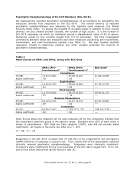
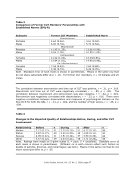
for the EPQ-R Eysenck &Eysenck, 1994). As shown in Table 3, neither male nor female
ex-CUT members differed from the norm on the Psychoticism scale or on the Neuroticism
scale. Scores on the Extroversion scale, however, were significantly lower than the norm
for females and marginally lower for males. On the Lie (dissimulation) scale, there was no
significant difference for females. For males, the difference was significant: Male
respondents scored lower (exhibited less dissimulation) than the norm.
For present purposes, we treated the 95% confidence interval around the normative
subscale means for the EPQ-R (Eysenck &Eysenck, 1994) as the range of scores that is
considered normal. If this sample as a whole falls within the normal range, on each
subscale no more than three individuals (5%) should have scores outside this range. On
the Psychoticism scale, only one male and one female scored above the normal range. On
the Neuroticism scale, one male scored above the normal range. On the Lie (dissimulation)
scale, one male scored above the normal range. On the Extroversion scale, three males
and seven females scored below the normal range this collectively represent 17% of the
sample. Thus, more than the expected 5% of individuals scored outside the normal range.
In particular, these ten scores all reveal abnormal introversion.
time out of CUT and -.33 for relationship with spouse during CUT. A second multiple
regression model was constructed to predict the number of high scores. An initial stepwise
multiple regression also revealed that both time out of CUT and the reported quality of the
relationship with one‘s spouse after CUT involvement were significant predictor variables, p
=.005 and .011, respectively. Neither time in CUT nor the relationship with one‘s spouse
during involvement with CUT entered into the model. Next, each other variable was
combined with time out of CUT, using a simultaneous entry procedure, in order to
determine whether any increased the proportion of variance explained (R2). Again, only the
quality of the relationship with one‘s spouse after CUT and time out of CUT were significant
predictors. The overall R2 =.45 was significant, F(2, 40) =14.67, p .001, and the
standardized regression coefficients (βs) were -.40 for relationship with spouse after CUT
and -.39 for time out of CUT. In short, these analyses both show that respondents who
reported a relatively good relationship with their spouse after CUT involvement and who had
left CUT a relatively long time ago tended to report fewer psychiatric symptoms.
Comparisons of Ex-Members’ Personalities with Established Norms (EPQ-R).
Responses to the EPQ-R showed good internal consistency: Alpha coefficients for the four
subscales ranged from .67 to .89. One-sample t tests were used to compare respondents‘
mean score with the normative mean on each of the subscales (as provided in the manual
for the EPQ-R Eysenck &Eysenck, 1994). As shown in Table 3, neither male nor female
ex-CUT members differed from the norm on the Psychoticism scale or on the Neuroticism
scale. Scores on the Extroversion scale, however, were significantly lower than the norm
for females and marginally lower for males. On the Lie (dissimulation) scale, there was no
significant difference for females. For males, the difference was significant: Male
respondents scored lower (exhibited less dissimulation) than the norm.
For present purposes, we treated the 95% confidence interval around the normative
subscale means for the EPQ-R (Eysenck &Eysenck, 1994) as the range of scores that is
considered normal. If this sample as a whole falls within the normal range, on each
subscale no more than three individuals (5%) should have scores outside this range. On
the Psychoticism scale, only one male and one female scored above the normal range. On
the Neuroticism scale, one male scored above the normal range. On the Lie (dissimulation)
scale, one male scored above the normal range. On the Extroversion scale, three males
and seven females scored below the normal range this collectively represent 17% of the
sample. Thus, more than the expected 5% of individuals scored outside the normal range.
In particular, these ten scores all reveal abnormal introversion.