Cultic Studies Journal, Vol. 15, No. 2, 1998, page 69
If false recollections are not a likely cause of the discrepancies between the two sets of
scores, one might conclude that CUT misrepresents itself and deceives its prospective and
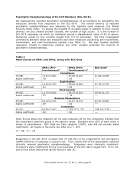
current members. Support for this interpretation comes from the finding that the greatest
discrepancy between pre- and post-involvement was on the Mind Control subscale, and the
next greatest was on the Compliance subscale. These two subscales also showed the
highest post-involvement means, and each of them was near the highest possible score
(35) on the subscale.
Another possible interpretation for the discrepancies between GPA1 and GPA2 is that
individuals changed their interpretation of reality when they first came in contact with CUT
and then again when they left it. While a person is still in a cultic group and subscribes to
the group‘s interpretation of reality, he or she may not perceive abusive actions or attitudes
as abusive. Instead, a person may interpret what outsiders might consider being abuse as
a need to atone for past transgressions or deserving chastisement for imperfections. In
CUT terms, this is an individual‘s karma, and ―bad karma‖ may stem from past deeds of a
previous or several previous embodiments. This belief allows the leader to interpret current
events, including being abused, by attributing them to a past of which the follower may
have no knowledge and which may be impossible to verify. Additionally, if one subscribes
to the belief that ―God chastises those most whom he (or she) loves most,‖ abuse may be
interpreted as a privilege of ―the chosen.‖ A belief that a follower‘s devotion or
unquestioning commitment must be tested so that his or her spiritual attainment may be
assessed also provides a formidable tool to change the meaning of events. Clinicians who
are familiar with issues of domestic abuse may find interesting parallels between what is
referred to as mystical manipulation (Lifton, 1987, 1991) in a cult context and the mind
games with which victims of domestic abuse are manipulated.
The high discrepancies between GPA1 and GPA2 may also be attributable to individuals‘
changes in the interpretation of events that took place during the conversion process,
throughout involvement, and since exiting CUT, as well as misrepresentations on the part of
CUT. These explanations may be two sides of the same coin. To an outsider, a
reinterpretation of reality may appear to be deceptive (and not necessarily abusive), but to
the new recruit and long-term follower it may be a ―higher form of knowledge.‖ Former
members who have shed their pseudoidentity (West &Martin, 1994), however, are not
merely outsiders. Their personal experiences may cause them to view the former
interpretation of their realities as deceptive and abusive. They may often prefer even
stronger terms, such as spiritual betrayal.
The evidence of discriminant validity with respect to the GPA scores strengthens the
credibility of these findings. Moreover, we found no relationship between the extent to
which respondents‘ ratings reflected group abusiveness (both current and retrospective
perceptions) and the extent to which they portrayed themselves in a socially desirable light.
Additionally, the sample‘s low-to-average scores on the lie, or social desirability, scale
suggest that their responses were not influenced by motives to misrepresent the
abusiveness.
Psychological Distress
A large percentage of former CUT members (almost 50% of the respondents) reported
experiencing such high levels of psychological distress as to be categorized as positive risks
(Derogatis, 1994). However, only 6.6% of the respondents had received psychotherapy or
counseling prior to their involvement in CUT. This low percentage may partly be
attributable to the relatively young age at which many of them joined (57.4% joined before
the age of 25 and 72.1% before the age of 30).
Although the percentage of ex-members experiencing such high levels of psychological
distress to qualify as a psychiatric risk is large, as time away from CUT increased, distress
If false recollections are not a likely cause of the discrepancies between the two sets of
scores, one might conclude that CUT misrepresents itself and deceives its prospective and
current members. Support for this interpretation comes from the finding that the greatest
discrepancy between pre- and post-involvement was on the Mind Control subscale, and the
next greatest was on the Compliance subscale. These two subscales also showed the
highest post-involvement means, and each of them was near the highest possible score
(35) on the subscale.
Another possible interpretation for the discrepancies between GPA1 and GPA2 is that
individuals changed their interpretation of reality when they first came in contact with CUT
and then again when they left it. While a person is still in a cultic group and subscribes to
the group‘s interpretation of reality, he or she may not perceive abusive actions or attitudes
as abusive. Instead, a person may interpret what outsiders might consider being abuse as
a need to atone for past transgressions or deserving chastisement for imperfections. In
CUT terms, this is an individual‘s karma, and ―bad karma‖ may stem from past deeds of a
previous or several previous embodiments. This belief allows the leader to interpret current
events, including being abused, by attributing them to a past of which the follower may
have no knowledge and which may be impossible to verify. Additionally, if one subscribes
to the belief that ―God chastises those most whom he (or she) loves most,‖ abuse may be
interpreted as a privilege of ―the chosen.‖ A belief that a follower‘s devotion or
unquestioning commitment must be tested so that his or her spiritual attainment may be
assessed also provides a formidable tool to change the meaning of events. Clinicians who
are familiar with issues of domestic abuse may find interesting parallels between what is
referred to as mystical manipulation (Lifton, 1987, 1991) in a cult context and the mind
games with which victims of domestic abuse are manipulated.
The high discrepancies between GPA1 and GPA2 may also be attributable to individuals‘
changes in the interpretation of events that took place during the conversion process,
throughout involvement, and since exiting CUT, as well as misrepresentations on the part of
CUT. These explanations may be two sides of the same coin. To an outsider, a
reinterpretation of reality may appear to be deceptive (and not necessarily abusive), but to
the new recruit and long-term follower it may be a ―higher form of knowledge.‖ Former
members who have shed their pseudoidentity (West &Martin, 1994), however, are not
merely outsiders. Their personal experiences may cause them to view the former
interpretation of their realities as deceptive and abusive. They may often prefer even
stronger terms, such as spiritual betrayal.
The evidence of discriminant validity with respect to the GPA scores strengthens the
credibility of these findings. Moreover, we found no relationship between the extent to
which respondents‘ ratings reflected group abusiveness (both current and retrospective
perceptions) and the extent to which they portrayed themselves in a socially desirable light.
Additionally, the sample‘s low-to-average scores on the lie, or social desirability, scale
suggest that their responses were not influenced by motives to misrepresent the
abusiveness.
Psychological Distress
A large percentage of former CUT members (almost 50% of the respondents) reported
experiencing such high levels of psychological distress as to be categorized as positive risks
(Derogatis, 1994). However, only 6.6% of the respondents had received psychotherapy or
counseling prior to their involvement in CUT. This low percentage may partly be
attributable to the relatively young age at which many of them joined (57.4% joined before
the age of 25 and 72.1% before the age of 30).
Although the percentage of ex-members experiencing such high levels of psychological
distress to qualify as a psychiatric risk is large, as time away from CUT increased, distress