Cultic Studies Review, Vol. 5, No. 2, 2006, Page 89
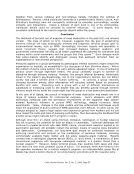
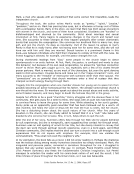
Legionaries of Christ
The founder of the Legionaries of Christ, the Rev. Marcial Maciel Delgado, 86 and ill,
has been prohibited by Pope Benedict XVI from saying mass in public or speaking to the
media. Maciel, who has for thirty years avoided answering complaints that he abused young
boys in seminaries, was repeatedly praised for his work by Pope John Paul II. It is alleged
that Maciel absolved in confession some of the boys he is accused of abusing. Maciel claims
he is innocent, but says that like Christ he has decided not to defend himself.
A former Legionary testified that the organization is very secretive and abusive. Followers
must take private vows not to criticize the actions of superiors and to report those who do.
He also said the confidentiality of spiritual counseling is often violated. ...The Hartford
Courant says, ―Justice was far too gentle‖ with Maciel, although his punishment ―is an
undeniable sign that, even at the highest levels, the Roman Catholic Church is no longer
treating accusations of sexual abuse by priests with its traditional tolerance, secrecy, and
denial.‖ ...The Legionaries of Christ, founded in 1941, has 650 priests and 2,500
seminarians in 20 countries. The Regnum Christi Movement is its lay auxiliary.
The Michigan Supreme Court has ruled that the operation of a seminary in Mount Pleasant
by the Legion of Christ on a 97-acre former IBM training center does not violate the
town‘s zoning code. The court also said the property is now tax-exempt and that the Legion
can train priests there. The ruling means the town will lose $1.8 million annually in revenue
and will have to refund past taxes paid by the Legion, whose [Mexico-based] founder was
recently banned from saying mass publicly by the Vatican following an investigation of
charges he molested seminarians decades ago.
Lord’s Resistance Army
The Lord’s Resistance Army (LRA), in northern Uganda, is similar to the now-dissolved
Ugandan Movement for the Restoration of the Ten Commandments in that they both
used similar techniques to indoctrinate and retain members. Although the LRA kidnapped
children and made them absolutely subservient killers, and the Movement for the
Restoration of the Ten Commandments did not use physical force, both organizations
employed psychological control founded on separation of members from family and friends,
the promise of salvation exclusively through the leader, group pressure, induction of guilt,
information management, singing and chanting, and other methods common to cults.
Neurotheology
Having recently demonstrated that mystical experiences can be produced in the laboratory,
and claiming that such experiences are ―descriptively identical‖ to religious experiences
commonly reported since time immemorial, Johns Hopkins University researchers argue that
the potential for the use of psychedelic/hallucinogenic drugs to treat depression, drug
addiction, and intolerable pain must be explored.
The blind test volunteers — all of whom said they had pre-existing spiritual interests — took
either psilocybin or the non-hallucinogenic stimulant Ritalin. A majority who took the
psilocybin felt that the ensuing hallucinogenic episode qualified as a ―full mystical
experience.‖ The effects remained for at least two months, and eighty percent reported
moderately or greatly increased well-being or satisfaction with life, changes confirmed by
friends and colleagues.
The results of this and other studies stemming from the new discipline of neurotheology
— the neurology of religious experience — and reported in the online journal
Psychopharmacology, have overcome the initial skepticism of Professor Roland Griffiths, of
the Johns Hopkins department of neuroscience and psychiatry, who says, ‖Under defined
conditions, with careful preparation, you can safely and fairly reliably occasion what‘s called
Legionaries of Christ
The founder of the Legionaries of Christ, the Rev. Marcial Maciel Delgado, 86 and ill,
has been prohibited by Pope Benedict XVI from saying mass in public or speaking to the
media. Maciel, who has for thirty years avoided answering complaints that he abused young
boys in seminaries, was repeatedly praised for his work by Pope John Paul II. It is alleged
that Maciel absolved in confession some of the boys he is accused of abusing. Maciel claims
he is innocent, but says that like Christ he has decided not to defend himself.
A former Legionary testified that the organization is very secretive and abusive. Followers
must take private vows not to criticize the actions of superiors and to report those who do.
He also said the confidentiality of spiritual counseling is often violated. ...The Hartford
Courant says, ―Justice was far too gentle‖ with Maciel, although his punishment ―is an
undeniable sign that, even at the highest levels, the Roman Catholic Church is no longer
treating accusations of sexual abuse by priests with its traditional tolerance, secrecy, and
denial.‖ ...The Legionaries of Christ, founded in 1941, has 650 priests and 2,500
seminarians in 20 countries. The Regnum Christi Movement is its lay auxiliary.
The Michigan Supreme Court has ruled that the operation of a seminary in Mount Pleasant
by the Legion of Christ on a 97-acre former IBM training center does not violate the
town‘s zoning code. The court also said the property is now tax-exempt and that the Legion
can train priests there. The ruling means the town will lose $1.8 million annually in revenue
and will have to refund past taxes paid by the Legion, whose [Mexico-based] founder was
recently banned from saying mass publicly by the Vatican following an investigation of
charges he molested seminarians decades ago.
Lord’s Resistance Army
The Lord’s Resistance Army (LRA), in northern Uganda, is similar to the now-dissolved
Ugandan Movement for the Restoration of the Ten Commandments in that they both
used similar techniques to indoctrinate and retain members. Although the LRA kidnapped
children and made them absolutely subservient killers, and the Movement for the
Restoration of the Ten Commandments did not use physical force, both organizations
employed psychological control founded on separation of members from family and friends,
the promise of salvation exclusively through the leader, group pressure, induction of guilt,
information management, singing and chanting, and other methods common to cults.
Neurotheology
Having recently demonstrated that mystical experiences can be produced in the laboratory,
and claiming that such experiences are ―descriptively identical‖ to religious experiences
commonly reported since time immemorial, Johns Hopkins University researchers argue that
the potential for the use of psychedelic/hallucinogenic drugs to treat depression, drug
addiction, and intolerable pain must be explored.
The blind test volunteers — all of whom said they had pre-existing spiritual interests — took
either psilocybin or the non-hallucinogenic stimulant Ritalin. A majority who took the
psilocybin felt that the ensuing hallucinogenic episode qualified as a ―full mystical
experience.‖ The effects remained for at least two months, and eighty percent reported
moderately or greatly increased well-being or satisfaction with life, changes confirmed by
friends and colleagues.
The results of this and other studies stemming from the new discipline of neurotheology
— the neurology of religious experience — and reported in the online journal
Psychopharmacology, have overcome the initial skepticism of Professor Roland Griffiths, of
the Johns Hopkins department of neuroscience and psychiatry, who says, ‖Under defined
conditions, with careful preparation, you can safely and fairly reliably occasion what‘s called