Cultic Studies Review, Vol. 5, No. 2, 2006, Page 28
Heaven’s Gate
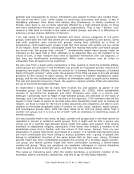
In 1997 39 members of a group known as Heaven‘s Gate killed themselves. As documented
by sociologist Janja Lalich (2004a 2004b), through interviews with former members and
informed others, plus content analysis of archival reports, and scholarly and popular
articles, Heaven‘s Gate was a totalistic group. Its charismatic leaders, Ti and Do, controlled
and influenced its members within a closed, self-sealing belief system.
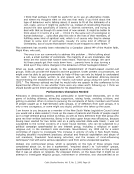
Ti and Do, formerly Marshall Applewhite and Bonnie Nettles, left traditional lives to form the
group in the 1970's. Applewhite was divorced with four children and had been a music
educator, while Nettles, a married mother of four children, had been a nurse.
At the height of the New Age Movement they were successful in recruiting members from
communes and college campuses. They spoke convincingly about the Book of Revelations,
about UFO's, reincarnation, and spirit beings, and they claimed they were messengers of
the second coming. New members ranged in age from the late teens to the sixties. They
gave up their worldly goods. Although these donations supported Ti and Do, Ti and Do were
not interested in material things or sex. In fact, Ti may have been a latent homosexual. In
the end they joined their followers in taking a poisonous potion of liquor and drugs.
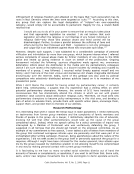
Lalich (2004, page 233) described their belief system:
...Ti and Do would be killed by opponents. ...and three and one-half days
later a spaceship would arrive to lift them off to the "Next Level," or the
"Level Above Human." ...an actual physical place. ...Days, months, years,
even decades passed as Ti, Do, and their followers waited for the spaceship
to retrieve them, all that time living within their specially constructed social
system.
GPA of Heaven’s Gate
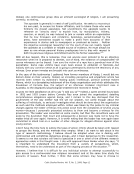
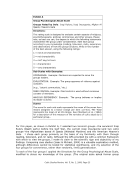
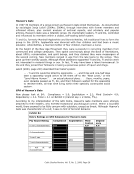
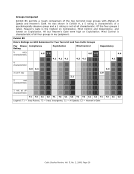
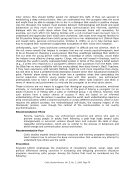
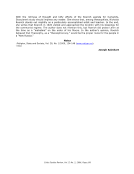
Now please look at B4. Compliance =5.0 Exploitation =2.1 Mind Control= 4.9
Dependency =4.4. Total =4.1 on Exhibit C (Cannot say =2 items, 7%).
According to my interpretation of the GPA items, Heaven‘s Gate members were strongly
attached to their leaders, who exerted exceptional psychological control. Within a bounded
world, there seemed to be little concern with outsiders, except as threat. Although Heaven‘s
Gate was characteristic of a cult, I saw no hint of terrorist behavior.
Exhibit B4
Dole’s Ratings on GPA Subscales for Heaven’s Gate
Psy Abuse Rating Compliance Exploitation Mind
Control
Depend
ency
5 very characteristic 5.0 4.9 4.4
4 characteristic
3 can‘t say
2.1
2 not characteristic
1 not at all
characteristic