Cultic Studies Review, Vol. 5, No. 2, 2006, Page 40
nevertheless tolerant toward those holding different values, from the one who attempts to
enforce his convictions upon others by political and social realization.
It is for this reason that several commentators have introduced the distinction between
―fundamentalism‖ and ―integralism‖ in order to suggest these differences in thinking and
acting. In the German-speaking realm, the foremost philosopher to emphasize this
differentiation is Robert Spaemann.[18] In Spaemann‘s view, ―fundamentalism‖ represents
an ideology based on a solid and hierarchical system of values, which tries to persuade by
dialogue while basically being tolerant toward other value systems. ―Integralism,‖ in
contrast, encompasses all ideological orientations that attempt to achieve their beliefs and
convictions by use of physical or psychical violence in the here and now.
Thus, generally speaking, we may comprehend more or less all collectivistic-totalitarian
systems as integralisms. The French philosopher Andre Glucksmann is of the opinion that
what happened during the twentieth century and what is continuing into the twenty-first,
has to be viewed as part of the permanent struggle between the various forms of
integralism—as the violent manifestation of fundamentalist thinking—against the open
Western societies. ―The goal of integralism is always de-structuralization, aiming at the
destruction of Western society.‖[19] Glucksmann not only mentions the Islamist integralism
but also the totalitarian ideologies of National Socialism and Marxism-Leninism. In this
―mental chaos,‖ Glucksmann observes a basic struggle between the various kinds of
Integralism, on the one hand, and the democratic-pluralistic societies of the West, on the
other. Collectivistic-ideological groups and parties set up the breeding ground for mental as
well as physical forms of terrorism. The radical Left of the West, to name but one example,
has ever since 1968 sworn itself to an equalizing Marxist dogmatism that aspires toward a
revolution of values that paves the way for spiritual totalitarianism. The value-arbitrary
society is consequently not an open but rather a deeply inhuman society based upon the
might of the powerful.
Moral-Philosophical Reflections and Ethical and Legal Implications of Terrorist
Violence
Among the most controversial problems of the political world today we detect the
justification of the principles and actions of political justice. The chance for conflict—
politically speaking, the chance for war—simultaneously determines the problem of peace.
This challenge has to be seen in the diverse claims for freedom of individuals, interest-
groups, and of social, political and religious nations, states, and state-coalitions, indeed,
entire cultures, which have to be reconciled and, if feasible, peacefully arranged.
Terrorist deeds ground themselves without exception in a ―pre-juridical‖ or, to speak with
Kant, ―moral-juridical‖ realm. Only a moral philosophical reflection on terrorism and the
incentives and goals of terrorist actions, therefore, may enable us to finally answer the
decisive question: ―Are terrorism and terrorist actions morally and ethically justifiable?‖
The instrument of terrorism, the path along which terrorism walks to attain to its goals, is
unlimited application of violence, a direct physical (in an indirect way frequently also
psychic) form of violence, tendentiously devoid of any self-imposed limitations and
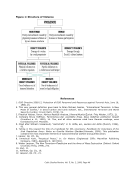
confinements. (Compare Graphic Annex 1, ―Structure of Violence‖). Hence, the question
about the moral vindication of terrorist actions can be equated with the essential question
for the legitimate use of violence and force to put through political and ideological goals.
Morality and Violence
The notion of violence in the physical meaning of ―violentia‖ explicitly refers to the
application of physical power and strength to an individual or his material property against
his will. Long ago, already Aristotle reflected on violence as a force imposed upon a victim
without this individual directly contributing to this effect or being able to withdraw from it.
nevertheless tolerant toward those holding different values, from the one who attempts to
enforce his convictions upon others by political and social realization.
It is for this reason that several commentators have introduced the distinction between
―fundamentalism‖ and ―integralism‖ in order to suggest these differences in thinking and
acting. In the German-speaking realm, the foremost philosopher to emphasize this
differentiation is Robert Spaemann.[18] In Spaemann‘s view, ―fundamentalism‖ represents
an ideology based on a solid and hierarchical system of values, which tries to persuade by
dialogue while basically being tolerant toward other value systems. ―Integralism,‖ in
contrast, encompasses all ideological orientations that attempt to achieve their beliefs and
convictions by use of physical or psychical violence in the here and now.
Thus, generally speaking, we may comprehend more or less all collectivistic-totalitarian
systems as integralisms. The French philosopher Andre Glucksmann is of the opinion that
what happened during the twentieth century and what is continuing into the twenty-first,
has to be viewed as part of the permanent struggle between the various forms of
integralism—as the violent manifestation of fundamentalist thinking—against the open
Western societies. ―The goal of integralism is always de-structuralization, aiming at the
destruction of Western society.‖[19] Glucksmann not only mentions the Islamist integralism
but also the totalitarian ideologies of National Socialism and Marxism-Leninism. In this
―mental chaos,‖ Glucksmann observes a basic struggle between the various kinds of
Integralism, on the one hand, and the democratic-pluralistic societies of the West, on the
other. Collectivistic-ideological groups and parties set up the breeding ground for mental as
well as physical forms of terrorism. The radical Left of the West, to name but one example,
has ever since 1968 sworn itself to an equalizing Marxist dogmatism that aspires toward a
revolution of values that paves the way for spiritual totalitarianism. The value-arbitrary
society is consequently not an open but rather a deeply inhuman society based upon the
might of the powerful.
Moral-Philosophical Reflections and Ethical and Legal Implications of Terrorist
Violence
Among the most controversial problems of the political world today we detect the
justification of the principles and actions of political justice. The chance for conflict—
politically speaking, the chance for war—simultaneously determines the problem of peace.
This challenge has to be seen in the diverse claims for freedom of individuals, interest-
groups, and of social, political and religious nations, states, and state-coalitions, indeed,
entire cultures, which have to be reconciled and, if feasible, peacefully arranged.
Terrorist deeds ground themselves without exception in a ―pre-juridical‖ or, to speak with
Kant, ―moral-juridical‖ realm. Only a moral philosophical reflection on terrorism and the
incentives and goals of terrorist actions, therefore, may enable us to finally answer the
decisive question: ―Are terrorism and terrorist actions morally and ethically justifiable?‖
The instrument of terrorism, the path along which terrorism walks to attain to its goals, is
unlimited application of violence, a direct physical (in an indirect way frequently also
psychic) form of violence, tendentiously devoid of any self-imposed limitations and
confinements. (Compare Graphic Annex 1, ―Structure of Violence‖). Hence, the question
about the moral vindication of terrorist actions can be equated with the essential question
for the legitimate use of violence and force to put through political and ideological goals.
Morality and Violence
The notion of violence in the physical meaning of ―violentia‖ explicitly refers to the
application of physical power and strength to an individual or his material property against
his will. Long ago, already Aristotle reflected on violence as a force imposed upon a victim
without this individual directly contributing to this effect or being able to withdraw from it.