Cultic Studies Review, Vol. 5, No. 2, 2006, Page 55
aware that law enforcement regulations used to protect individual rights may also be
exploited by unscrupulous individuals.li Fortunately, terrorists still have to overcome
daunting technical challenges to develop nuclear or chemical weapons.lii Since the
crackdown on the Lashkar-e-Jhangvi (LeJ) in 2002 by Pakistani authorities, none of al-
Qaeda‘s associated groups appears to be developing chemical and biological weapons.liii In
order to survive, terrorist groups will have to be more independent and less command-
driven, a change influenced more by need than strategic preference.liv
Strategic Choice or Group Behavior
Martha Crenshaw emphasizes the importance of analyzing terrorist groups in order to
develop effective policy recommendations.lv She describes two approaches to better
understand terrorism and its consequences. The first approach argues that terrorism
represents a strategic choice from a set of possible alternatives by a political actor.
Behaving according to a set of collective values, an organization may choose terrorism to
achieve radical political and social change. This instrumental approach views terrorism as a
response to government behavior and actions. As the cost for conducting such activity
increases or as the reward for such actions decreases, violence will be less likely to occur.
The instrumental perspective, then, analyzes terrorism according to a rational cost/benefit
calculus.
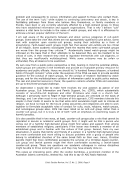
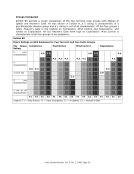
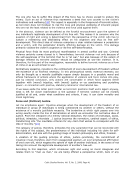
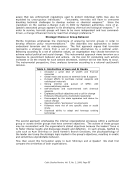
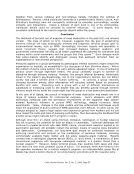
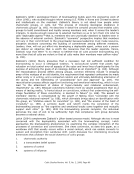
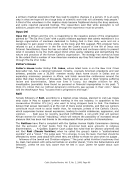
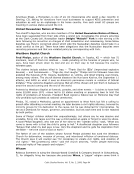
Table 1: Similarities of Aum and Al Qaeda
Amassed a great deal of wealth and financial
resources
Global reach and access to external funds &support
Pursued efforts to purchase nuclear weapons and
radiological materials
Strong interest and pursuit of WMD: well
resourced/strong desires
Self-developed and experimented with chemical
weapons
Expressed political objectives and a call for change
Followers influenced by charismatic leadership
Discouraged by the state apparatus and desire for
radical change
Operated within ―permissive‖ environments
Followers were not of one specific class or social
strata
Displayed ability to adapt and leverage existing
technology
The second approach emphasizes the internal organizational processes within a particular
group or across similar groups that have common objectives. The actions of these groups
may be inconsistent with the organization‘s stated objectives because the leaders‘ focus is
to foster intense loyalty and discourage dissent and defection. In such groups, typified by
cults such as Aum Shinrikyo or David Koresh‘s Branch Davidians, the psychopathology of
the leader can trump the strategic logic implied in the group‘s objectives, resulting in erratic
and sometimes unpredictable behavior.
How then would this formulation apply to Aum Shinrikyo and al Qaeda? We shall first
compare the similarities of both organizations.
aware that law enforcement regulations used to protect individual rights may also be
exploited by unscrupulous individuals.li Fortunately, terrorists still have to overcome
daunting technical challenges to develop nuclear or chemical weapons.lii Since the
crackdown on the Lashkar-e-Jhangvi (LeJ) in 2002 by Pakistani authorities, none of al-
Qaeda‘s associated groups appears to be developing chemical and biological weapons.liii In
order to survive, terrorist groups will have to be more independent and less command-
driven, a change influenced more by need than strategic preference.liv
Strategic Choice or Group Behavior
Martha Crenshaw emphasizes the importance of analyzing terrorist groups in order to
develop effective policy recommendations.lv She describes two approaches to better
understand terrorism and its consequences. The first approach argues that terrorism
represents a strategic choice from a set of possible alternatives by a political actor.
Behaving according to a set of collective values, an organization may choose terrorism to
achieve radical political and social change. This instrumental approach views terrorism as a
response to government behavior and actions. As the cost for conducting such activity
increases or as the reward for such actions decreases, violence will be less likely to occur.
The instrumental perspective, then, analyzes terrorism according to a rational cost/benefit
calculus.
Table 1: Similarities of Aum and Al Qaeda
Amassed a great deal of wealth and financial
resources
Global reach and access to external funds &support
Pursued efforts to purchase nuclear weapons and
radiological materials
Strong interest and pursuit of WMD: well
resourced/strong desires
Self-developed and experimented with chemical
weapons
Expressed political objectives and a call for change
Followers influenced by charismatic leadership
Discouraged by the state apparatus and desire for
radical change
Operated within ―permissive‖ environments
Followers were not of one specific class or social
strata
Displayed ability to adapt and leverage existing
technology
The second approach emphasizes the internal organizational processes within a particular
group or across similar groups that have common objectives. The actions of these groups
may be inconsistent with the organization‘s stated objectives because the leaders‘ focus is
to foster intense loyalty and discourage dissent and defection. In such groups, typified by
cults such as Aum Shinrikyo or David Koresh‘s Branch Davidians, the psychopathology of
the leader can trump the strategic logic implied in the group‘s objectives, resulting in erratic
and sometimes unpredictable behavior.
How then would this formulation apply to Aum Shinrikyo and al Qaeda? We shall first
compare the similarities of both organizations.