Cultic Studies Review, Vol. 5, No. 2, 2006, Page 21
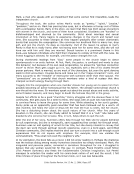
found the definitions of Beit-Hallahmi (1993) and Rosedale and Langone (1998) most
useful. In the present paper I propose to rely also on the wording of the recent ICSA
definition (ICSA, 2005) of cult proposed by Rutgers sociologist Benjamin Zablocki and
commented upon by Rosedale and Langone:
An ideological organization held together by charismatic relationships and
demanding total commitment." Charisma refers to a spiritual power or
personal quality that gives leaders influence or authority over large numbers
of people. Hence a cult is characterized by an ideology, strong demands
issuing from that ideology, and powerful processes of social-psychological
influence to induce group members to meet those demands. This high-
demand leader-centered social climate places such groups at risk of
exploiting and injuring members, although they may remain benign, if
leadership doesn't abuse its power.
In my opinion the expression ―cultist (or cult)‖ is not necessarily pejorative. A cultist may or
may not be harmful or harmless, a victim or beneficiary. A cult leader may be responsible
and ethical or a criminal who is dangerous to his followers and/or the public.
Mind Control
In the weeks after 9/11 many cult specialists wondered whether or not suicide bombers
were under mind control as described by Lifton (1961) and Zimbardo (1996). At that time I
suggested (Dole, 2001, p. 214) that:
Abusive religious, political, and other groups. ..{apply )deception, intensive
persuasion, covert hypnotic techniques, and extreme flattery to recruit
converts. They control devotees through confession, induced guilt, a totalistic
organization, and absolute adherence to a theology or dogma. The
individual's freedom is sharply reduced ...The leaders have control of the
recruit's environment.
Of the flood of articles and books published in the last six years that address the question of
intensive social influence I will mention briefly work by psychiatrist Robert J. Lifton (2000),
social psychologist Anthony Stahelski (2005), and sociologist Janja Lalich (2004a 2004b).
In Destroying the World to Save it, Lifton (2000) tells the terrible tale of Aum Shinrikyo.
When the guru, Asahara, and his followers released Sarin gas in Japan's subways they
believed that global destruction, fear, and chaos would lead to a wonderful world. In short,
terror was essential.
Lalich (2004) compared the Democratic Workers Party, a small radical political cult led by a
charismatic woman, with Heaven‘s Gate. The leaders of Heaven‘s Gate offered their
followers a transcendent vision, an ideal world beyond planet Earth that they could attain by
the ultimate self-sacrifice. Lalich's theory of bounded choice stresses the complexity of the
interactions among group members and the power of charisma.
Stahelski (2005) proposes a social psychological conditioning theory to explain how
terrorists are created by cultic groups. Within a context of group dynamics he posits five
phases of conditioning: depluralization, self-deindividuation, other-deindividuation,
dehumanization, and demonization.
My conclusion given present knowledge is that how groups and their leaders control the
behavior, cognitions, and emotions of insiders and outsiders is immensely complex and
varied.
found the definitions of Beit-Hallahmi (1993) and Rosedale and Langone (1998) most
useful. In the present paper I propose to rely also on the wording of the recent ICSA
definition (ICSA, 2005) of cult proposed by Rutgers sociologist Benjamin Zablocki and
commented upon by Rosedale and Langone:
An ideological organization held together by charismatic relationships and
demanding total commitment." Charisma refers to a spiritual power or
personal quality that gives leaders influence or authority over large numbers
of people. Hence a cult is characterized by an ideology, strong demands
issuing from that ideology, and powerful processes of social-psychological
influence to induce group members to meet those demands. This high-
demand leader-centered social climate places such groups at risk of
exploiting and injuring members, although they may remain benign, if
leadership doesn't abuse its power.
In my opinion the expression ―cultist (or cult)‖ is not necessarily pejorative. A cultist may or
may not be harmful or harmless, a victim or beneficiary. A cult leader may be responsible
and ethical or a criminal who is dangerous to his followers and/or the public.
Mind Control
In the weeks after 9/11 many cult specialists wondered whether or not suicide bombers
were under mind control as described by Lifton (1961) and Zimbardo (1996). At that time I
suggested (Dole, 2001, p. 214) that:
Abusive religious, political, and other groups. ..{apply )deception, intensive
persuasion, covert hypnotic techniques, and extreme flattery to recruit
converts. They control devotees through confession, induced guilt, a totalistic
organization, and absolute adherence to a theology or dogma. The
individual's freedom is sharply reduced ...The leaders have control of the
recruit's environment.
Of the flood of articles and books published in the last six years that address the question of
intensive social influence I will mention briefly work by psychiatrist Robert J. Lifton (2000),
social psychologist Anthony Stahelski (2005), and sociologist Janja Lalich (2004a 2004b).
In Destroying the World to Save it, Lifton (2000) tells the terrible tale of Aum Shinrikyo.
When the guru, Asahara, and his followers released Sarin gas in Japan's subways they
believed that global destruction, fear, and chaos would lead to a wonderful world. In short,
terror was essential.
Lalich (2004) compared the Democratic Workers Party, a small radical political cult led by a
charismatic woman, with Heaven‘s Gate. The leaders of Heaven‘s Gate offered their
followers a transcendent vision, an ideal world beyond planet Earth that they could attain by
the ultimate self-sacrifice. Lalich's theory of bounded choice stresses the complexity of the
interactions among group members and the power of charisma.
Stahelski (2005) proposes a social psychological conditioning theory to explain how
terrorists are created by cultic groups. Within a context of group dynamics he posits five
phases of conditioning: depluralization, self-deindividuation, other-deindividuation,
dehumanization, and demonization.
My conclusion given present knowledge is that how groups and their leaders control the
behavior, cognitions, and emotions of insiders and outsiders is immensely complex and
varied.