Cultic Studies Review, Vol. 5, No. 2, 2006, Page 46
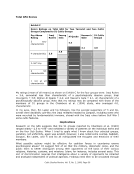
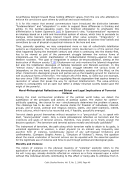
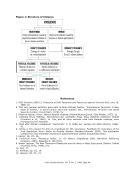
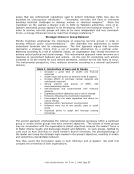
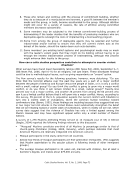
Figure 1: Structure of Violence
References
1. DOD Directive 2000.12, Protection of DOD Personnel and Resources against Terrorist Acts, June 16,
1986, 15.
2. This very general definition goes back to Brian Michael Jenkins, "International Terrorism: A New
Mode of Conflict," in David Carlton and Carlo Schaerf, eds., International Terrorism and World
Security (London: Croom Helm, 1975), 15.
3. Friedrich Hacker, Terror. Mythos-Realität-Analyse, (Vienna/Munich/Zurich: Fritz Molden, 1973), 21.
4. Compare Bruce Hoffman, Terrorismus—der unerklärte Krieg. Neue Gefahren politischer Gewalt
(Frankfurt a. M., 1999), 16. This, and all other sections cited from German readings, were
translated by E.R. Micewski.
5. Cited after Wilhelm Vossenkuhl, "Herrschaft," in O. Höffe, ed., Lexikon der Ethik (Munich, 1992),
95.
6. Telling in this respect the title of a handbook for IRA volunteers: Handbook for Volunteers of the
Irish Republican Army: Notes on Guerilla Warfare (Boulder/Colorado, 1995). This publication
contains the most important elements of subconventional warfare and guerilla action.
7. Hacker, Op. Cit., 26.
8. Immanuel Kant, "Perpetual Peace," in: On History (Englewood Cliffs: Macmillan Publishing
Company, 1963), Appendix II, 129 [381].
9. Walter Laqueur, The New Terrorism—Fanaticism and the Arms of Mass Destruction (Oxford: Oxford
University Press, 1999), 274.
10. Ibid., 11.
11. Hoffman, Op. Cit., 19.
12. Laqueur, Op. Cit., 21.