Cultic Studies Review, Vol. 5, No. 2, 2006, Page 71
In still other cases, I suspect, a seeker‘s psychological needs and pre-existing belief system
may so well mesh with a particular violent group that the brainwashing process is not
necessary for leaders to have deployable agents. All the leader needs to do is make sure
that he has a large enough supply of recruits to enable him to select those who would be
willing to kill for the cause. Al Qaeda and other terrorist organizations, for example,
advertise themselves on the Internet and use the Internet to screen recruits:
The SITE Institute, a Washington, D.C.-based terrorism research group that
monitors al Qaeda‘s Internet communications, has provided chilling details of
a high-tech recruitment drive launched in 2003 to recruit fighters to travel to
Iraq and attack U.S. and coalition forces there. Potential recruits are
bombarded with religious decrees and anti-American propaganda, provided
with training manuals on how to be a terrorist, and—as they are led through a
maze of secret chat rooms—given specific instructions on how to make the
journey to Iraq. (Weimann, 2004)
So long as an organization such as Al Qaeda can engage in media campaigns that bring a
large flow of ―applicants‖ to the group, it can find, select, and train those people who will be
useful to the organization, including those who will kill for it. If, for some reason, the flow of
―applicants‖ subsided significantly, the group‘s leadership might then find it necessary to
implement a brainwashing program to produce enough deployable agents to meet its needs.
Of course, the leader might also implement a brainwashing program to enhance control over
members who are favorably predisposed to the group‘s violent goals.
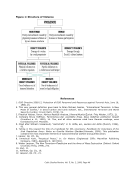
Although there are surely a variety of pathways to violence, I believe that the flexible model
described in this paper has practical utility in planning programs of prevention. It can be
summarized as follows:
1. Cultural trends will influence the kinds and quantities of groups that are most likely
to get a seeker‘s attention.
2. Personal psychological predispositions and values will narrow the range of groups
that have the potential of gaining a person‘s attention and interest.
3. Something causes a person to become dissatisfied with life in some way and opens
him or her to other perspectives and worldviews—that is, to become a seeker.
4. Chance factors—e.g., street recruitment, friendship networks—may determine which
groups of potential interest the seeker examines.
5. Since most groups present a benign face to the world, chance factors may determine
whether or not the group the seeker examines is violent or destructive.
6. If in the early stages of exploring a particular group a seeker has a powerful inner
experience or series of experiences the seeker perceives to be consistent with the
group‘s ideology, he or she may be more likely to make an initial commitment to the
group—that is, to convert to the group‘s belief system, to adopt the group‘s
worldview.
7. Whether a group is destructive or benign (generally unknown to a seeker in the early
stages of group exploration), seekers during the first two or three years after initial
commitment may tend to lose interest in and disconnect from the group in question.
They might do so because, for example, information from outside the group causes
them to reevaluate aspects of its ideology, interpersonal conflicts within the group
reduce its attractiveness, or they begin to question the sincerity of leaders or the
adequacy of certain doctrines.
In still other cases, I suspect, a seeker‘s psychological needs and pre-existing belief system
may so well mesh with a particular violent group that the brainwashing process is not
necessary for leaders to have deployable agents. All the leader needs to do is make sure
that he has a large enough supply of recruits to enable him to select those who would be
willing to kill for the cause. Al Qaeda and other terrorist organizations, for example,
advertise themselves on the Internet and use the Internet to screen recruits:
The SITE Institute, a Washington, D.C.-based terrorism research group that
monitors al Qaeda‘s Internet communications, has provided chilling details of
a high-tech recruitment drive launched in 2003 to recruit fighters to travel to
Iraq and attack U.S. and coalition forces there. Potential recruits are
bombarded with religious decrees and anti-American propaganda, provided
with training manuals on how to be a terrorist, and—as they are led through a
maze of secret chat rooms—given specific instructions on how to make the
journey to Iraq. (Weimann, 2004)
So long as an organization such as Al Qaeda can engage in media campaigns that bring a
large flow of ―applicants‖ to the group, it can find, select, and train those people who will be
useful to the organization, including those who will kill for it. If, for some reason, the flow of
―applicants‖ subsided significantly, the group‘s leadership might then find it necessary to
implement a brainwashing program to produce enough deployable agents to meet its needs.
Of course, the leader might also implement a brainwashing program to enhance control over
members who are favorably predisposed to the group‘s violent goals.
Although there are surely a variety of pathways to violence, I believe that the flexible model
described in this paper has practical utility in planning programs of prevention. It can be
summarized as follows:
1. Cultural trends will influence the kinds and quantities of groups that are most likely
to get a seeker‘s attention.
2. Personal psychological predispositions and values will narrow the range of groups
that have the potential of gaining a person‘s attention and interest.
3. Something causes a person to become dissatisfied with life in some way and opens
him or her to other perspectives and worldviews—that is, to become a seeker.
4. Chance factors—e.g., street recruitment, friendship networks—may determine which
groups of potential interest the seeker examines.
5. Since most groups present a benign face to the world, chance factors may determine
whether or not the group the seeker examines is violent or destructive.
6. If in the early stages of exploring a particular group a seeker has a powerful inner
experience or series of experiences the seeker perceives to be consistent with the
group‘s ideology, he or she may be more likely to make an initial commitment to the
group—that is, to convert to the group‘s belief system, to adopt the group‘s
worldview.
7. Whether a group is destructive or benign (generally unknown to a seeker in the early
stages of group exploration), seekers during the first two or three years after initial
commitment may tend to lose interest in and disconnect from the group in question.
They might do so because, for example, information from outside the group causes
them to reevaluate aspects of its ideology, interpersonal conflicts within the group
reduce its attractiveness, or they begin to question the sincerity of leaders or the
adequacy of certain doctrines.