Cultic Studies Review, Vol. 5, No. 2, 2006, Page 20
Are Terrorists Cultists?
Arthur A. Dole, Ph.D., ABPP
Emeritus Professor, Psychology in Education
University of Pennsylvania
Abstract
Are terrorists cultists? Or, are cultists terrorists? To open exploration of these
questions within a speculative framework, I begin by examining the
definitions of basic terms, relying heavily on previous analyses by Dole and
by Langone, Stout, Lifton, Zimbardo, and others. After a review of extremely
harmful acts by terrorists and cultists since 2001, I discuss how often, for
what purposes, and under what circumstances such groups use violence. As
examples I select two terrorist groups and two cultic groups and compare
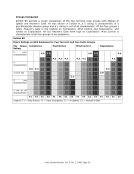
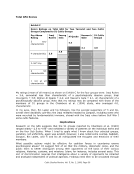
them on selected abusive and beneficial characteristics, using a modified
version of the Group Psychological Abuse Scale as a rough yardstick. I then
discuss possible counter actions appropriate to some of the similarities and
differences among cultists and terrorists. What research is needed to support
prevention and control? Can aspects of exit consultation or other methods of
behavioral control be applied to members of terrorist groups? When, if at all,
might soft power or constructive action in the spirit of Martin Luther King be
effective? I conclude that some but not all terrorists are similar in their
dynamics to cultists and that many cultists are not similar to terrorists.
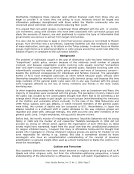
Are terrorists cultists? Or, are cultists terrorists? To explore these questions within a
speculative framework, I will review and update portions of a chapter in The Psychology of
Terrorism (Stout, 2002) that I prepared in the fall of 2001 just after the bombings of
September 11. I then compare two terrorist and two cultic groups.
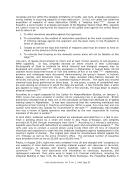
Terrorist
After examining various definitions of "Terrorist," I concluded (Dole, 2001, p.213):
As Michael Kinsley (2001) has written, defining terrorism is essential it's
also impossible. I propose to use to use the term terrorist in the following
sense: Given a conflict, a terrorist is an extremely hostile opponent.
Current usage among coalition countries tends to define terrorist as anyone who harms
noncombatants. Such thinking demonizes without accounting for variations and distinctions.
Thus, by this definition, Basque separatists, Moroccan bombers, Hezbollah, Saddam
Hussein, and the bin Laden suicide gang are all terrorists. A Spaniard or American may be
tempted to overlook that each group may have very different histories, customs, purposes,
grievances, and methods. Events since 9/11 have not changed my view that calling an
opponent a terrorist without amplification interferes with the resolution of a particular
conflict, whether by military or diplomatic means. Thus although Saddam could be called a
terrorist and a tyrant, he was not responsible for the suicide attacks on the United States
(9/11 Report, 2004).
Suicide attacks and other murderous assaults are not new as methods in all kinds of
warfare including insurgency they have been used for centuries. See also Stout (2002) for
a wide variety of views about terrorism.
Cultist
In 2002 (Dole, 2002) I wrote that cultist (cult member) is also a tricky term. Lawyers,
sociologists, and theologians among others apply different meanings. As a psychologist, I
Are Terrorists Cultists?
Arthur A. Dole, Ph.D., ABPP
Emeritus Professor, Psychology in Education
University of Pennsylvania
Abstract
Are terrorists cultists? Or, are cultists terrorists? To open exploration of these
questions within a speculative framework, I begin by examining the
definitions of basic terms, relying heavily on previous analyses by Dole and
by Langone, Stout, Lifton, Zimbardo, and others. After a review of extremely
harmful acts by terrorists and cultists since 2001, I discuss how often, for
what purposes, and under what circumstances such groups use violence. As
examples I select two terrorist groups and two cultic groups and compare
them on selected abusive and beneficial characteristics, using a modified
version of the Group Psychological Abuse Scale as a rough yardstick. I then
discuss possible counter actions appropriate to some of the similarities and
differences among cultists and terrorists. What research is needed to support
prevention and control? Can aspects of exit consultation or other methods of
behavioral control be applied to members of terrorist groups? When, if at all,
might soft power or constructive action in the spirit of Martin Luther King be
effective? I conclude that some but not all terrorists are similar in their
dynamics to cultists and that many cultists are not similar to terrorists.
Are terrorists cultists? Or, are cultists terrorists? To explore these questions within a
speculative framework, I will review and update portions of a chapter in The Psychology of
Terrorism (Stout, 2002) that I prepared in the fall of 2001 just after the bombings of
September 11. I then compare two terrorist and two cultic groups.
Terrorist
After examining various definitions of "Terrorist," I concluded (Dole, 2001, p.213):
As Michael Kinsley (2001) has written, defining terrorism is essential it's
also impossible. I propose to use to use the term terrorist in the following
sense: Given a conflict, a terrorist is an extremely hostile opponent.
Current usage among coalition countries tends to define terrorist as anyone who harms
noncombatants. Such thinking demonizes without accounting for variations and distinctions.
Thus, by this definition, Basque separatists, Moroccan bombers, Hezbollah, Saddam
Hussein, and the bin Laden suicide gang are all terrorists. A Spaniard or American may be
tempted to overlook that each group may have very different histories, customs, purposes,
grievances, and methods. Events since 9/11 have not changed my view that calling an
opponent a terrorist without amplification interferes with the resolution of a particular
conflict, whether by military or diplomatic means. Thus although Saddam could be called a
terrorist and a tyrant, he was not responsible for the suicide attacks on the United States
(9/11 Report, 2004).
Suicide attacks and other murderous assaults are not new as methods in all kinds of
warfare including insurgency they have been used for centuries. See also Stout (2002) for
a wide variety of views about terrorism.
Cultist
In 2002 (Dole, 2002) I wrote that cultist (cult member) is also a tricky term. Lawyers,
sociologists, and theologians among others apply different meanings. As a psychologist, I