Cultic Studies Review, Vol. 5, No. 2, 2006, Page 64
2. The psychodynamic model (i.e., what a group does for a person, especially in terms
of meeting psychological needs about which he/she might have limited awareness
this model is often favored by psychodynamically oriented therapists)
3. The thought reform model (i.e., what a group does to a person—the social-
psychological dynamics of influence and control this model is often favored by cult
critics).
Although I separate these models for purposes of explanation, in practice probably all three
models are relevant to varying degrees for almost all conversions. Those observers who are
rigidly partial to one or another of the models will, in my opinion, have difficulty gaining a
well-rounded picture of a particular conversion.
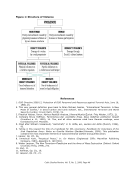
I think it is useful to divide the conversion process into three phases, each of which involves
the interaction of variables within the person and within the environment:
1. attraction
2. conversion proper
3. acculturation
In the late 1970s and early 1980s, many college-age youth were attracted to cultic groups.
The highly manipulative Moonie (i.e., Unification Church) recruitment of college students
was especially noteworthy because nearly one-half of the people entering the cult-watch
network were concerned about the Moonies (Conway, Siegelman, Carmichael, &Coggins,
1986). For this reason, many cult critics tended at that time to emphasize the role of
deceptive, manipulative, even orchestrated recruitment tactics, which were so conspicuous
at Moonie recruitment centers in the United States. However, as time passed and Moonie
recruitment slowed to a trickle, workers in the field began to appreciate more that there
were many paths into cultic groups, some more dependent upon environmental pressures,
others more dependent upon personal needs or interests of the recruits. As Zablocki (1998)
pointed out, the ―brainwashing‖ frequently associated with cultic groups refers more to the
difficulty in getting out (what Zablocki calls ―exit costs‖) than to the manner in which people
get in.
Although highly manipulative recruitment into cultic groups certainly still occurs, the
interaction of cultural factors with personal needs, interests, and goals of potential recruits
must be examined to understand the attraction phase of cult conversion. This interaction is
important, for example, in some conversions to cultic Christian groups, which appear to
attract people already operating within a Christian worldview. I suspect that a similar
attraction exists in the movement of some Muslim youth from mainstream to extremist
groups.
Whether persons are recruited into or attracted to a particular group, they may still undergo
a profound change in worldview. ―Conversion‖ refers to the process—sometimes sudden,
sometimes gradual—whereby persons come to accept a worldview different in fundamental
ways from that which they formerly held. Conversion is often associated with, if not
dependent upon, a powerful inner experience, which is typically given a spiritual
interpretation (Langone, 2003). Sometimes these experiences may arise spontaneously. For
example, a meditator in a monistic Hindu tradition may suddenly experience a shift to a
particular alternate state of consciousness, which he/she interprets—sometimes under the
manipulative guidance of group members or a guru—as a mystical experience of the
godhead to which the tradition refers. Another example: A disconsolate Christian, Muslim,
or Jew who seeks comfort by reading Holy Scripture may stumble upon a verse that dispels
the confusion in his or her troubled soul, an experience that engenders a sense of special
destiny and connection to God. Sometimes powerful inner experiences can be engineered.
2. The psychodynamic model (i.e., what a group does for a person, especially in terms
of meeting psychological needs about which he/she might have limited awareness
this model is often favored by psychodynamically oriented therapists)
3. The thought reform model (i.e., what a group does to a person—the social-
psychological dynamics of influence and control this model is often favored by cult
critics).
Although I separate these models for purposes of explanation, in practice probably all three
models are relevant to varying degrees for almost all conversions. Those observers who are
rigidly partial to one or another of the models will, in my opinion, have difficulty gaining a
well-rounded picture of a particular conversion.
I think it is useful to divide the conversion process into three phases, each of which involves
the interaction of variables within the person and within the environment:
1. attraction
2. conversion proper
3. acculturation
In the late 1970s and early 1980s, many college-age youth were attracted to cultic groups.
The highly manipulative Moonie (i.e., Unification Church) recruitment of college students
was especially noteworthy because nearly one-half of the people entering the cult-watch
network were concerned about the Moonies (Conway, Siegelman, Carmichael, &Coggins,
1986). For this reason, many cult critics tended at that time to emphasize the role of
deceptive, manipulative, even orchestrated recruitment tactics, which were so conspicuous
at Moonie recruitment centers in the United States. However, as time passed and Moonie
recruitment slowed to a trickle, workers in the field began to appreciate more that there
were many paths into cultic groups, some more dependent upon environmental pressures,
others more dependent upon personal needs or interests of the recruits. As Zablocki (1998)
pointed out, the ―brainwashing‖ frequently associated with cultic groups refers more to the
difficulty in getting out (what Zablocki calls ―exit costs‖) than to the manner in which people
get in.
Although highly manipulative recruitment into cultic groups certainly still occurs, the
interaction of cultural factors with personal needs, interests, and goals of potential recruits
must be examined to understand the attraction phase of cult conversion. This interaction is
important, for example, in some conversions to cultic Christian groups, which appear to
attract people already operating within a Christian worldview. I suspect that a similar
attraction exists in the movement of some Muslim youth from mainstream to extremist
groups.
Whether persons are recruited into or attracted to a particular group, they may still undergo
a profound change in worldview. ―Conversion‖ refers to the process—sometimes sudden,
sometimes gradual—whereby persons come to accept a worldview different in fundamental
ways from that which they formerly held. Conversion is often associated with, if not
dependent upon, a powerful inner experience, which is typically given a spiritual
interpretation (Langone, 2003). Sometimes these experiences may arise spontaneously. For
example, a meditator in a monistic Hindu tradition may suddenly experience a shift to a
particular alternate state of consciousness, which he/she interprets—sometimes under the
manipulative guidance of group members or a guru—as a mystical experience of the
godhead to which the tradition refers. Another example: A disconsolate Christian, Muslim,
or Jew who seeks comfort by reading Holy Scripture may stumble upon a verse that dispels
the confusion in his or her troubled soul, an experience that engenders a sense of special
destiny and connection to God. Sometimes powerful inner experiences can be engineered.