Cultic Studies Review, Vol. 5, No. 2, 2006, Page 22
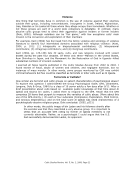
Violence
One thing that terrorists have in common is the use of violence against their enemies
outside their group, including noncombatants. Insurgents in Israel, Ireland, Afghanistan,
Iraq, Pakistan or Sri Lanka kill those whom they allege occupy their homelands. Whether or
not these groups are part of a world wide conspiracy is debatable. In contrast, many
abusive cultic groups tend to direct their aggression against insiders or former insiders
(Dole, 2002). Although outsiders can be "fair game," with few exceptions cults‘ main
mission is the conversion and exploitation of their members
For example, Kent (2004) has borrowed from the family violence and sociology of violence
literature to identify four interrelated domains associated with religious violence: (Kent,
2004, p. 101): (1) intrapsychic or biopsychosocial contributors (2) interpersonal
contributors (3) intragroup contributors and (4) intergroup contributors.
Kent (2004, pp. 125-128) lists 22 sects, cults, and new religions involved with violent
deaths during the past four decades. Of these only three—Manson in the United States,
Aum Shinrikyo in Japan, and the Movement for the Restoration of God in Uganda—killed
substantial numbers of innocent outsiders.
I scanned all News reports published in the Cultic Studies Review from 2002 to 2004. I
found stories of fraud, abuse of women and children, and negligent homicide, but no
instances of mass murder. In other words, some groups monitored by CSR may exhibit
criminal behaviors but few could be classified as terrorists or killer cults such as Al Qaeda.
Terrorists or Cultists?
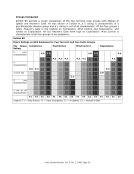
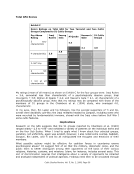
How similar are terrorist and cultic groups on salient characteristics of psychological abuse?
To explore this question I administered the Group Psychological Scale, GPA, (Chambers,
Langone, Dole &Grice, 1994) to a class of 10 senior adults a few days after 9/11. After a
brief presentation about cults based on available public knowledge at that time about Al
Qaeda and Osama bin Laden, I asked them to respond to the GPA. Recall that the GPA
comprises 28 items that purport to measure the varieties of cultic abuse. (More about this
use of the GPA shortly.) On each of four subscales (Compliance, Exploitation, Mind Control,
and Anxious Dependency,) and on the total score Al Qaeda was rated characteristic of a
psychologically abusive religious group. Dole concluded: (2002, p221)
In other words, the public image of bin Laden and his followers shortly after
the suicides was that they resembled a very abusive group. It is important to
stress that an accurate GPA rating by former Al Qaeda members is not
currently obtainable. Rather, as a psychologist I could argue that the U.S.
had successfully demonized Bin Laden, its opponent.
Violence
One thing that terrorists have in common is the use of violence against their enemies
outside their group, including noncombatants. Insurgents in Israel, Ireland, Afghanistan,
Iraq, Pakistan or Sri Lanka kill those whom they allege occupy their homelands. Whether or
not these groups are part of a world wide conspiracy is debatable. In contrast, many
abusive cultic groups tend to direct their aggression against insiders or former insiders
(Dole, 2002). Although outsiders can be "fair game," with few exceptions cults‘ main
mission is the conversion and exploitation of their members
For example, Kent (2004) has borrowed from the family violence and sociology of violence
literature to identify four interrelated domains associated with religious violence: (Kent,
2004, p. 101): (1) intrapsychic or biopsychosocial contributors (2) interpersonal
contributors (3) intragroup contributors and (4) intergroup contributors.
Kent (2004, pp. 125-128) lists 22 sects, cults, and new religions involved with violent
deaths during the past four decades. Of these only three—Manson in the United States,
Aum Shinrikyo in Japan, and the Movement for the Restoration of God in Uganda—killed
substantial numbers of innocent outsiders.
I scanned all News reports published in the Cultic Studies Review from 2002 to 2004. I
found stories of fraud, abuse of women and children, and negligent homicide, but no
instances of mass murder. In other words, some groups monitored by CSR may exhibit
criminal behaviors but few could be classified as terrorists or killer cults such as Al Qaeda.
Terrorists or Cultists?
How similar are terrorist and cultic groups on salient characteristics of psychological abuse?
To explore this question I administered the Group Psychological Scale, GPA, (Chambers,
Langone, Dole &Grice, 1994) to a class of 10 senior adults a few days after 9/11. After a
brief presentation about cults based on available public knowledge at that time about Al
Qaeda and Osama bin Laden, I asked them to respond to the GPA. Recall that the GPA
comprises 28 items that purport to measure the varieties of cultic abuse. (More about this
use of the GPA shortly.) On each of four subscales (Compliance, Exploitation, Mind Control,
and Anxious Dependency,) and on the total score Al Qaeda was rated characteristic of a
psychologically abusive religious group. Dole concluded: (2002, p221)
In other words, the public image of bin Laden and his followers shortly after
the suicides was that they resembled a very abusive group. It is important to
stress that an accurate GPA rating by former Al Qaeda members is not
currently obtainable. Rather, as a psychologist I could argue that the U.S.
had successfully demonized Bin Laden, its opponent.