Cultic Studies Review, Vol. 5, No. 2, 2006, Page 63
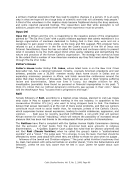
By no means does this suggest that concepts such as ―brainwashing‖ are meaningless or
irrelevant to understanding how seemingly normal people can change in ways that lead
them to commit unspeakable acts of violence. However, such concepts are misused when
they function as labels designed to lock people into their own worldviews instead of helping
them understand how other individuals can live according to very different and sometimes
incompatible worldviews. Such understanding requires that we see the world as others see
it, even though their worldview may be alien, even repugnant, to us. Seeing the world
through ―alien‖ eyes, however, requires a temporary suspension of belief in our own
fundamental assumptions about life, an action that can be frightening as well as cognitively
challenging. If we lack the courage and skill to penetrate into these ―alien‖ systems of
thought and value, we cannot understand them and, as a consequence, our responses to
them will forever remain uninformed.
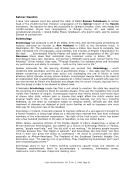
Such courage and skill is required to understand the seemingly inexplicable acts of violence
associated with the Jihadist terrorism that so preoccupies us today. Although ―jihad‖ can
refer to ―an individual‘s striving for spiritual self-perfection,‖ in the context of violence and
terrorism, the term refers to a ―Muslim holy war or spiritual struggle against infidels‖
(answers.com definition), the definition used in this paper.
Cultic studies experts can contribute to the international conversation about Jihadism
because they have experience in understanding and responding constructively to the large
variety of ―alien‖ systems of thought and value observed in cultic organizations. Although
much ambiguity surrounds the term ―cult‖ (see Rosedale &Langone, Internet Langone,
Internet), it is frequently associated with those groups that appear to exercise high levels of
influence and control over their followers in order to induce them to serve the goals and
needs of the groups‘ leaders. Certainly, some terrorist groups exhibit such dynamics of
influence and control.
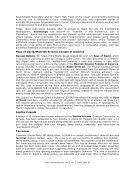
In this essay I will apply a cultic studies perspective to the phenomena of Jihadism. I will
examine the following questions:
1. Why do seemingly normal, average people join extremist or other socially deviant
organizations?
2. What factors can lead group members down a pathway to violence?
3. How can a cultic studies perspective contribute to attempts to counter violent
Jihadism?
This essay makes no claim to be the definitive analysis of the subject. It is one of a number
of articles on terrorism that this journal has published (Centner, 2002 Centner, 2003 Dole,
2006 Gomez, 2006 Mansfield, 2003 Micewski, 2006 Morehead, 2002 Mutch, 2006
Stahelski, 2005). The essay will clarify the points of intersection of Jihadist terrorism and
cultic studies so as to make future research and action endeavors more meaningful to
experts outside the cultic studies field than has been the case thus far. In so doing, I hope
to enhance dialogue among experts in terrorism, Islamic studies, and cultic studies.
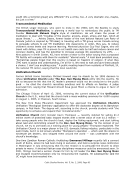
Why do seemingly normal, average people join extremist or other socially deviant
organizations?
Conversion
Elsewhere (Langone, 1996) I have discussed three models of conversion to cultic groups:
1. The deliberative model (i.e., what a person thinks about a group this model is often
favored by sociologists, clergy, and religious studies scholars)
By no means does this suggest that concepts such as ―brainwashing‖ are meaningless or
irrelevant to understanding how seemingly normal people can change in ways that lead
them to commit unspeakable acts of violence. However, such concepts are misused when
they function as labels designed to lock people into their own worldviews instead of helping
them understand how other individuals can live according to very different and sometimes
incompatible worldviews. Such understanding requires that we see the world as others see
it, even though their worldview may be alien, even repugnant, to us. Seeing the world
through ―alien‖ eyes, however, requires a temporary suspension of belief in our own
fundamental assumptions about life, an action that can be frightening as well as cognitively
challenging. If we lack the courage and skill to penetrate into these ―alien‖ systems of
thought and value, we cannot understand them and, as a consequence, our responses to
them will forever remain uninformed.
Such courage and skill is required to understand the seemingly inexplicable acts of violence
associated with the Jihadist terrorism that so preoccupies us today. Although ―jihad‖ can
refer to ―an individual‘s striving for spiritual self-perfection,‖ in the context of violence and
terrorism, the term refers to a ―Muslim holy war or spiritual struggle against infidels‖
(answers.com definition), the definition used in this paper.
Cultic studies experts can contribute to the international conversation about Jihadism
because they have experience in understanding and responding constructively to the large
variety of ―alien‖ systems of thought and value observed in cultic organizations. Although
much ambiguity surrounds the term ―cult‖ (see Rosedale &Langone, Internet Langone,
Internet), it is frequently associated with those groups that appear to exercise high levels of
influence and control over their followers in order to induce them to serve the goals and
needs of the groups‘ leaders. Certainly, some terrorist groups exhibit such dynamics of
influence and control.
In this essay I will apply a cultic studies perspective to the phenomena of Jihadism. I will
examine the following questions:
1. Why do seemingly normal, average people join extremist or other socially deviant
organizations?
2. What factors can lead group members down a pathway to violence?
3. How can a cultic studies perspective contribute to attempts to counter violent
Jihadism?
This essay makes no claim to be the definitive analysis of the subject. It is one of a number
of articles on terrorism that this journal has published (Centner, 2002 Centner, 2003 Dole,
2006 Gomez, 2006 Mansfield, 2003 Micewski, 2006 Morehead, 2002 Mutch, 2006
Stahelski, 2005). The essay will clarify the points of intersection of Jihadist terrorism and
cultic studies so as to make future research and action endeavors more meaningful to
experts outside the cultic studies field than has been the case thus far. In so doing, I hope
to enhance dialogue among experts in terrorism, Islamic studies, and cultic studies.
Why do seemingly normal, average people join extremist or other socially deviant
organizations?
Conversion
Elsewhere (Langone, 1996) I have discussed three models of conversion to cultic groups:
1. The deliberative model (i.e., what a person thinks about a group this model is often
favored by sociologists, clergy, and religious studies scholars)