Cultic Studies Review, Vol. 5, No. 2, 2006, Page 65
The magician James Randi (1987), for example, has exposed a number of faith-healing
charlatans who have succeeded in tricking thousands of people into feeling a powerful
―presence of God‖ as they witness what they falsely believe to be ―miracles.‖ Stories of
lecherous ―perfect masters‖ supposedly leading their disciples to advanced states of spiritual
experience in the Hindu and Buddhist traditions are common (Garden, 2003). And the large
group awareness training (LGAT) movement (Langone, 1989) has given millions of persons
a powerful ―spiritual‖ high during an expensive weekend of ―consciousness raising‖
exercises.
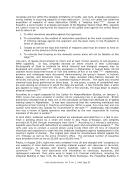
The world‘s mainstream religious traditions have long recognized the existence of
charlatans, manipulated conversions, and private ―revelations‖—that is, the need to
separate the ―wheat from the tares‖ (e.g., Vere, 2005). Because people can be fooled,
responsible religious authorities seek ways to sharpen their respective flock‘s capacity to
discern wisely, to see the ―wolf in sheep‘s clothing,‖ to use a Christian metaphor. Most
religions over the centuries have developed an institutional wisdom—perhaps expressed
more in tradition and unwritten ―rules‖ than in explicit warnings—regarding the lure of ―false
prophets‖ and spiritual arrogance. This institutional wisdom, which is woven into the
authority structure of religious traditions, provides a safe zone for spiritual seekers.
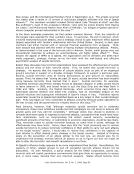
When a powerful inner experience or other factor leads seekers away from the safety of a
tradition‘s mainstream authorities, seekers might (a) come under the sway of a cult or sect,
which may or may not be harmful to them (b) enter a private, idiosyncratic spiritual world,
which may be merely different or may be delusional or (c) view their tradition from a
vantage point that enriches the tradition (e.g., people recognized as saints who have
retreated so as to explore their inner vision, but who return with a mission or message that
enlivens their tradition). The third option is quite rare, so movement away from the religious
mainstream may entail an element of personal risk and may sometimes be personally
destructive. This risk is probably magnified in modern, pluralistic societies because the
mainstream religions have not had time to develop and teach discernment skills appropriate
to the deep and rapid cultural changes that have occurred during the past few decades.
One might argue that the term ―conversion‖ doesn‘t apply to movement from the
mainstream to the extreme within a worldview—for example, within a particular religious
tradition. Such change reflects, perhaps, a ―diversion‖ within a tradition, rather than a
―conversion,‖ which involves a fundamental shift in one‘s outlook on self, world, and other.
However, I believe that the incredulous, fearful reactions of parents, such as those Muslim
and Christian parents alluded to above, testify to the radical nature and depth of change
they observe in their children. Moreover, the benign ―born again‖ experience of evangelical
Christianity is often viewed as a genuine conversion, a radical shift in one‘s perceived
relationship to God, even though the born-again individual may remain in the same religious
tradition or even the same church.
The worldview shift of a conversion that occurs within a tradition may be overlooked (except
perhaps by family and other intimates of the convert) because the person still uses the
same language and the same scripture. The meanings associated with the tradition‘s
terminology and concepts, however, may change radically for the convert and may become
intertwined with his or her psychological needs. Thus, a genuine worldview shift, a
conversion, can occur even though on a superficial level little seems to have changed. For
example, before being ―born again‖ a member of a Christian church might say, ―Jesus is my
savior,‖ many times. But after the ―born-again‖ experience that same statement is pregnant
with a depth and breadth of meaning and feeling that are completely new to the person.
Such a born-again experience can occur within a mainstream Christian church or within a
deviant, possibly harmful, sect or cult.
The magician James Randi (1987), for example, has exposed a number of faith-healing
charlatans who have succeeded in tricking thousands of people into feeling a powerful
―presence of God‖ as they witness what they falsely believe to be ―miracles.‖ Stories of
lecherous ―perfect masters‖ supposedly leading their disciples to advanced states of spiritual
experience in the Hindu and Buddhist traditions are common (Garden, 2003). And the large
group awareness training (LGAT) movement (Langone, 1989) has given millions of persons
a powerful ―spiritual‖ high during an expensive weekend of ―consciousness raising‖
exercises.
The world‘s mainstream religious traditions have long recognized the existence of
charlatans, manipulated conversions, and private ―revelations‖—that is, the need to
separate the ―wheat from the tares‖ (e.g., Vere, 2005). Because people can be fooled,
responsible religious authorities seek ways to sharpen their respective flock‘s capacity to
discern wisely, to see the ―wolf in sheep‘s clothing,‖ to use a Christian metaphor. Most
religions over the centuries have developed an institutional wisdom—perhaps expressed
more in tradition and unwritten ―rules‖ than in explicit warnings—regarding the lure of ―false
prophets‖ and spiritual arrogance. This institutional wisdom, which is woven into the
authority structure of religious traditions, provides a safe zone for spiritual seekers.
When a powerful inner experience or other factor leads seekers away from the safety of a
tradition‘s mainstream authorities, seekers might (a) come under the sway of a cult or sect,
which may or may not be harmful to them (b) enter a private, idiosyncratic spiritual world,
which may be merely different or may be delusional or (c) view their tradition from a
vantage point that enriches the tradition (e.g., people recognized as saints who have
retreated so as to explore their inner vision, but who return with a mission or message that
enlivens their tradition). The third option is quite rare, so movement away from the religious
mainstream may entail an element of personal risk and may sometimes be personally
destructive. This risk is probably magnified in modern, pluralistic societies because the
mainstream religions have not had time to develop and teach discernment skills appropriate
to the deep and rapid cultural changes that have occurred during the past few decades.
One might argue that the term ―conversion‖ doesn‘t apply to movement from the
mainstream to the extreme within a worldview—for example, within a particular religious
tradition. Such change reflects, perhaps, a ―diversion‖ within a tradition, rather than a
―conversion,‖ which involves a fundamental shift in one‘s outlook on self, world, and other.
However, I believe that the incredulous, fearful reactions of parents, such as those Muslim
and Christian parents alluded to above, testify to the radical nature and depth of change
they observe in their children. Moreover, the benign ―born again‖ experience of evangelical
Christianity is often viewed as a genuine conversion, a radical shift in one‘s perceived
relationship to God, even though the born-again individual may remain in the same religious
tradition or even the same church.
The worldview shift of a conversion that occurs within a tradition may be overlooked (except
perhaps by family and other intimates of the convert) because the person still uses the
same language and the same scripture. The meanings associated with the tradition‘s
terminology and concepts, however, may change radically for the convert and may become
intertwined with his or her psychological needs. Thus, a genuine worldview shift, a
conversion, can occur even though on a superficial level little seems to have changed. For
example, before being ―born again‖ a member of a Christian church might say, ―Jesus is my
savior,‖ many times. But after the ―born-again‖ experience that same statement is pregnant
with a depth and breadth of meaning and feeling that are completely new to the person.
Such a born-again experience can occur within a mainstream Christian church or within a
deviant, possibly harmful, sect or cult.