Cultic Studies Review, Vol. 5, No. 2, 2006, Page 45
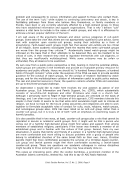
relativism of fundamental values be overcome without destroying intra-cultural diversity and
independency? The fact is that such a relativism of values is not only intellectually and
morally untenable, but furthermore politically problematic to the extent that it seems
unbearable, if not impossible for mankind, to exist with its consequences in the long haul.
I can see no other way to overcome this ethical relativism than to find a consensus on
fundamental values that is based upon the leading values of the European-Western culture.
If the major forces join in, a process could be launched at the end of which there stands a
moral, supranational (supra-cultural, supra-religious) social contract, providing for an
internationally acknowledged, minimal institution for ethical orientation. In respect to the
subject matter discussed here, this basic global ethical norm would primarily serve to define
the moral criteria for the use of political and non-political force.
Thus it could even be said that a ―Globalization‖ of the most profound ethical norms—
binding for humanity across all boundaries of culture, politics and religion—seems to be an
inevitable claim for future international arrangements.
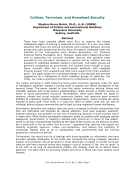
relativism of fundamental values be overcome without destroying intra-cultural diversity and
independency? The fact is that such a relativism of values is not only intellectually and
morally untenable, but furthermore politically problematic to the extent that it seems
unbearable, if not impossible for mankind, to exist with its consequences in the long haul.
I can see no other way to overcome this ethical relativism than to find a consensus on
fundamental values that is based upon the leading values of the European-Western culture.
If the major forces join in, a process could be launched at the end of which there stands a
moral, supranational (supra-cultural, supra-religious) social contract, providing for an
internationally acknowledged, minimal institution for ethical orientation. In respect to the
subject matter discussed here, this basic global ethical norm would primarily serve to define
the moral criteria for the use of political and non-political force.
Thus it could even be said that a ―Globalization‖ of the most profound ethical norms—
binding for humanity across all boundaries of culture, politics and religion—seems to be an
inevitable claim for future international arrangements.