Cultic Studies Review, Vol. 3, Nos. 2 &3, 2004, Page 99
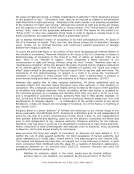
membership. On the other hand, Hogg‘s suggestion that leaders come to rely more on
coercive and reward power as they begin to distance themselves from the group is
congruent with the fact that Dederich expanded his use of physical discipline as he adopted
luxurious privileges not available to others. In short, the social identity perspective
corresponds in some but not all respects to the leadership history within Synanon.
Transformational Theory
One can also make a reasonable case that Dederich‘s leadership pattern represents the
pseudo-transformational style alluded to by Bass (1998). Group members stood to gain any
one of several transactional benefits, including a life free of drug addiction and crime (in the
cases of drug addict members). Dederich offered inspirational leadership, a transcendent
purpose, and individual consideration of group members. However, Dederich had little
toleration of dissent, was an expert in humiliation and criticism of his followers, focused on
punishing transgressions (as opposed to rewarding correct behavior), and was manipulative
and Machiavellian in dealing with the group. Thus, Bass‘s conception of pseudo-
transformational leadership provides a close description of Dederich‘s leadership style within
Synanon.
The Children of God
History
David Berg founded the Children of God (COG) in 1967 in California employing an anti-
establishment, fundamentalist Christian message to recruit young adults. Berg transformed
this group in a matter of thirteen years from a fundamentalist sect to an international
charismatic group that sanctioned promiscuous sexual behavior and religious prostitution.
This activity funded a luxurious lifestyle for Berg and his inner circle (Davis, 1984 Charity
Frauds Bureau Report, 1974). Berg was a man of voracious sexual appetites. In addition to
three marriages and numerous affairs, he conducted incestuous relations with his children --
a fact verified in his writings, the "MO Letters" (Berg, 1976 Davis, 1984).
Local businesses and churches were originally called upon to "provision" the group as a
means of combating drug use among the young. Many recruits did, in fact, give up sex,
drugs, and alcohol to become involved with COG in its early years (Davis, 1984). Berg
urged members to "forsake all" as a test of their faith (Berg, 1976). This commandment
provided the basis for having members donate all their material possessions to Berg‘s sect.
The group gained nationwide media attention by 1969 after initiating prayer demonstrations
at public events complete with biblical robes, wooden staffs, etc. (Davis, 1984).
By 1970 the group was located at a rural compound in Texas where recruitment techniques
became systematized. The initial recruitment of an individual usually entailed sleep
depriving the recruit with revolving indoctrination teams, and making certain that the recruit
was never left alone nor given time to reflect quietly on issues. The recruit was
continuously badgered regarding commitment to Jesus, the need to ―forsake all,‖ etc. Once
recruits signed a ―revolutionary sheet‖ donating their goods to the group, they began a
minimum of three month disciple training (Charity Frauds Bureau Report, 1974). This
training involved heavily regimented 18 hour days with religious broadcasts frequently
played all night. Each recruit was continually squired by a committed member (Davis,
1984). Each new recruit was given a new name to symbolize their spiritual rebirth.
Following the ―forsake all‖ doctrine, members were expected to break all ties with their old
lives, especially friends and family --with the exception of writing parents for funds. Time
was spent in menial work and memorizing biblical verse, etc. All members were expected to
keep diaries listing accomplishments, evil thoughts, etc. These items were revealed in
group meetings where public confessions were encouraged (Davis, 1984, 1973). In less
membership. On the other hand, Hogg‘s suggestion that leaders come to rely more on
coercive and reward power as they begin to distance themselves from the group is
congruent with the fact that Dederich expanded his use of physical discipline as he adopted
luxurious privileges not available to others. In short, the social identity perspective
corresponds in some but not all respects to the leadership history within Synanon.
Transformational Theory
One can also make a reasonable case that Dederich‘s leadership pattern represents the
pseudo-transformational style alluded to by Bass (1998). Group members stood to gain any
one of several transactional benefits, including a life free of drug addiction and crime (in the
cases of drug addict members). Dederich offered inspirational leadership, a transcendent
purpose, and individual consideration of group members. However, Dederich had little
toleration of dissent, was an expert in humiliation and criticism of his followers, focused on
punishing transgressions (as opposed to rewarding correct behavior), and was manipulative
and Machiavellian in dealing with the group. Thus, Bass‘s conception of pseudo-
transformational leadership provides a close description of Dederich‘s leadership style within
Synanon.
The Children of God
History
David Berg founded the Children of God (COG) in 1967 in California employing an anti-
establishment, fundamentalist Christian message to recruit young adults. Berg transformed
this group in a matter of thirteen years from a fundamentalist sect to an international
charismatic group that sanctioned promiscuous sexual behavior and religious prostitution.
This activity funded a luxurious lifestyle for Berg and his inner circle (Davis, 1984 Charity
Frauds Bureau Report, 1974). Berg was a man of voracious sexual appetites. In addition to
three marriages and numerous affairs, he conducted incestuous relations with his children --
a fact verified in his writings, the "MO Letters" (Berg, 1976 Davis, 1984).
Local businesses and churches were originally called upon to "provision" the group as a
means of combating drug use among the young. Many recruits did, in fact, give up sex,
drugs, and alcohol to become involved with COG in its early years (Davis, 1984). Berg
urged members to "forsake all" as a test of their faith (Berg, 1976). This commandment
provided the basis for having members donate all their material possessions to Berg‘s sect.
The group gained nationwide media attention by 1969 after initiating prayer demonstrations
at public events complete with biblical robes, wooden staffs, etc. (Davis, 1984).
By 1970 the group was located at a rural compound in Texas where recruitment techniques
became systematized. The initial recruitment of an individual usually entailed sleep
depriving the recruit with revolving indoctrination teams, and making certain that the recruit
was never left alone nor given time to reflect quietly on issues. The recruit was
continuously badgered regarding commitment to Jesus, the need to ―forsake all,‖ etc. Once
recruits signed a ―revolutionary sheet‖ donating their goods to the group, they began a
minimum of three month disciple training (Charity Frauds Bureau Report, 1974). This
training involved heavily regimented 18 hour days with religious broadcasts frequently
played all night. Each recruit was continually squired by a committed member (Davis,
1984). Each new recruit was given a new name to symbolize their spiritual rebirth.
Following the ―forsake all‖ doctrine, members were expected to break all ties with their old
lives, especially friends and family --with the exception of writing parents for funds. Time
was spent in menial work and memorizing biblical verse, etc. All members were expected to
keep diaries listing accomplishments, evil thoughts, etc. These items were revealed in
group meetings where public confessions were encouraged (Davis, 1984, 1973). In less